
North Carolina Homes Wheeled Away From Sinking Coastline

Dozens of Outer Banks houses lost to Atlantic erosion. Residents move entire structures on wheels to escape rapidly eroding Hatteras Island shoreline.
The North Carolina coast is experiencing one of the nation's most dramatic demonstrations of climate-driven coastal erosion, with entire neighborhoods watching their homes literally disappear into the Atlantic Ocean. Hatteras Island, a narrow barrier island that extends from the North Carolina mainland like a delicate finger reaching toward the open sea, has become a cautionary tale for communities across the entire eastern seaboard facing similar threats from rising sea levels and accelerated land loss.
The situation on Hatteras Island represents what scientists and environmental experts are calling a "canary in the coalmine" scenario—a preview of what awaits many other vulnerable east coast communities in the coming decades. The island's geography, which places it directly in the path of Atlantic storms and exposes it to relentless wave action, makes it particularly susceptible to the compound effects of climate change and environmental degradation. This vulnerable positioning has transformed the island into a natural laboratory for observing the devastating impacts of our changing climate on human settlements.
Since September of the current year, the situation has deteriorated at an alarming pace, with 19 residential structures completely consumed by the ocean waves. These homes didn't simply flood or suffer damage—they were physically torn from their foundations and pilings, colliding with neighboring structures in a destructive cascade before fragmenting in the churning Atlantic waters. The spectacle has shaken the community deeply, as residents witness decades of memories and family investments quite literally washing away into the sea.
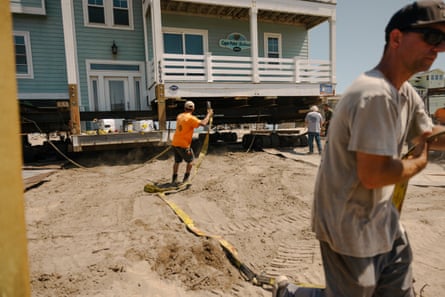
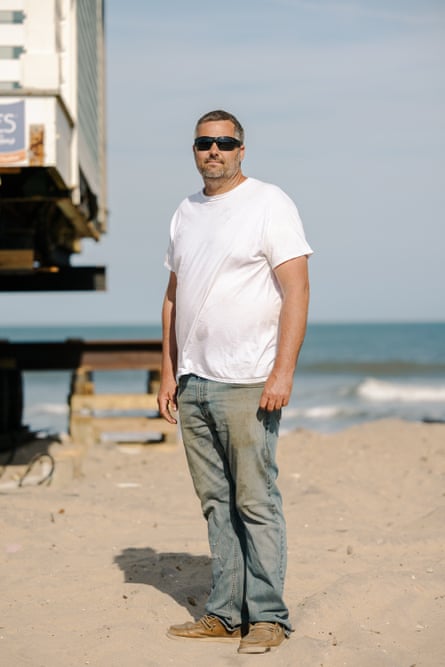
In response to this escalating crisis, homeowners have increasingly turned to house relocation services, a dramatic and expensive solution that underscores the desperation of residents determined to preserve their properties. Barry Crum, a lifelong Hatteras Island native who has built a career around moving buildings, has become the island's preeminent house mover and a symbol of creative adaptation in the face of environmental catastrophe. His specialized equipment and expertise have transformed what was once an unthinkable option into a viable—if costly—path forward for families unwilling to abandon their homes entirely.
The process of moving an entire house is both technically complex and emotionally charged. Using heavy-duty hydraulic systems and specialized trailers, Crum and his team carefully lift structures from their original locations and transport them on wheeled platforms to new, supposedly safer positions further inland. The operation requires precise engineering calculations, careful planning to navigate local roads and infrastructure, and considerable financial resources from homeowners desperate to save their properties from the encroaching ocean.
This unconventional solution highlights the increasingly dire choices facing coastal residents: remain in place and risk losing everything, retreat further inland at enormous expense, or participate in the uncertain process of relocating existing structures. For many families with deep historical roots on the island, these options represent an impossible decision—choosing between financial ruin, community displacement, or the gamble of staying put in an increasingly dangerous location. The emotional toll of watching one's neighborhood literally disappear is compounded by the practical and financial burden of any response.
The pace of sea-level rise affecting Hatteras Island is not uniform across the region—some areas experience faster subsidence and erosion than others, creating a patchwork of risk zones. The island faces a triple threat: direct ocean erosion from wave action, gradual sea-level rise from thermal expansion and melting ice sheets, and land subsidence that makes the ground literally sink relative to the rising water. This combination has created one of the most rapidly deteriorating coastlines on the entire U.S. eastern seaboard.
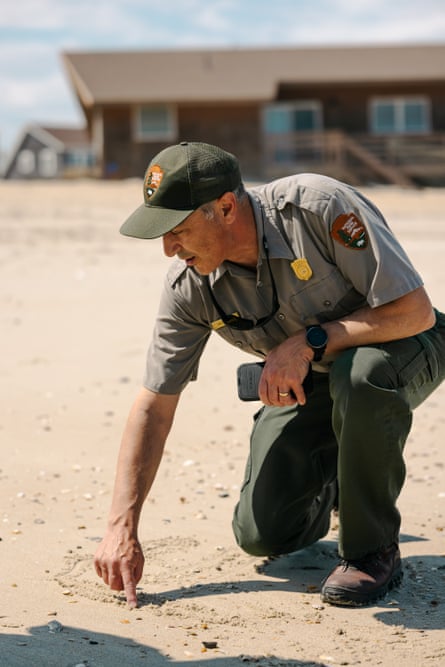
Scientists studying the Outer Banks region warn that the situation will continue to worsen without significant intervention and adaptation strategies. The island's narrow profile and sandy composition make it particularly vulnerable compared to rocky coastlines that better withstand wave action. Additionally, the barrier island ecosystem that historically protected the mainland from storms has been degraded by decades of development, dredging, and environmental manipulation. These underlying problems create a compounding crisis that extends far beyond the current season's losses.
The broader implications of the Hatteras Island crisis extend to dozens of other vulnerable coastal communities across the United States. Communities from the Jersey Shore to the Florida coast are watching developments on Hatteras Island closely, understanding that similar pressures may soon force them to make comparable decisions. The question is no longer whether these communities will experience significant coastal erosion, but rather how quickly it will occur and how they will respond. Some communities are investing in expensive seawalls and beach replenishment projects, while others are beginning to consider managed retreat and relocation strategies.
The economic dimensions of the Hatteras Island crisis are staggering. Individual homes represent hundreds of thousands of dollars in property value, and the collective losses across dozens of structures represent tens of millions in destroyed wealth. Local tax bases decline as properties disappear, reducing funding for schools, emergency services, and infrastructure maintenance. The economy of the island, historically dependent on fishing, tourism, and seasonal real estate, faces existential threats as the physical foundation of the community literally crumbles.
Tourism, a crucial industry for the island's survival, faces uncertain futures as beaches shrink and the landscape becomes increasingly scarred by erosion. Visitors drawn to pristine barrier island ecosystems and traditional coastal communities may find fewer reasons to visit as the landscape transforms. Business owners and operators watch anxiously as their customer base shrinks with each family that relocates inland or abandons the island entirely. The social fabric of the community frays as neighbors pack up and leave, sometimes permanently.
Barry Crum's house-moving business represents both a solution and a symptom of the deeper crisis facing Hatteras Island. While his technical expertise provides a lifeline for some desperate homeowners, the fact that entire residential structures must be moved on wheels demonstrates the inadequacy of current approaches to coastal adaptation. Moving a house might save an individual property, but it does nothing to address the underlying environmental forces driving the crisis—rising oceans and accelerating land loss continue regardless of whether homes are relocated or demolished.
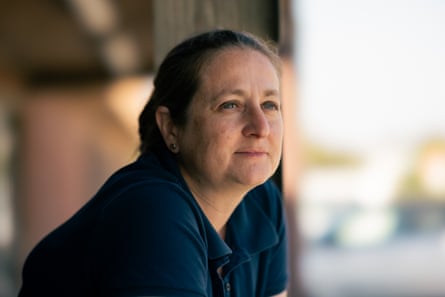
Looking forward, communities like Hatteras Island face a future of difficult choices and uncomfortable realities. Some residents will undoubtedly remain, betting that their homes can withstand future storms and erosion. Others will invest in expensive relocation services, hoping to preserve their properties for future generations. Still others will accept their losses and move away, seeking new lives in more stable communities inland. The island itself will continue its inexorable march toward the sea, regardless of human efforts to resist or adapt to this inevitable transformation driven by global climate change.
Source: The Guardian


