
Nuclear Plant Warning: £38bn Sizewell C Cost 'Risky'

Government spending watchdog warns Sizewell C nuclear plant's £38bn cost faces significant uncertainty, with benefits uncertain until 2064.
The government's ambitious Sizewell C nuclear plant project in Suffolk has come under scrutiny from the National Audit Office, which has raised serious concerns about the financial viability and risk profile of the £38 billion infrastructure investment. The spending watchdog has determined that the potential benefits of this major energy initiative are considerable but remain subject to substantial uncertainty, while the associated risks are immediate, substantial, and ultimately borne by the British public.
According to the NAO's comprehensive assessment, the cost of the nuclear power station is subject to "significant uncertainty" that could result in the benefits failing to materialize for UK households until at least 2064—a timeline that extends more than four decades into the future. This extended payback period raises critical questions about the long-term financial prudence of committing such substantial public resources to a single energy infrastructure project. The watchdog's analysis suggests that the investment may not deliver positive returns within any reasonable timeframe that would benefit current or near-future generations of taxpayers.
The National Audit Office has specifically emphasized that while the potential benefits of Sizewell C are considerable in scope, they are far from guaranteed. The risks, by contrast, are characterized as "immediate, substantial and borne by the public," indicating an asymmetrical distribution of potential gains and losses. This warning highlights a fundamental concern about how the government is structuring its energy policy and where the burden of financial responsibility ultimately falls. The private sector partners and operators of the facility may enjoy considerable upside potential, while taxpayers face the immediate burden of cost overruns and project delays.
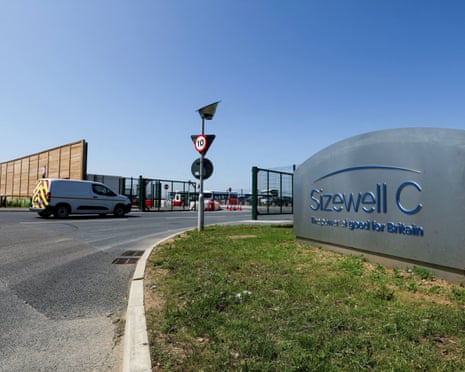
The Sizewell C project represents one of the most significant infrastructure commitments in recent British history, designed to address longstanding concerns about the nation's energy security and the transition away from fossil fuels. The plant is intended to generate approximately 3.2 gigawatts of electricity, enough to power approximately 6 million homes and replace the capacity of aging nuclear facilities scheduled for decommissioning. However, the substantial financial outlays required have consistently exceeded initial projections, a pattern common to major nuclear infrastructure projects across the developed world.
The £38 billion cost estimate for Sizewell C has itself become a point of contention within government and among energy analysts. Previous nuclear projects in the United Kingdom and internationally have demonstrated a troubling pattern of budget overruns, with actual costs frequently exceeding initial projections by 30 to 50 percent or more. The Hinkley Point C project, located in Somerset, has itself experienced significant cost escalations since its conception, adding weight to concerns about whether the Sizewell estimate adequately accounts for potential complications and unforeseen expenses.
The NAO's warning comes at a time when the government is attempting to secure private investment for the nuclear energy infrastructure project while also maintaining public support for substantial state backing. The delicate balance between private sector participation and public investment has proven contentious, with critics arguing that private partners bear insufficient risk while taxpayers are left exposed to cost overruns and operational underperformance. The watchdog's assessment suggests that the current structure of the deal may not adequately protect the public interest.
Energy security experts have pointed out that the UK faces a genuine dilemma regarding its energy future. The nation must simultaneously reduce carbon emissions, maintain reliable electricity supply, and manage constrained public finances. Nuclear power represents a potential solution to these challenges, offering low-carbon baseload generation that could replace aging coal and gas infrastructure. However, the enormous capital costs and extended construction timelines associated with nuclear projects create significant challenges for government planners attempting to balance multiple competing priorities.
The timeline extending to 2064 for benefits to materialize represents a critical concern raised by the spending watchdog. By that date, the economic context, technological landscape, and energy requirements of the United Kingdom may have shifted dramatically. Renewable energy technologies such as wind and solar continue to improve in cost-effectiveness and efficiency, potentially offering more economical solutions for future electricity generation. The NAO's extended timeline suggests that by the time Sizewell C delivers positive returns, alternative energy solutions may have rendered large portions of its output unnecessary or economically uncompetitive.
The government's commitment to the Sizewell C project reflects a belief that nuclear power generation remains essential to the UK's energy transition strategy and long-term carbon reduction targets. Ministers have argued that the project will create thousands of construction and operational jobs, boost regional economic development in East Anglia, and demonstrate Britain's commitment to next-generation energy technology. These employment and economic benefits were cited as justifications for the substantial public investment required to bring the project to completion.
However, the NAO's assessment suggests that policymakers may have underestimated the financial risks inherent in such an ambitious undertaking. The watchdog's emphasis on "immediate and substantial" risks borne by the public indicates that cost overruns, construction delays, or operational issues would directly impact government finances and, by extension, public services funded through the national budget. This risk distribution has prompted calls from opposition parties and fiscal conservatives for more rigorous scrutiny of the project's assumptions and cost estimates.
The nuclear energy debate in the UK has become increasingly polarized, with environmental advocates supporting nuclear as part of a diversified low-carbon energy mix, while fiscal hawks question whether the project represents wise use of limited public resources. The NAO's warning provides independent verification for concerns raised by critics who have questioned the financial architecture and risk allocation of the Sizewell C deal. The spending watchdog's assessment carries considerable weight in UK policy discussions, given its role as an impartial authority on government spending efficiency.
Looking forward, the Sizewell C project faces continued scrutiny from multiple quarters—parliamentary oversight committees, independent auditors, environmental organizations, and fiscal responsibility advocates will all likely demand greater transparency regarding cost assumptions and risk management strategies. The NAO's report suggests that the government must provide more detailed justifications for why this particular investment approach represents the optimal use of public resources compared to alternative energy infrastructure investments. The debate over Sizewell C will likely continue as a barometer for how effectively the UK can balance energy security needs with fiscal responsibility and economic sustainability.
Source: The Guardian


