
NY Commuter Rail Halts: Major Strike Impacts Millions

Long Island Rail Road workers strike, shutting down North America's largest commuter rail system. Five unions halt service affecting eastern New York suburbs.
A significant labor disruption brought North America's largest commuter rail system to a complete standstill on Saturday morning as unionized workers staged a coordinated strike action. The Long Island Rail Road, which serves millions of commuters traveling between New York City and its eastern suburban communities, ceased all operations following the walkoff by five major unions representing approximately half of the railroad's total workforce. This unprecedented shutdown represents one of the most consequential transit labor actions to impact the region in recent years.
The Long Island Rail Road strike began in the early hours of Saturday morning, leaving commuters scrambling to find alternative transportation methods for their daily travels. The rail system, which typically handles hundreds of thousands of passengers on any given day, suddenly became completely unavailable, forcing workers, students, and travelers to rely on buses, personal vehicles, and ride-sharing services. The timing of the walkoff created immediate chaos across the metropolitan area as weekend travelers and workers found themselves stranded without their primary mode of transportation.
Five distinct unions coordinated the strike action, collectively representing roughly 50 percent of the Long Island Rail Road's operational workforce. These unions had reached a breaking point in contract negotiations with management, leading them to authorize the strike after unsuccessful discussions over compensation, working conditions, and other labor agreement terms. The coordination between multiple unions demonstrated a unified front among workers seeking to leverage their collective bargaining power to achieve meaningful concessions from rail administration.
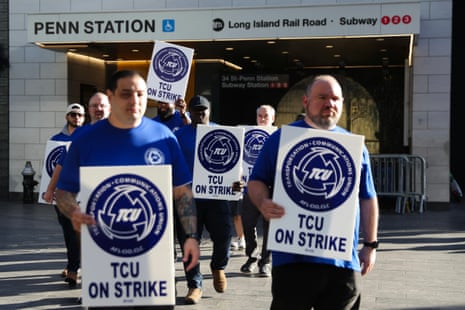
The Long Island Rail Road serves as a critical transportation artery for the eastern New York metropolitan area, connecting millions of residents to employment centers, educational institutions, and commercial districts throughout the region. The system operates hundreds of daily trains across an extensive network of tracks, stations, and terminal facilities. By shutting down operations completely, the strike effectively isolated eastern suburban communities from convenient access to New York City's central business districts and major employment hubs.
The economic impact of the rail strike extends far beyond simple inconvenience, potentially affecting countless businesses, employers, and service providers who depend on the reliable movement of workers throughout the metropolitan area. Companies reliant on Just-In-Time delivery systems and supply chains faced disruptions as freight and logistics operations ground to a halt. Small businesses, restaurants, retail establishments, and service providers throughout the region experienced reduced customer traffic as consumers and workers stayed home rather than attempting to navigate alternative transportation options.
Labor relations between the Long Island Rail Road and its workforce have been strained in recent contract negotiations, with disputes centered on multiple substantive issues affecting workers' daily lives and career prospects. Union representatives have cited concerns about compensation levels that they argue fail to keep pace with inflation and the cost of living in the New York metropolitan area. Additionally, working condition disputes involving scheduling practices, safety protocols, and job security have remained contentious throughout the negotiation process.
The shutdown affected not only rail passengers but also the broader transportation ecosystem throughout the region, as interconnected bus services, connecting commuter services, and alternative transit options became overwhelmed with demand. Commuters who typically relied exclusively on the Long Island Rail Road suddenly faced the challenge of learning unfamiliar route systems and navigating crowded alternative transportation services. The knock-on effects of the rail closure rippled through every level of the metropolitan transportation network.
Management at the Long Island Rail Road issued statements regarding the shutdown, indicating their commitment to resolving the labor dispute through continued negotiation and dialogue with union leadership. However, the timing and scale of the strike suggested that significant gaps remained between labor and management positions on key contractual issues. The strike action represented a dramatic escalation in the dispute, moving beyond negotiation tactics to actual operational disruption.
For the eastern suburbs served by the Long Island Rail Road, the sudden loss of rail service created unprecedented transportation challenges that required immediate adjustment by hundreds of thousands of residents. Families scrambled to arrange alternative childcare and school transportation, while employers grappled with staffing shortages as workers struggled to reach their workplaces. The strike exposed the critical dependency of the modern metropolitan economy on reliable transit infrastructure and the vulnerability created when that infrastructure becomes unavailable.
The unionized workers involved in the strike action have historically played a crucial role in maintaining and operating the complex network of rail infrastructure that serves the eastern metropolitan area. Their expertise, dedication, and labor represent the backbone of reliable rail service that millions depend upon daily. The decision to strike reflected their determination to achieve fair compensation and working conditions rather than accept what they viewed as inadequate contractual offers from management.
Historical context for this labor dispute reveals patterns of previous negotiations between the Long Island Rail Road and its unions, with contentious discussions becoming increasingly common as economic pressures and operational demands have mounted. The rail system has faced aging infrastructure challenges, budget constraints, and capacity pressures that have complicated labor relations. Previous contract negotiations have likewise proven difficult, suggesting systemic tension between labor and management that extends beyond the current dispute.
The shutdown prompted urgent calls from elected officials, business leaders, and community organizations for rapid resolution of the labor dispute. Mayors and county executives representing affected communities issued statements urging both parties to return to negotiations and reach a settlement that would restore service as quickly as possible. The collective pressure from political leaders and business interests added urgency to resolution efforts even as the strike continued.
The Long Island Rail Road strike impact demonstrated the essential role that transit workers play in maintaining modern urban infrastructure and the cascading consequences when critical services become unavailable. The complete operational shutdown illustrated how dependent contemporary metropolitan economies have become on reliable, functioning transit systems. Without rail service, the entire apparatus of commuting, commerce, and daily life in the region required hasty reconfiguration.
As negotiations continued between union representatives and management, the question of when service might resume remained uncertain and dependent on the parties reaching agreement on outstanding contractual issues. The longer the strike persisted, the greater the economic damage accumulated across the region. Both sides faced mounting pressure to compromise and reach a settlement that would restore vital rail service to millions of dependent commuters.
Source: The Guardian


