
Ocean-Powered AI: Silicon Valley's $200M Bet on Floating Data Centers

Silicon Valley investors including Palantir's Peter Thiel are funding offshore AI data centers powered by ocean waves. Panthalassa raises $140M for revolutionary floating AI infrastructure.
Silicon Valley investors are making a bold gamble on an unconventional solution to a growing problem: the difficulty of building AI data centers on land. Peter Thiel, co-founder of Palantir Technologies, and other prominent venture capitalists have collectively invested hundreds of millions of dollars into an ambitious project that would place artificial intelligence infrastructure directly in the middle of the world's oceans, powered entirely by renewable wave energy. This innovative approach represents a significant shift in how the tech industry thinks about powering its most resource-intensive operations.
The driving force behind this initiative is Panthalassa, a pioneering company that recently secured $140 million in its latest funding round. According to the company's announcement on May 4, these fresh capital investments will accelerate the completion of a pilot manufacturing facility located near Portland, Oregon, and enable the rapid deployment of revolutionary wave-riding "nodes" designed to harness electrical power directly from ocean movements. What makes this approach truly distinctive is that instead of collecting renewable energy and transmitting it to traditional land-based data centers, Panthalassa's floating nodes would directly power onboard AI chips while sending processed inference tokens—the outputs representing AI model responses—to customers worldwide through satellite connections.
This technological innovation addresses one of the most pressing challenges facing the artificial intelligence industry today. Data center development on land faces mounting regulatory hurdles, environmental concerns, water scarcity issues, and community opposition. Tech companies have encountered significant delays and denials for planned data center projects in various regions, prompting industry leaders to explore alternative locations and methods. The ocean-based approach offers a potential escape from these terrestrial constraints while simultaneously tapping into an abundant, renewable energy source that has long been underutilized.
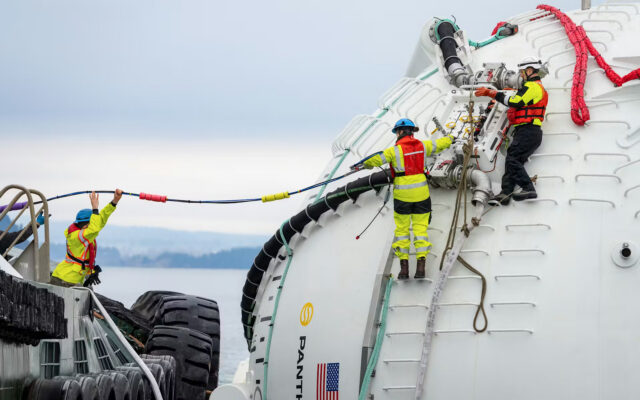
Benjamin Lee, a respected computer architect and engineer at the University of Pennsylvania, provided valuable insight into how this revolutionary system would function. "Panthalassa's idea transforms an energy transmission problem into a data transmission problem," Lee explained to Ars Technica. "Performing AI computation on the ocean would require transferring models to the ocean-based nodes and then responding to prompts and queries." This conceptual reframing is crucial to understanding the elegance of the solution—rather than building expensive transmission infrastructure to bring renewable ocean energy to shore-based facilities, Panthalassa brings the computation directly to the energy source.
The timing of this investment surge is particularly significant given the intense pressure facing the AI infrastructure industry. Major technology companies including OpenAI, Google, Microsoft, and Meta have all announced massive capital expenditures for data center construction and expansion. Projections suggest that AI-related power consumption could rival that of entire countries within the next few years. However, these expansion plans have repeatedly collided with local opposition, environmental reviews, and resource limitations, especially regarding water availability for cooling systems. Ocean-based solutions sidestep many of these issues by operating in international waters and utilizing saltwater cooling systems.
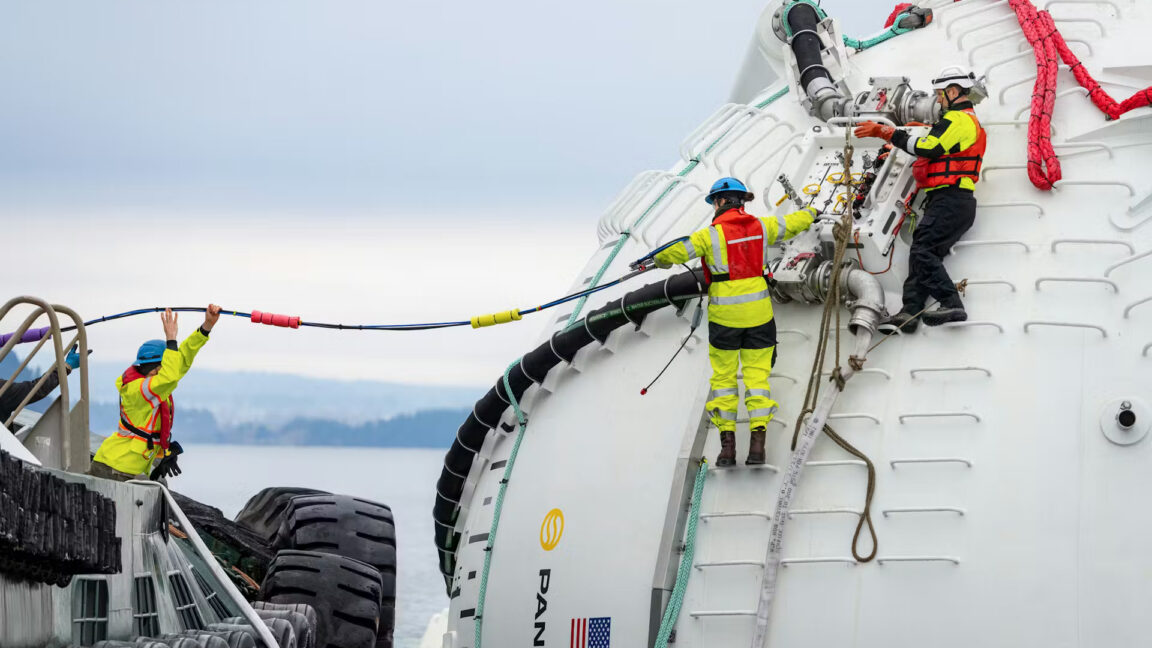
The financial backing from prominent investors like Thiel signals serious confidence in the viability of ocean-based AI infrastructure. Thiel's investment through his various funds and ventures has historically demonstrated an appetite for radical technological solutions to seemingly intractable problems. His involvement lends credibility to what many initially dismissed as science fiction, suggesting that leading venture capitalists view floating AI data centers as a legitimate long-term solution rather than a temporary novelty. This institutional endorsement is likely to encourage additional investments from other venture capital firms and strategic investors seeking exposure to next-generation infrastructure technologies.
The manufacturing facility near Portland, Oregon will serve as the crucial testing ground for scaling this technology from concept to commercial reality. The pilot facility will focus on optimizing the design and production of the wave-riding nodes, conducting extensive durability tests in challenging ocean conditions, and refining the satellite communication systems necessary for global connectivity. Successful demonstration at this site would provide the technical validation needed for broader deployment across multiple ocean locations worldwide, potentially revolutionizing how compute-intensive AI services are delivered globally.
Beyond the practical advantages, the environmental implications of this approach are substantial. Ocean-powered AI infrastructure would eliminate the carbon emissions associated with powering data centers through conventional grid electricity, which remains largely dependent on fossil fuels in many regions. By directly harnessing wave energy, these floating nodes would operate with minimal environmental impact while providing clean, renewable power for computationally intensive AI workloads. This alignment with sustainability goals makes the technology particularly attractive to investors and customers concerned about the carbon footprint of artificial intelligence deployment.
The satellite communication component of the system represents another critical technological achievement. Panthalassa's infrastructure would need to maintain low-latency connections between ocean-based AI nodes and customers worldwide, ensuring that inference responses arrive in near real-time. Modern satellite networks have made this increasingly feasible, with companies like Starlink demonstrating that reliable, high-speed satellite internet is now practical for enterprise applications. The combination of ocean-based AI compute with satellite networking creates a globally distributed system capable of serving customers anywhere on Earth.
Industry analysts suggest that successful execution of Panthalassa's vision could fundamentally reshape the data center landscape. Rather than concentrating computational power in specific geographic regions dictated by land availability and local regulations, AI computation could become truly globally distributed, deployed wherever ocean resources exist. This decentralization might lead to improved resilience, reduced latency for certain applications, and freedom from the political and regulatory constraints that increasingly plague land-based data center development in developed nations.
The $140 million funding round represents just the beginning of what could become a multi-billion-dollar industry. As Panthalassa moves forward with manufacturing and deployment, other startups and established technology companies are likely to pursue similar strategies. The convergence of AI demand, energy constraints, regulatory challenges, and technological advancement creates a perfect environment for disruptive innovation in infrastructure. Investors betting on this space appear to be positioning themselves at the forefront of what could become the next major evolution in how humanity powers its digital economy.
Source: Ars Technica


