
Odesa Under Fire: Ukraine Battles Latest Russian Strikes

Russian attacks intensify across Ukraine with at least 14 injured in Odesa. Zelenskyy emphasizes critical need for stronger air defenses amid ongoing conflict.
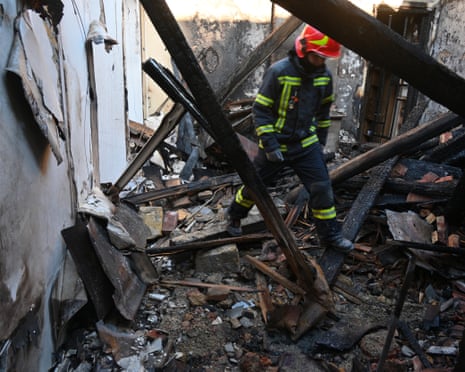
The southern Ukrainian city of Odesa has become the focal point of intense Russian military attacks, with the latest bombardment leaving a trail of destruction and civilian casualties across the war-torn nation. In a dramatic escalation of hostilities, at least 14 individuals sustained injuries during the coordinated strikes, underscoring the persistent threat facing Ukraine's civilian population and critical infrastructure. The attacks represent another chapter in Russia's relentless campaign to wear down Ukrainian defenses and destabilize the country's economic and social fabric.
President Volodymyr Zelenskyy has been vocal in his assessment of the situation, placing particular emphasis on the critical importance of air defenses in protecting Ukrainian cities from further devastation. His statements come as the military continues to grapple with the sophisticated nature of Russian strike capabilities, which have evolved significantly since the beginning of the full-scale invasion in 2022. The Ukrainian leader's focus on air defense systems reflects a strategic pivot toward leveraging Western military aid to create a more robust protective shield over populated areas.
The pattern of attacks on Odesa is not isolated but part of a broader Russian military strategy targeting Ukraine's coastal regions and major urban centers. Intelligence assessments suggest that Russia aims to demoralize the civilian population while simultaneously degrading Ukraine's ability to maintain economic activity and international trade. The port city's significance as a crucial hub for grain exports and maritime commerce makes it a high-value target in Russia's grand strategy to pressure Ukraine into negotiations.

Across the entire country, the toll of Russian bombardment continues to mount, with military and civilian targets alike bearing the brunt of an onslaught that shows no signs of abating. Ukrainian air defense forces have been working tirelessly to intercept incoming missiles and drones, though the sheer volume of attacks creates an asymmetric challenge. Defense officials report that while their systems have become increasingly effective, the coordinated nature of Russian strikes—often launched from multiple directions simultaneously—presents an ongoing operational challenge.
Meanwhile, at the international level, discussions regarding Ukraine's future support and integration continue to shape the geopolitical landscape. Top EU officials and Hungary's incoming government have scheduled a critical meeting for Wednesday to address the structural reforms necessary to unlock €17 billion in frozen European Union funds. These financial resources remain suspended due to longstanding rule-of-law concerns that plagued the administration of Viktor Orbán, whose government's tenure was marked by judicial independence issues and governance challenges that prompted Brussels to take unprecedented action.
The financial stakes are particularly high, as some of the frozen funds, notably €11 billion ($13 billion) allocated through the post-pandemic Recovery Fund, face a critical deadline of mid-August. Beyond this date, these resources will become irrevocably lost, meaning Hungary's new administration faces mounting pressure to demonstrate tangible progress on governance reforms. This financial clock adds urgency to the negotiating process, as Budapest seeks to navigate the complex requirements set forth by EU authorities while managing domestic political considerations.
The convergence of these two major developments—the intensifying military situation in Ukraine and the financial negotiations involving Budapest—illustrates the interconnected nature of European security and economic stability. Ukraine's ability to defend itself remains intrinsically tied to continued Western support, while the EU's internal cohesion depends on member states upholding democratic principles and rule of law standards. The outcome of Wednesday's negotiations could have far-reaching implications for both Hungary's economic trajectory and the broader European project of supporting Ukraine's resistance.
Back on the ground in Ukraine, military commanders continue coordinating defensive operations while civil defense officials work to minimize civilian casualties. The systematic nature of Russian attacks has prompted many residents to spend extended periods in shelter facilities, fundamentally disrupting normal life. Educational institutions remain largely shuttered, hospitals operate under wartime protocols, and the psychological toll on the population continues to accumulate with each new attack.
The international community continues to monitor developments closely, with NATO and other Western allies assessing how best to sustain military aid flows to Ukraine while managing their own security concerns. The provision of advanced air defense systems, including Patriot missiles and other sophisticated anti-aircraft platforms, has been crucial to Ukraine's defensive capabilities. However, military analysts note that Russia's ability to produce and deploy massive numbers of less sophisticated drones and cruise missiles creates a strategic challenge that cannot be entirely mitigated through defensive systems alone.
As the conflict enters yet another phase of intensified combat operations, the humanitarian consequences continue to mount. Displacement, trauma, and infrastructure destruction represent long-term challenges that will require extensive reconstruction efforts and international support. The situation in Odesa serves as a sobering reminder of the human cost of the conflict and the stakes involved in the broader geopolitical struggle unfolding across Eastern Europe.
Source: The Guardian


