
Officer Details Dangerous Crocodile Recovery Operation

Law enforcement describes retrieval of crocodile containing human remains. DNA testing underway to identify if remains match missing person case.
In a harrowing account of investigative work and wildlife danger, a law enforcement officer has revealed the intricate details of retrieving a crocodile containing human remains in what has become a high-stakes missing persons investigation. The officer's firsthand narrative provides insight into the complex coordination required when dangerous animals intersect with criminal investigations, highlighting the careful planning and execution necessary to safely extract potential evidence from such a perilous situation.
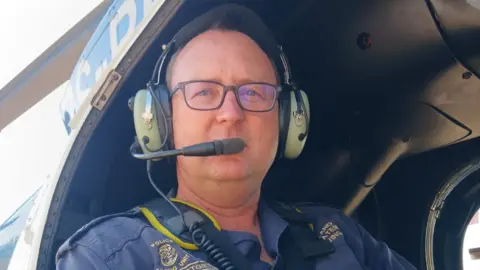
The operation represented a convergence of wildlife management and criminal investigation expertise, requiring both courage and precision from the responding officers. According to the officer's account, the team had to adhere strictly to predetermined protocols and safety measures throughout the process. "I had to stick to the plan," the officer explained, underscoring how critical adherence to protocol was in managing the inherent risks of the situation. This methodical approach ensured not only the safety of the personnel involved but also the preservation of potential evidence that could prove crucial to identifying the remains and resolving the missing person case.
The crocodile in question was captured as part of an investigation into the disappearance of a local individual who has been missing under circumstances that led authorities to suspect foul play. Environmental and wildlife experts worked alongside criminal investigators to safely contain and retrieve the animal, which was suspected of containing human remains within its digestive system. The collaborative effort between different agencies demonstrates how modern law enforcement must adapt to unique and challenging situations that fall outside traditional investigative parameters.
DNA analysis has become the critical next phase in this investigation, with laboratory technicians currently conducting thorough testing on the remains discovered within the crocodile. The results will determine whether the remains match the DNA profile of the missing man, potentially providing the closure that his family has desperately sought. The technological advancement in genetic identification has transformed investigations like this one, allowing authorities to conclusively establish identity in cases where traditional investigative methods might prove inconclusive or insufficient.
The process of safely extracting the crocodile required extensive planning and coordination among multiple agencies, each bringing specialized expertise to the operation. Wildlife specialists assessed the animal's behavior and size, while criminal investigators documented every aspect of the retrieval to maintain the chain of custody for the remains. Safety protocols were paramount, as crocodiles are extremely dangerous predators, and officers had to balance the need to secure potential evidence with the imperative to protect themselves and the public.
The officer's description of "sticking to the plan" reflects the rigorous training and preparation that law enforcement undergoes for situations that extend beyond conventional policing. Each member of the team understood their role, the sequence of actions required, and the contingencies if something went wrong. This level of preparedness proved essential in executing what many would consider an exceptionally unusual and dangerous investigation scenario.

From the moment the crocodile was identified as a potential suspect in the disappearance, authorities began assembling a specialized task force. Environmental wildlife authorities worked to safely capture the animal without harming it, as doing so would risk contaminating or destroying the potential evidence it contained. The operation required specialized equipment, trained handlers, and careful monitoring of the animal's condition throughout the capture and transport process.
The involvement of forensic science in this case exemplifies how modern investigations leverage multiple disciplines to solve crimes. DNA testing is expected to provide definitive answers regarding the identity of the remains, potentially moving the investigation into new phases such as determining cause of death and establishing accountability for what occurred. The scientific evidence collected could prove instrumental in any future legal proceedings related to the missing man's case.
Missing persons cases often present unique challenges for investigators, particularly when circumstances suggest criminal involvement but physical evidence remains elusive. In this instance, the unusual circumstances—involving wildlife—actually provided a potential lead that conventional investigation methods might never have uncovered. The discovery of the crocodile's involvement emerged through careful observation and investigative work that connected animal sightings to the missing person's disappearance location and timeline.
The broader context of this investigation highlights ongoing challenges faced by law enforcement agencies in remote or wildlife-inhabited areas. When investigations involve both human tragedy and animal involvement, the complexity multiplies significantly. Authorities must balance ecological concerns, public safety, investigative integrity, and animal welfare—a demanding balancing act that requires expertise across numerous fields.
As the DNA test results are awaited, the investigation remains in a critical phase. The family of the missing man anxiously anticipates confirmation that could finally provide answers about their loved one's fate. Meanwhile, authorities continue gathering additional evidence and information that might complement the forensic findings and help establish a complete understanding of how the man's remains came to be within the crocodile.
The officer's reflection on maintaining adherence to protocol throughout this extraordinary operation serves as a reminder of the professionalism and discipline required in law enforcement, even when situations present unprecedented challenges. Every decision made during the crocodile retrieval had potential consequences—both for the investigation's integrity and for the safety of those involved. The successful execution of the operation demonstrates the value of preparation, training, and unwavering commitment to established procedures, regardless of how unusual the circumstances become.
Looking forward, once the DNA analysis results are confirmed, the investigation will likely expand to address multiple questions: How did the remains come to be within the crocodile? Was this an accidental incident or something more sinister? What additional evidence might be recovered that could answer these critical questions? The answers to these inquiries will be crucial not only for bringing closure to the victim's family but also for ensuring justice is served appropriately based on the circumstances of the case.
Source: BBC News


