
Oil Prices Soar as Iran Conflict Drags On, Threatening Supply

Experts predict US gas prices could hit $3.85 per gallon as the US-Israel campaign against Iran enters its third week, disrupting regional oil and gas production.
As the United States-Israel campaign against Iran extends into its third week, oil prices are poised for another day of wild fluctuation, with one analyst predicting that prices at the pump might hit $3.85 per gallon on Monday.
The spiraling conflict has imperiled oil and gas production infrastructure in the region, causing petroleum prices to surge upward. On Friday, the US conducted strikes on Kharg Island, an essential oil processing hub in Iran. Meanwhile, Tehran continues to block ships from passing through the Strait of Hormuz, where a fifth of the international oil supply typically traverses.
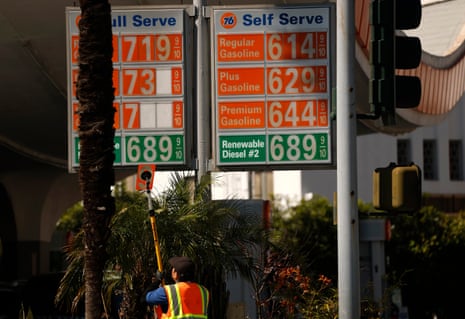
The escalating tensions have created significant uncertainty in the global energy market, with traders closely monitoring the situation for any potential disruptions to supply. Analysts warn that the conflict could have far-reaching consequences, potentially leading to further price volatility and disruptions to the flow of oil and gas around the world.
One industry expert, speaking on the condition of anonymity, predicted that the surge in oil prices could push the average price of gasoline in the United States to $3.85 per gallon on Monday, reflecting the growing concerns over the stability of the region's energy infrastructure.
The US and its allies have been engaged in a campaign against Iran for several weeks, with the aim of crippling the country's economy and forcing it to abandon its perceived nuclear ambitions. However, the continued strikes and blockades have only served to exacerbate the already tense situation, leading to fears of a prolonged conflict that could have severe consequences for the global energy market.
As the world watches the unfolding events with bated breath, industry analysts and policymakers are scrambling to find a diplomatic solution that would ease the tensions and restore stability to the region's energy sector. The stakes are high, and the outcome of this conflict could have far-reaching implications for the global economy and the daily lives of millions of people who rely on affordable and reliable energy sources.
Source: The Guardian


