
One in Five Councils Ban Swearing Under Controversial Orders

New report reveals dramatic rise in public spaces protection orders used to criminalize everyday activities like swearing, shouting, and standing in groups across England and Wales.
A comprehensive investigation into local government enforcement practices has uncovered an alarming trend in how public spaces protection orders (PSPOs) are being utilized across England and Wales. The Campaign for Freedom in Everyday Life released a damning report revealing that one in five local councils have now implemented bans on swearing in public places—a significant increase from just one in twenty councils recorded in 2022. This dramatic rise in enforcement reflects a broader pattern of concern among civil liberties advocates about how these orders are being weaponized against ordinary citizens engaging in everyday activities.
Originally designed as targeted instruments to combat serious anti-social behaviour such as aggressive confrontations, drug-related incidents, and threatening conduct, PSPOs have evolved into something far more contentious. Councils across the country have progressively expanded their interpretation of what constitutes unacceptable public conduct, creating what critics describe as unnecessarily restrictive and intrusive regulations. The expansion of these orders represents a fundamental shift in how local authorities approach community management and raises serious questions about the proper balance between maintaining public order and preserving individual freedoms.
The report documents an extensive catalogue of everyday activities now subject to criminal penalties under various council PSPOs. Beyond the prohibition on swearing, councils have prohibited shouting, standing in groups, picking up stones, and numerous other activities that would ordinarily be considered perfectly legal expressions of human behavior. These restrictions have transformed routine public interactions into potential violations that could result in substantial fines, creating an environment of fear and self-censorship among residents. The scope of prohibited conduct has become so broad that individuals may unknowingly commit infractions simply by going about their daily lives in public spaces.

The campaign organization behind the investigation has characterized these enforcement practices as "busybody" regulations, suggesting they represent an unnecessary intrusion into personal behavior that poses no genuine threat to public safety or order. Campaigners argue that these orders have fundamentally strayed from their original purpose and now function as tools for excessive social regulation. Rather than targeting genuinely problematic behavior that harms communities, councils appear to be using PSPOs to impose behavioral conformity standards that many residents find oppressive and unjustified. This mission creep in how PSPOs are deployed raises fundamental questions about government overreach and the appropriate scope of local authority powers.
The statistics presented in the report paint a picture of rapidly expanding enforcement frameworks. The increase from five percent to twenty percent of councils implementing swearing bans within a two-year period demonstrates a concerning acceleration in this trend. This trajectory suggests that without intervention, the proportion of councils using PSPOs for such purposes could continue to escalate, potentially affecting hundreds of thousands of residents across England and Wales. The trend indicates a systemic problem rather than isolated incidents of overzealous enforcement by individual councils.
Legal experts and civil liberties organizations have raised substantial concerns about the enforcement mechanisms built into these orders. Violations can result in fixed penalty notices—fines that residents must pay without due process for addressing their specific circumstances. This administrative approach to enforcement bypasses traditional legal safeguards and has been criticized for disproportionately affecting vulnerable populations and lower-income residents who cannot afford the fines. The financial penalties associated with PSPOs effectively criminalize behavior that is not inherently illegal, creating a two-tiered system where those with financial resources face minimal consequences while others face significant hardship.
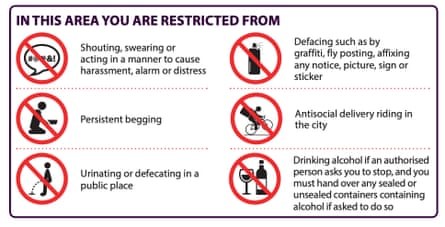
The diversity of prohibited activities documented in the report reveals the arbitrary nature of many PSPO restrictions. Prohibitions on picking up stones, for instance, appear particularly absurd when applied to adults, yet councils have implemented such restrictions claiming they prevent potential violence or vandalism. Standing in groups has been banned in certain areas, effectively criminalizing the basic human activity of socializing in public spaces. These restrictions seem designed to discourage certain populations from using public areas rather than addressing legitimate safety concerns. The scope of these prohibitions suggests that councils are using PSPOs as general tools for social engineering rather than targeted responses to specific problematic behaviors.
The regulatory expansion documented in this report has occurred largely without significant public debate or scrutiny. Many residents remain unaware of the specific restrictions imposed in their local areas, creating situations where individuals unknowingly violate PSPO regulations. This lack of transparency undermines the legitimacy of these enforcement regimes and suggests that councils have not adequately justified these restrictions to their constituents. Democratic accountability requires that substantial restrictions on public behavior be clearly communicated and subject to meaningful public consultation before implementation.
Advocates for reform point out that these orders disproportionately impact marginalized communities including homeless individuals, young people, and ethnic minorities. When swearing is criminalized, for instance, enforcement often falls heaviest on groups already subject to heightened police and council scrutiny. The subjective nature of determining what constitutes "swearing" versus merely "speaking firmly" creates opportunities for discriminatory enforcement patterns. This disparity raises serious concerns about equality before the law and the potential for PSPOs to entrench existing social inequalities through selective enforcement practices.
The Campaign for Freedom in Everyday Life has called for urgent reform of how these orders are created and enforced. The organization advocates for stricter national guidelines that would limit PSPOs to genuinely problematic behaviors that cause demonstrable harm to communities and would prevent councils from using them as tools for general behavioral regulation. Such reforms would require councils to provide robust evidence that proposed restrictions address specific documented problems rather than relying on subjective concerns about public decorum. The campaign suggests that a return to the original intent of PSPOs would allow them to function as appropriate tools for maintaining genuine public safety without unnecessarily infringing on routine human behavior.
The legal status of PSPOs and their relationship to broader human rights protections has become an increasingly important area of scrutiny. Some legal scholars argue that certain PSPO restrictions may violate the European Convention on Human Rights protections regarding freedom of expression and assembly. Challenge cases brought through the courts could establish important precedents regarding the proper limits of local government authority to restrict public behavior. The growing body of legal challenges to PSPO restrictions suggests that courts may ultimately provide important constraints on council enforcement power in this area.
Local authorities defending their use of PSPOs argue that these orders represent necessary tools for addressing genuine community concerns and maintaining acceptable standards in public spaces. Councils contend that residents have complained about behaviors they find objectionable, and PSPOs provide a mechanism for responding to these complaints. However, critics counter that tolerating minor inconveniences and disagreements in public spaces is part of living in diverse communities, and that government authority should not be used to eliminate all activities that some residents find mildly annoying. The fundamental tension between these positions reflects deeper disagreements about the proper relationship between individual liberty and collective order.
The report's findings have sparked renewed debate about local government accountability and the importance of robust oversight mechanisms for council decision-making. Community groups and civil liberties organizations are increasingly demanding that councils subject proposed PSPOs to rigorous scrutiny before implementation and that councils regularly review existing orders to determine whether they remain justified. Some areas have begun implementing more transparent processes for PSPO creation that include genuine public consultation and require evidence-based justification for restrictions. These emerging best practices suggest that meaningful reform is possible if councils commit to exercising their powers more responsibly.
As this trend continues, the expanding use of PSPOs to criminalize ordinary behavior represents a significant challenge to individual liberties in England and Wales. The movement from targeting genuine anti-social behavior toward regulating everyday activities demonstrates how enforcement tools can drift from their original purpose if not subject to consistent oversight and scrutiny. The findings of the Campaign for Freedom in Everyday Life report serve as an important reminder that maintaining freedom requires ongoing vigilance against gradual encroachments on liberty, even when those encroachments appear minor or justified by appeals to order and propriety. Whether councils and policymakers respond to these concerns by implementing meaningful reforms will help determine the future of civil liberties in these regions.


