
OpenAI President Forced to Defend Personal Diary in Musk Trial

Greg Brockman testifies in Elon Musk's lawsuit against OpenAI, revealing personal journal entries as evidence in dispute over nonprofit mission abandonment.
Greg Brockman, the president of OpenAI, found himself in an extraordinarily uncomfortable position during the ongoing litigation brought by Elon Musk. Over multiple days of testimony, Brockman was compelled to read excerpts from his deeply personal journal entries aloud to a jury, an experience he described as profoundly distressing. The trial centers on Musk's allegations that OpenAI has fundamentally betrayed its original nonprofit mission, transforming instead into a profit-driven enterprise primarily designed to enrich company leadership, particularly Brockman and CEO Sam Altman.
During his second consecutive day of cross-examination, Brockman expressed his genuine anguish about the unusual circumstances. "It's very painful," he confessed to OpenAI's legal counsel, Sarah Eddy, as he grappled with the necessity of exposing intimate thoughts to public scrutiny. The situation represents an extraordinary invasion of privacy, forcing a high-ranking technology executive to share reflections he had never intended for public consumption or legal proceedings.
Brockman made clear that while he harbors no shame regarding the content of his personal writings, he views them as inherently private reflections that should remain confidential. The journal entries, he explained, do not function as straightforward chronicles of events or clear emotional documentation. Rather, they operate as streams of consciousness that flow unpredictably through various ideas and hypothetical perspectives.
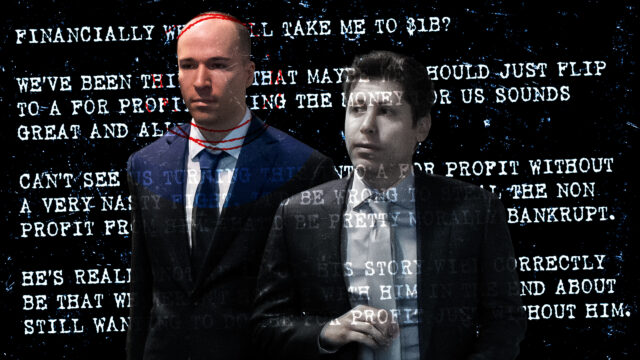
The nature of these diary entries has become central to Musk's legal strategy in the lawsuit. The Elon Musk lawsuit against OpenAI represents one of the most significant disputes in the technology sector, challenging the organization's fundamental direction and the motives of its leadership. By introducing Brockman's personal reflections as evidence, Musk's legal team apparently aims to demonstrate that company executives have prioritized personal financial gain over the original nonprofit charitable mission that founded the organization.
The OpenAI nonprofit mission has been a contentious issue within technology and business circles. When OpenAI was established, it was created as a nonprofit research organization dedicated to ensuring that artificial intelligence development would benefit all humanity. However, the company's evolution, including the creation of OpenAI LP, a for-profit subsidiary, and the subsequent commercial deployment of products like ChatGPT, has generated considerable debate about whether these actions align with the original mission statement.
Brockman's testimony provides a window into the internal deliberations and personal thoughts of OpenAI leadership during the company's transformation. The decision to require him to publicly read diary entries marks an extraordinary measure in corporate litigation, one that extends beyond typical business document discovery. This approach suggests that Musk's legal team believes personal journals contain crucial evidence demonstrating intent and decision-making processes that underlie the company's strategic direction.
The tension between maintaining privacy and fulfilling legal obligations has created a challenging ethical situation. Brockman must balance his right to personal confidentiality with his civic duty to provide truthful testimony. The circumstance highlights how modern litigation increasingly intrudes into the personal lives of corporate executives, requiring disclosure of materials far beyond traditional business records and communications.
The trial itself has attracted significant attention from technology industry observers, investors, and legal experts who view the case as potentially precedent-setting. The outcome could substantially influence how artificial intelligence companies structure their organizations and govern their missions. Many in the tech industry are watching closely to see whether courts will ultimately vindicate Musk's claims that OpenAI has departed from its stated principles or whether the company can successfully defend its current operational structure.
Legal analysts have noted that forcing executives to reveal personal journal content represents an unusual tactic in corporate disputes. Normally, litigation discovery focuses on business communications, financial records, and official documentation. The inclusion of Brockman's diary suggests that Musk's attorneys believe personal reflections contain admissions or revelations that undermine OpenAI's public positioning regarding its organizational mission and leadership motivations.

The emotional toll of this testimony cannot be understated. Brockman's discomfort with discussing his personal thoughts in a public courtroom setting reflects the inherent vulnerability of having intimate reflections scrutinized by opposing counsel and jury members. Despite his assertion that he feels no shame about the entries' content, the act of public disclosure fundamentally violates the private nature of journaling, which serves many individuals as a confidential space for exploring complex thoughts and emotions.
As the trial continues, observers await further revelations from Brockman's testimony and the responses from other OpenAI executives and board members. The case will ultimately determine whether current structures at OpenAI constitute appropriate governance of a hybrid nonprofit-for-profit entity or whether they represent a betrayal of organizational principles. The jury's interpretation of evidence, including Brockman's journal entries, will prove decisive in determining the trial's outcome and potentially reshaping the artificial intelligence industry's approach to mission alignment and organizational integrity.
Source: Ars Technica

