
Oregon's Public Defender Crisis Leaves Innocents Defenseless

An attorney shortage in Oregon's criminal justice system traps thousands without legal representation. One woman's fight against false charges reveals systemic failures.
In the heart of Oregon's criminal justice system, a crisis is unfolding that threatens the fundamental rights of thousands of defendants. An acute attorney shortage has created a bottleneck in the courts, leaving individuals accused of crimes—including those who are innocent—without adequate legal representation. This growing problem has sparked urgent calls for reform and raised serious questions about the state's ability to provide constitutionally mandated defense services.
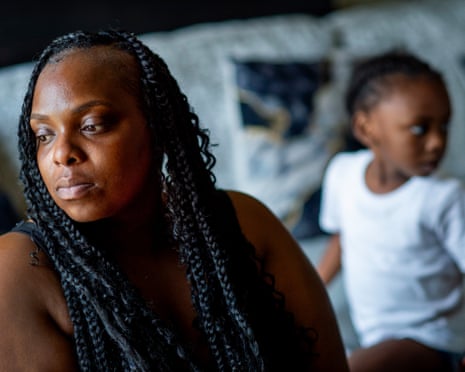
Corshelle Jenkins' story exemplifies the devastating consequences of Oregon's public defender crisis. The 36-year-old Portland resident found herself caught in a nightmare she couldn't have anticipated: falsely charged with a crime and trapped in a legal system ill-equipped to help her prove her innocence. When she received the letter in May 2025 informing her of theft charges and a subsequent arrest warrant, her world turned upside down. Jenkins, a devoted mother of six, knew immediately that something was terribly wrong—she had never been arrested for stealing anything.
Assuming that a simple court appearance would clear up what seemed like an obvious case of mistaken identity, Jenkins prepared to defend herself. However, she quickly discovered that the system designed to protect innocent people was instead becoming her adversary. The criminal justice system in Oregon, already stretched thin, could offer her minimal assistance in navigating the complex legal proceedings that lay ahead. What should have been a straightforward matter of clarification became an extended ordeal.
The root cause of Oregon's legal crisis stems from a severe shortage of qualified attorneys willing to work in the public defense sector. Unlike private practice, which offers substantially higher salaries and more flexible schedules, public defender positions come with heavy caseloads, administrative burdens, and lower compensation. Many experienced attorneys have left the field, while fewer new lawyers enter it, creating a vicious cycle that leaves public defender offices chronically understaffed. Counties throughout the state have reported similar challenges, with some offices operating at only a fraction of their needed capacity.
The implications of this shortage extend far beyond individual cases like Jenkins'. When criminal defense attorneys are spread too thin, they cannot adequately investigate cases, interview witnesses, or prepare thorough legal arguments for their clients. Innocent people may accept plea deals they shouldn't take simply because they lack proper representation. Guilty individuals may receive inadequate sentences not because of justice, but because their attorneys lacked time to present mitigating circumstances. The entire system becomes compromised, undermining the principle that everyone deserves their day in court with competent counsel.
Jenkins faced the frightening prospect of arrest despite her innocence, illustrating how quickly the system can spiral out of control when resources are limited. With no attorney readily available to help her, she was forced to navigate the bureaucratic maze on her own—a daunting task for someone without legal training. The wait for resolution stretched on, each day bringing new anxiety about the arrest warrant hanging over her head. Her family worried constantly about the possibility of her being arrested at a traffic stop, during a routine interaction with police, or worst of all, in front of her six children.

The scope of Oregon's court crisis is staggering. Thousands of individuals are currently waiting for legal representation, some for months at a time. Court dockets have become increasingly congested, with cases delayed indefinitely. Many defendants sit in jail unable to post bail while waiting for an attorney to be assigned, essentially serving time before conviction. This pretrial detention not only violates fundamental principles of justice but also wreaks havoc on defendants' employment, housing stability, and family relationships. The burden falls disproportionately on low-income individuals and communities of color, perpetuating systemic inequalities within the criminal justice system.
Advocates and legal experts have been sounding the alarm about Oregon's deteriorating situation for years. Bar associations have called for increased funding, better working conditions for public defenders, and systemic reforms to address the backlog. Some have proposed loan forgiveness programs to attract attorneys to the field, while others suggest redistributing cases or implementing alternative dispute resolution mechanisms. Despite these recommendations, legislative action has been slow, and the problem continues to worsen as more attorneys leave the profession and fewer replacements arrive.
For Corshelle Jenkins, waiting became a way of life. Each court date pushed forward, each continuance extending her agony. The simple matter of proving mistaken identity that should have taken weeks to resolve stretched into months. Without proper legal representation, she couldn't effectively challenge the charges or demand that prosecutors present their evidence. She was trapped in a system that was supposed to protect her rights but instead left her vulnerable and defenseless. The emotional toll on Jenkins and her family was immense, as the uncertainty and fear of arrest hung over their daily lives.

The human cost of Oregon's attorney shortage cannot be overstated. Beyond the immediate legal consequences, people face job loss, housing instability, and psychological trauma. Children are separated from parents awaiting trial. Families struggle to afford bail while waiting for public defenders to take their cases. The wrongful conviction rate increases when defendants lack adequate representation. These aren't abstract statistics; they're real people whose lives are derailed by a system failing to fulfill its constitutional obligations.
State officials have acknowledged the crisis but struggle with how to address it comprehensively. Budget constraints, competing priorities, and the complexity of the problem have made rapid solutions elusive. Some counties have attempted to hire contract attorneys or restructure their offices, but these measures have provided only temporary relief. A comprehensive solution would require significant investment in public defender offices, improved pay scales for attorneys, better working conditions, and systemic reforms to reduce unnecessary court proceedings and encourage case resolution.
Jenkins' case represents just one instance among thousands of similar situations unfolding across Oregon. Her experience illuminates the broader failure of a system stretched beyond capacity. As more people face arrest warrants for crimes they didn't commit and lack the resources to fight back, public pressure for reform continues mounting. The question is whether Oregon's state government will act quickly enough to prevent further damage to its citizens and its justice system.
The path forward requires political will, adequate funding, and commitment to fundamental constitutional principles. Until Oregon addresses its public defender crisis with the urgency it demands, innocent people like Corshelle Jenkins will continue facing an uphill battle. Their fight for justice cannot wait any longer. The state must act decisively to restore balance to its criminal justice system and ensure that every person, regardless of income, receives the competent legal representation they deserve and the Constitution guarantees.
Source: The Guardian


