
Oscar-Nominated Director Films Saudi Drug War Drama

Acclaimed Australian filmmaker Phillip Noyce directs feature film for Saudi Arabia. Critics question regime's investment in entertainment amid human rights concerns.
In a significant development within international cinema, acclaimed Australian director Phillip Noyce has undertaken a high-profile project funded by the Saudi Arabian government. The filmmaker, known for his work on major Hollywood productions and critically acclaimed dramas, is directing a feature film that celebrates the efforts of the nation's narcotics enforcement officers. This exclusive arrangement represents a notable instance of state-sponsored filmmaking in the Middle Eastern region.
The film, titled The Watchful Eyes, draws inspiration from an actual case handled by Saudi Arabia's Ministry of Interior narcotics division. According to production materials, the movie aims to portray what the Saudi government describes as the heroism of security men in combating drugs within the kingdom. The project positions itself as a dramatic narrative that highlights the challenges and triumphs of law enforcement officials working in the country's ongoing battle against drug trafficking and substance abuse.
Phillip Noyce's involvement lends significant prestige to the production. The director's extensive filmography includes acclaimed works such as Patriot Games, Clear and Present Danger, and Rabbit-Proof Fence, establishing him as a filmmaker capable of handling complex narratives and character-driven stories. His selection for this Saudi-backed project underscores the government's commitment to producing high-quality cinematic content that aligns with its strategic messaging objectives.

However, the initiative has attracted significant international scrutiny and criticism from human rights advocates and international observers. Critics contend that the Saudi government's investment in entertainment projects, particularly those celebrating security and law enforcement narratives, represents an effort to rehabilitate and improve the nation's global image. This practice, often referred to as reputation management through entertainment, has become increasingly common among governments seeking to influence international perceptions.
The timing of this film project comes amid long-standing concerns about Saudi Arabia's approach to drug-related offenses and capital punishment. According to available records, the kingdom executed 243 individuals in the previous year for drug-related crimes alone, a statistic that has drawn sustained criticism from international human rights organizations. These enforcement practices stand in stark contrast to the narrative being promoted through The Watchful Eyes, which emphasizes the positive aspects of the nation's drug enforcement efforts.
International human rights organizations have raised alarm bells about what they characterize as whitewashing human rights violations through selective storytelling in film. The strategy of commissioning high-profile entertainment productions to reshape international perceptions of controversial policies has become a recognized phenomenon in contemporary global politics. By partnering with established filmmakers like Noyce, governments can leverage the credibility and reach of cinema to influence how their actions are perceived worldwide.
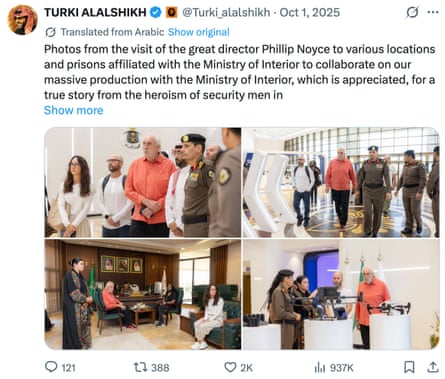
The production values and narrative approach of The Watchful Eyes reflect the Saudi government's determination to create a sophisticated and compelling cinematic work. Rather than producing propaganda-style content, the film aims to function as a genuine dramatic feature that will appeal to international audiences. This strategy proves more effective at influencing perceptions than overtly propagandistic material, as it operates within the conventions of mainstream cinema while subtly advancing specific governmental narratives.
Noyce's previous work has frequently explored themes of government power, institutional authority, and moral complexity. His background in creating politically-engaged cinema suggests that his involvement in this Saudi-backed project represents a significant creative and professional choice. The decision to accept this assignment has implications for how established filmmakers navigate relationships with governments that have been criticized for their human rights records, particularly regarding capital punishment and the treatment of individuals convicted of drug offenses.
The broader context of international film production reveals a growing trend of state-sponsored cultural projects designed to advance national interests and reshape global narratives. Wealthy nations and governments increasingly recognize cinema's power to influence international opinion, leading to substantial investments in feature filmmaking and entertainment production. These projects often succeed in reaching audiences who might not engage with more direct forms of political or diplomatic messaging.
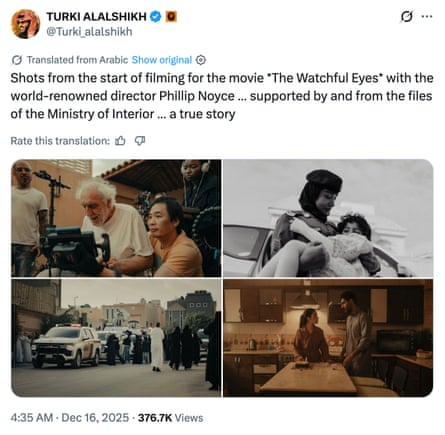
The collaboration between Noyce and the Saudi government raises important questions about artistic freedom, ethical responsibility, and the relationship between creators and state actors. When established filmmakers accept commissions from governments with controversial human rights practices, they become implicit participants in potential reputation laundering efforts. These decisions carry professional and ethical implications that extend beyond the immediate film project.
From a production standpoint, The Watchful Eyes represents a substantial investment in contemporary filmmaking technology and storytelling craft. The project demonstrates Saudi Arabia's commitment to producing entertainment that meets international standards for cinematography, direction, and narrative sophistication. This approach contrasts sharply with earlier, more obviously propagandistic attempts at state-sponsored filmmaking, indicating an evolution in how governments strategically invest in cultural production.
The film's release and distribution strategy will prove significant in determining its reach and influence. International film festival circuits, streaming platforms, and theatrical releases all represent potential venues for the project's presentation to global audiences. The success of this venture in terms of shifting international perceptions will likely influence other governments' decisions to invest similarly in entertainment-based narrative shaping.
As the production progresses, industry observers and human rights organizations will likely continue to scrutinize the project's development, content, and ultimate presentation. The intersection of entertainment, state power, and human rights advocacy represents a complex contemporary issue that extends well beyond this single film. Phillip Noyce's involvement ensures significant international attention and critical analysis of how the project handles its subject matter and what messages it ultimately conveys to audiences worldwide.


