
Pacific's Tuna Crisis: Climate Change Threatens Island Economies

Rising ocean temperatures are shifting tuna populations away from Pacific Islands, threatening the economic survival of millions dependent on fishing.
The Pacific Islands face an unprecedented economic crisis as climate change fundamentally alters the marine ecosystems that have sustained their communities for centuries. Rising ocean temperatures are triggering a dramatic shift in tuna populations, pushing these vital fish stocks away from traditional fishing grounds and toward cooler waters in the central and northern Pacific. This migration represents far more than an environmental concern—it threatens the very survival of island nations whose entire economies depend on the fishing industry.
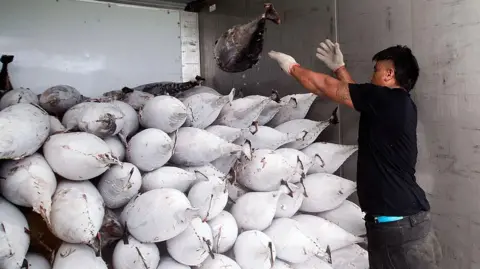
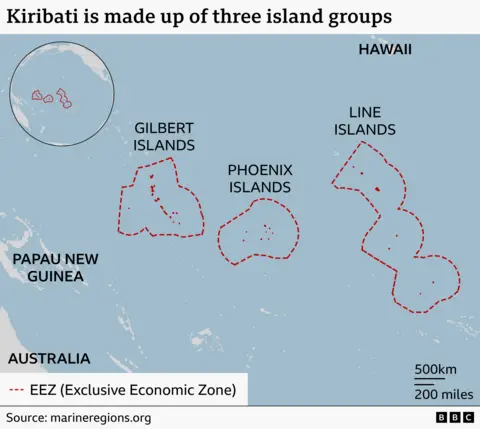
For many Pacific Island communities, tuna fishing represents the lifeblood of their economic systems. Countries including Kiribati, Nauru, Palau, and the Marshall Islands generate between 40 to 90 percent of their government revenue from fishing licenses and tuna exports. The industry provides employment for thousands of workers and sustains local food security across the region. When tuna populations migrate, these nations face not just economic hardship but potential collapse of their government budgets, inability to fund essential services like healthcare and education, and widespread unemployment.
Scientific research has demonstrated clear links between rising sea temperatures and the behavior of tuna species. As water temperatures climb, tuna—being highly migratory species sensitive to thermal changes—naturally shift toward cooler zones. Studies from oceanographic institutions have tracked these movements with increasing precision, revealing patterns that correlate directly with documented temperature increases over the past two decades. The phenomenon affects multiple tuna species, including yellowfin and skipjack varieties that form the foundation of Pacific Island fisheries.
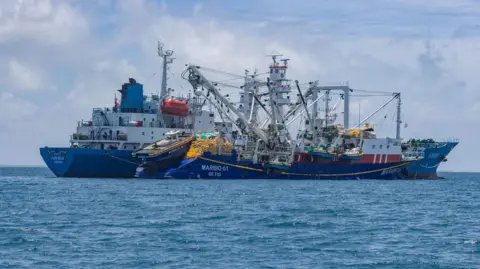
The economic implications extend beyond immediate fishing concerns into broader macroeconomic territory. Pacific Island economies lack diversification, making them extraordinarily vulnerable to disruption in their primary industry. Tourism provides a secondary income source for some nations, but it remains insufficient to compensate for massive losses in fishing revenue. Government officials throughout the region have warned that without intervention, many islands face financial insolvency within the next decade as tuna resources dwindle and migration patterns worsen.
Infrastructure development presents another challenge intertwined with this crisis. Fishing harbors, processing facilities, and refrigeration systems represent massive capital investments that become obsolete if tuna populations abandon traditional grounds. Port cities that thrived for generations on the fishing trade now contemplate their future in a fundamentally transformed ocean environment. Communities must simultaneously manage present economic needs while planning for uncertain futures, creating impossible policy choices for resource-constrained governments.
International negotiations around fishing rights have become increasingly contentious as this crisis unfolds. Large industrial fishing nations from Asia and Europe hold licenses to fish in Pacific waters, and disputes over sustainable catch limits pit island nations' survival needs against broader conservation concerns. The dynamics of these negotiations have shifted dramatically as ocean warming reduces available fish stocks, making every remaining tuna increasingly valuable and contested.
Scientists emphasize that climate change impacts on Pacific fisheries represent just one manifestation of broader global warming effects in the region. Rising sea levels threaten to submerge low-lying atolls entirely, while increasing ocean acidification damages coral reef ecosystems that support both food security and tourism. These interconnected crises create a perfect storm for Pacific Island nations, where no single solution addresses the multifaceted challenges they confront.
Some researchers have explored potential adaptation strategies, including investments in sustainable fishing practices and diversified marine resource management. Aquaculture development remains limited by geographic and technical constraints on most islands. Artificial reef creation and marine protected areas show promise in some contexts but cannot fully compensate for the scale of the resource migration. Policy experts increasingly recognize that adaptation alone cannot solve problems rooted in global emissions and planetary-scale climate shifts.
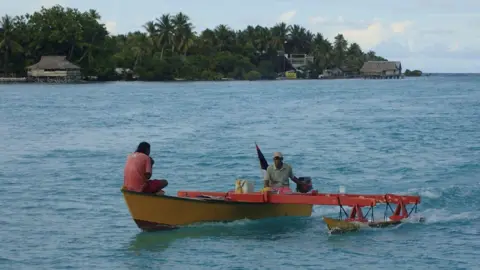
The human dimension of this crisis deserves particular attention. Island communities possess deep cultural connections to fishing traditions spanning thousands of years. The prospect of losing tuna populations represents not just economic displacement but cultural erasure for societies where fishing defines identity, social structure, and spiritual practice. Young people face uncertain employment futures, with migration to developed nations becoming increasingly attractive—and feasible—as opportunities diminish at home.
International climate negotiations have largely failed to prioritize Pacific Island concerns with appropriate urgency. While small island developing states have advocated forcefully for aggressive emissions reductions, major emitting nations have resisted the policy changes necessary to prevent further warming. This disconnect between those suffering immediate climate impacts and those responsible for emissions represents a fundamental justice issue that shapes island nations' desperation in global climate forums.
Looking forward, Pacific Island governments must prepare for scenarios where tuna populations migrate permanently away from their traditional fishing zones. This preparation includes developing alternative economic strategies, investing in education and infrastructure that enables population mobility, and strengthening regional cooperation on resource management. However, none of these adaptations can fully compensate for the loss of an industry that has sustained island civilizations for generations.
The Pacific tuna crisis exemplifies how climate change threatens economic development for vulnerable populations who contributed least to global emissions. The crisis demands urgent international action on emissions reductions, financial support for affected island nations, and recognition that some adaptation needs exceed what individual countries can accomplish alone. Without transformative change in global climate policies, Pacific Island economies face a future defined by resource scarcity, economic collapse, and human displacement on unprecedented scales.
Source: BBC News


