
Palestinian Farm Listed on Booking.com After Israeli Seizure

West Bank property seized from Palestinian family now advertised as vacation rental. Booking.com hosts 41 listings in illegal Israeli settlements, raising questions about property rights.
Mohammad al-Sbeih carries memories of his family's ancestral property like precious heirlooms—memories of wheat fields swaying in Mediterranean breezes, barley crops stretching across hillside terraces, and generations of agricultural tradition rooted in Palestinian soil south of Bethlehem. What began as a family farm has become the center of a troubling international controversy that highlights the complex intersection of property seizure, digital commerce, and the ongoing Israeli-Palestinian conflict.
"It was a hard plot to farm as it was on a hillside with terraces, but it was so beautiful," Sbeih reflects on his childhood years, his voice tinged with nostalgia for a simpler time when his family could work the land freely. The small agricultural plot represented far more than just economic livelihood—it embodied cultural continuity, family identity, and deep connections to the land that had sustained the al-Sbeih family for generations. The terraced farming technique visible in old photographs of the property speaks to centuries of Palestinian agricultural knowledge passed down through family lineage.
Today, that same property appears on Booking.com with a distinctly different character. The listing describes the West Bank home as "ideal for outdoor gatherings," complete with amenities and accommodations designed to attract international tourists seeking authentic vacation experiences. The transformation from family farmstead to commercial tourist accommodation represents a jarring shift in the property's purpose and ownership structure, raising critical questions about how such transactions occur and who benefits from them.

The al-Sbeih property is not an isolated case. According to recent documentation and investigation, the property represents one of at least 41 illegal Israeli settlement rentals currently listed on the global vacation booking platform. This discovery has ignited debate among human rights organizations, Palestinian advocates, and international observers regarding corporate responsibility and the ethics of profiting from disputed territory. Each of these 41 listings operates within the gray area of international law, where Israeli settlements in the occupied West Bank remain widely considered illegal under international humanitarian standards.
The emergence of these listings on mainstream hospitality platforms highlights a significant gap between corporate policy and actual enforcement on the ground. Booking.com, as one of the world's largest accommodation-sharing platforms, wields considerable influence over which properties receive visibility and legitimacy in the global marketplace. By hosting these listings, the platform effectively endorses and normalizes commercial activity in settlements that most international legal experts consider unauthorized under international law.
For Palestinian families like the al-Sbeihs, the listing of their seized property on an international platform adds another layer of dispossession. Not only has the family lost physical control of their land, but they now witness that land being monetized and advertised to global audiences without their consent or compensation. The commercial success of the listing—attracting bookings from tourists worldwide—generates revenue that flows away from the original Palestinian owners entirely.

The broader context of property seizure in the West Bank stretches back decades, rooted in the aftermath of the 1967 Six-Day War and the subsequent occupation. Israeli authorities have used various legal mechanisms—including military orders, land declarations, and settlement expansion policies—to transfer Palestinian properties into Israeli control. These processes often occur through administrative channels that Palestinian property owners say lack transparency and adequate opportunity for legal challenge.
Palestinian human rights organizations have documented thousands of cases where families lost access to their lands through mechanisms they describe as systematic and institutionalized. The al-Sbeih case exemplifies how these historical property disputes intersect with modern digital commerce, creating new complications for resolving long-standing disputes. The internationalization of the listings through platforms like Booking.com transforms local land disputes into global commercial transactions.
The presence of these settlement rentals on booking platforms also raises questions about corporate accountability in conflict zones. International companies operating in disputed territories face increasing scrutiny from investors, civil society organizations, and consumers who question whether doing business in such areas contributes to human rights violations. Booking.com's response to these concerns will likely influence how other major platforms approach similar situations.

Booking.com has faced previous criticism regarding its listings in Israeli settlements. In 2020, the company announced it would delist properties in Israeli settlements, responding to pressure from Palestinian advocates and international human rights groups. However, the discovery that 41 settlement properties remain active on the platform suggests that either the delisting policy was incompletely implemented, or that new listings have been added since the original announcement. The gap between stated policy and actual platform content raises transparency questions.
For Mohammad al-Sbeih and countless other Palestinian property owners, the situation represents a frustrating reality of powerlessness in the face of structural forces beyond their control. While their family's land generates income for current occupants through tourist bookings, the original owners receive nothing and have limited recourse through international mechanisms. The listings serve as digital monuments to what Palestinian activists describe as ongoing property dispossession.
The international community remains divided on how to address property seizures and settlements in the West Bank. While the United States, European Union, and United Nations consider settlements illegal, they have taken limited concrete action to enforce consequences. This ambiguity creates space for commercial activities like vacation rentals to flourish, effectively rewarding the control of disputed properties through profitable tourism ventures.
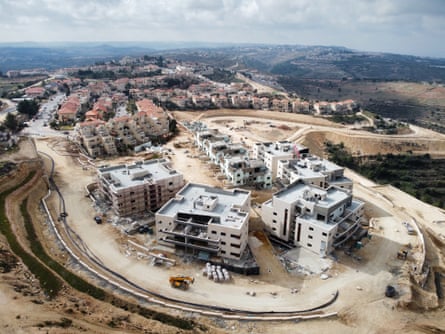
Sbeih's memories of farming his family's hillside plot with its carefully maintained terraces represent a vision of Palestinian life and land stewardship that now exists only in personal recollection. The farmland that once produced wheat and barley for family consumption and market sale has been converted into a commercial hospitality asset, serving entirely different purposes and generating value for entirely different stakeholders. This transformation encapsulates the broader tragedy of Palestinian land loss in the West Bank, where historical ownership and cultural connection to the land have been superseded by military occupation and settlement expansion.
The case also demonstrates how modern technology and digital platforms can either facilitate or complicate historical injustices. Booking.com's listings make the dispossession of Palestinian properties visible to international audiences, potentially raising awareness but also, critics argue, normalizing and legitimizing occupation-era property seizures. The platform's role in these transactions connects global consumers directly—albeit unknowingly—to the consequences of the occupation, raising questions about ethical consumption and corporate responsibility in geopolitically sensitive contexts.


