
Parents Furious Over Devon School's Plan to Cut Bus Services

Devon parents express outrage as local school announces plans to eliminate bus transportation services at end of academic year, raising concerns about student safety.
Parents and guardians across Devon have launched a vocal campaign against a controversial decision by a local secondary school to discontinue its school bus services at the conclusion of the current academic year. The announcement has sparked considerable backlash within the community, with families expressing deep concerns about how students will manage their daily commutes once the transportation option disappears.
The school transportation elimination decision, revealed to parents through official communications, has become a flashpoint of community frustration. Families who have long relied on the convenient and safe bus routes are now facing the prospect of arranging alternative transportation arrangements for their children. Many parents argue that the sudden withdrawal of this essential service lacks adequate planning and fails to consider the practical implications for working families and younger students who cannot drive themselves.
Transportation officials and school administrators have indicated that budget constraints and declining ridership numbers prompted the difficult decision. However, parents contend that these justifications fail to address the real-world challenges that families will encounter, particularly those living in rural areas surrounding the Devon facility where public transportation options remain limited.
The move has intensified discussions about student safety concerns related to independent transportation. Parents worry that eliminating supervised bus services could force vulnerable younger students to walk longer distances or rely on parents who may be unable to provide daily drops-off due to work commitments. Additionally, concerns have been raised about the environmental impact of replacing organized bus transportation with increased individual car journeys to and from the school.
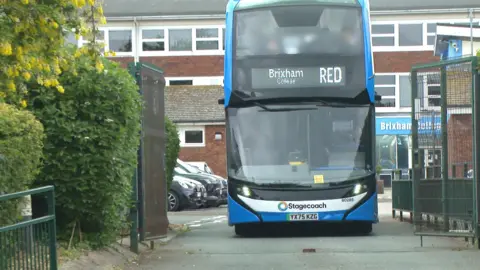
Community leaders and parent representatives have begun organizing meetings to explore possible solutions and alternatives to the current plan. Several parents have suggested potential compromises, including maintaining a reduced bus service for certain routes or implementing a student-led carpooling system with proper safety protocols. These grassroots efforts demonstrate the community's determination to address what many view as a shortsighted decision.
The controversy also highlights broader debates about school funding challenges facing educational institutions across the United Kingdom. Budget pressures have forced many schools to make difficult decisions regarding non-academic services, with transportation often among the first areas targeted for cost reduction. However, critics argue that eliminating such services ultimately creates additional burdens on families while undermining the school's commitment to accessibility and inclusivity.
Several parents have submitted formal complaints through official channels, requesting that the school's leadership reconsider the decision or develop a more gradual transition plan. A parent petition has garnered significant support, with families urging decision-makers to explore creative solutions that balance financial constraints with the genuine needs of the student population and their families.
Education specialists and child welfare advocates have weighed in on the debate, emphasizing the importance of reliable student transportation systems for educational outcomes and child safety. Research indicates that disruptions to transportation access can negatively impact student attendance rates and academic performance, particularly among younger and more vulnerable students who depend on organized services.

The Devon school's decision has prompted broader conversations about how educational institutions should balance fiscal responsibility with essential services. School administrators counter that the financial pressures they face are unsustainable, and that some difficult choices are inevitable given current funding models. They have pledged to provide parents with advance notice and adequate time to arrange alternative solutions before the service cessation takes effect.
Local government representatives have been drawn into the discussion, with some indicating a willingness to explore whether municipal authorities could intervene to maintain or partially fund bus route programs. These political dimensions add another layer to what has become a complex issue affecting multiple stakeholders within the Devon community.
As the academic year progresses, parents and school officials remain at odds over the implementation timeline and potential compromises. The situation underscores the ongoing tension between educational budget constraints and community expectations regarding essential student services. Whether the school will ultimately reverse its decision, modify its approach, or proceed as planned remains uncertain, but the parental opposition shows no signs of diminishing in the coming weeks and months ahead.
Source: BBC News


