
Pentagon's Golden Dome: 12 Companies Building Orbital Interceptors

US Space Force reveals 12 contractors developing Space-Based Interceptors for Golden Dome, a multilayer defense system against advanced missile threats.
The United States Space Force unveiled an extensive list of defense contractors on Friday who have been selected to develop Space-Based Interceptors as part of the Pentagon's ambitious Golden Dome initiative. This comprehensive multilayer defense architecture is designed to provide unprecedented protection for American territory against an increasingly diverse array of aerial threats, including unmanned drones, conventional ballistic missiles, advanced hypersonic weapons, and sophisticated cruise missiles that represent emerging challenges to national security.
The Golden Dome program represents a significant evolution in how the Department of Defense approaches air defense and missile protection. Rather than relying solely on ground-based systems, the initiative seeks to deploy orbital assets that can intercept threats before they reach U.S. airspace or population centers. This forward-defense approach aligns with modern military doctrine that emphasizes defeating adversaries at greater distances from protected areas.
According to the Space Force announcement, the selected roster of Golden Dome contractors includes some of the nation's most prominent defense and aerospace firms. The comprehensive list encompasses Anduril Industries, a rapidly growing company specializing in autonomous systems and artificial intelligence applications for defense; Booz Allen Hamilton, a major systems integration and consulting firm; General Dynamics Mission Systems, a division focused on advanced technologies; GITAI USA, which develops robotic systems for space operations; and industry giants Lockheed Martin and Northrop Grumman, both with extensive experience in missile defense programs.
Additional contractors named in the Golden Dome initiative include Quindar, a company focused on space technology solutions; Raytheon, known for advanced weapons systems and sensors; Sci-Tec, a specialized aerospace contractor; SpaceX, the commercial spaceflight leader; True Anomaly, which develops space situational awareness systems; and Turion Space, an emerging player in the commercial space sector. This diverse mix of established defense contractors and innovative commercial space companies reflects the Space Force's strategy to leverage both traditional expertise and cutting-edge innovation.
The Space Force distributed a total of 20 individual awards among these 12 companies during the final months of 2025 and into early 2026. This contract structure allows for multiple teams to pursue different technical approaches and solutions, fostering healthy competition and increasing the likelihood of identifying the most effective orbital interceptor technology for the program's needs.
A critical element of the Golden Dome acquisition strategy involves the use of what the Pentagon refers to as Other Transaction Authority, commonly abbreviated as OTA agreements. These specialized contracting mechanisms represent a departure from standard federal acquisition regulations and procedures that typically govern defense contracts. OTAs provide the Pentagon with significantly greater flexibility in how it structures contracts, awards funding, and manages contractor relationships.
The advantages of utilizing OTA agreements for the Space-Based Interceptor program are substantial and strategically important. By employing these alternative contracting mechanisms, the Department of Defense can essentially cast a wider net to attract a larger and more diverse pool of potential contractors. This approach proves particularly valuable in encouraging smaller, innovative companies and commercial space industry participants who might otherwise be deterred by the complexity and bureaucratic burdens of traditional federal procurement processes.
OTA agreements are especially well-suited for rapid prototyping initiatives where the goal is to quickly develop, test, and evaluate multiple technical approaches before committing to full-scale production contracts. This acquisition philosophy aligns perfectly with the Space Force's objectives for the first phase of the SBI program, where experimentation and innovation are prioritized over immediate deployment of a fully mature system.
The Golden Dome initiative reflects broader strategic concerns about emerging threats to U.S. airspace and military operations. Hypersonic weapons, in particular, have become a focus of increased attention within military circles. These advanced systems travel at speeds exceeding Mach 5, making them extremely difficult or impossible to intercept using conventional air defense systems currently deployed by the U.S. military. The development of space-based defense systems represents a potential solution to this challenge, as orbital platforms could detect and engage hypersonic threats during their boost and glide phases.
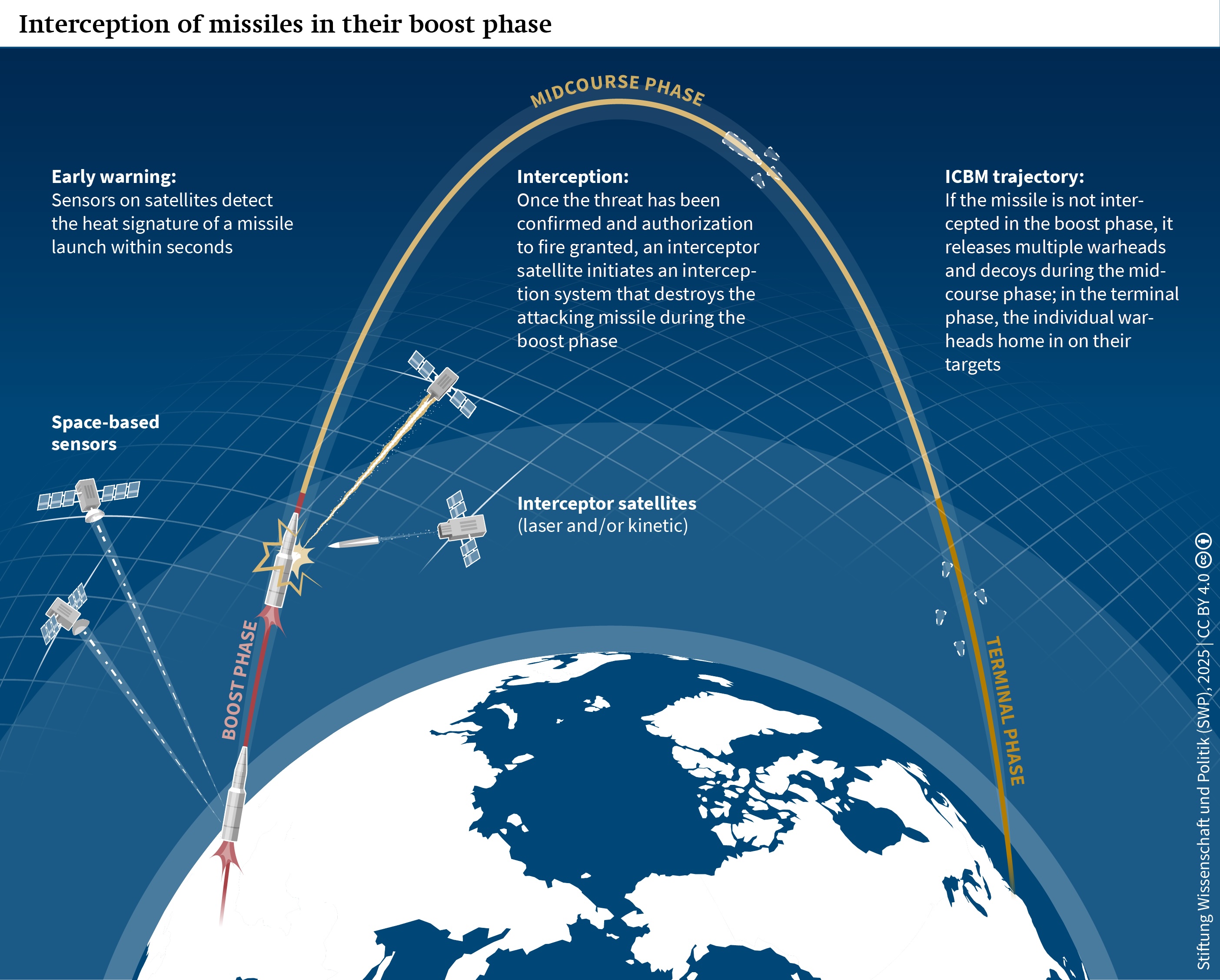
The multilayer aspect of the Golden Dome architecture is similarly important to understanding the program's strategic rationale. By combining space-based interceptors with existing ground-based air defense systems, the program aims to create overlapping defensive zones that would protect against attacks from multiple vectors simultaneously. This layered approach increases the probability of successful intercept and provides redundancy in case any single layer is compromised or overwhelmed.
Looking forward, the space-based interceptor program will likely undergo several development phases. The current phase, supported by these OTA awards, is focused on concept development and rapid prototyping to demonstrate technical feasibility and identify the most promising approaches. Subsequent phases would involve more detailed design, component development, and eventually test flights of prototype systems in actual space conditions.
The selection of such a broad range of contractors also suggests that the Space Force is considering multiple technical architectures for the Space-Based Interceptor system. Some contractors may be developing hit-to-kill kinetic interceptors that physically collide with targets, while others may be exploring directed energy weapons or other innovative approaches. This portfolio strategy maximizes the chances of success while allowing the Space Force to compare different technical solutions before making decisions about which architecture to pursue at scale.

The involvement of companies like SpaceX and other commercial space operators reflects the Pentagon's recognition that the commercial space industry has developed significant capabilities in launch services, orbital operations, and space systems development. Drawing on these commercial capabilities allows the Department of Defense to access specialized expertise and benefit from the rapid pace of innovation occurring in the commercial space sector, while potentially reducing development costs through shared investments and technology transfer.
As the Golden Dome program continues to develop, the contractors selected to participate in this initiative will face significant technical challenges. Developing reliable interceptor systems that can operate in the harsh environment of space, accurately track and engage maneuvering targets, and coordinate with other defensive systems will require substantial technological advances. The coming months and years of this program will be critical in determining whether the ambitious vision of space-based missile defense can be successfully transformed into operational reality for the United States military.
Source: Ars Technica


