
Philippine VP Sara Duterte Faces Second Impeachment

Philippine Vice President Sara Duterte has been impeached for the second time. If convicted in Senate trial, she could be disqualified from running for president.
The Philippine House of Representatives has taken the dramatic step of impeaching Vice President Sara Duterte for a second time, marking an unprecedented escalation in the political tensions surrounding the nation's second-highest office. This latest impeachment proceeding represents a significant moment in Philippine politics, as it underscores the deepening rifts between different political factions and the contentious relationship between the Vice President and various congressional members who view her administration and leadership with considerable skepticism.
The impeachment motion against Duterte was filed and subsequently approved by the House, advancing the case toward what will likely be a highly publicized and politically charged Senate trial. The Senate, which serves as the final arbiter in impeachment cases under the Philippine constitutional framework, will now be tasked with determining whether the charges against the Vice President merit conviction. This process could take several weeks or even months to conclude, depending on the complexity of the proceedings and the number of witnesses called to testify.
The significance of this second impeachment cannot be overstated, as it carries far-reaching implications for Duterte's political future. Should the Senate ultimately vote to convict the Vice President, the consequences would be severe and irreversible. A conviction would result in her automatic disqualification from running for president in future elections, effectively removing her from consideration as a presidential candidate and potentially ending her ambitions for higher office in Philippine politics.

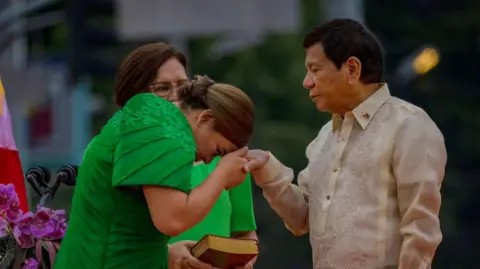
Understanding the context of Duterte's political journey is essential to comprehending the current situation. As the daughter of former President Rodrigo Duterte, Sara Duterte initially built her career in provincial politics before ascending to the national stage. Her election as Vice President represented a significant political moment, as she was seen by her supporters as a continuation of her father's tough-on-crime governance style and his controversial policies that had garnered both fervent supporters and vocal critics throughout his presidency.
The relationship between Vice President Duterte and various Congressional members has deteriorated considerably in recent months, leading to increased calls for her removal from office. The impeachment proceedings reflect broader political disagreements about her governance style, her conduct in office, and her vision for the country's direction. These tensions have played out publicly through media statements, congressional hearings, and statements made on various political platforms, keeping the issue at the forefront of Philippine national discourse.
This represents a second formal impeachment proceeding against Duterte, indicating that this is not the first time her political opponents have attempted to remove her from office through constitutional means. The fact that a second impeachment has been filed and approved suggests that the political opposition remains undeterred in their efforts to hold her accountable for what they view as violations of her duties or misconduct in her official capacity as Vice President.
The Philippine political landscape has become increasingly fractious in recent years, with various power blocs competing for influence and control over the direction of national policy. The impeachment of Duterte can be understood as part of this broader struggle for political dominance, with different factions of Congress attempting to consolidate power and remove political rivals from positions of authority. The Senate, which will ultimately decide the case, comprises members from various political parties and blocs, making the outcome genuinely uncertain at this stage.
Observers of Philippine politics note that conviction in Senate is far from guaranteed, as impeachment trials are notoriously difficult to win. Historically, very few impeachment cases in the Philippines have resulted in conviction, suggesting that the bar for removing an elected official is quite high. The Senate would need to achieve the necessary supermajority vote to convict Duterte, a threshold that may prove challenging for her political opponents to reach, depending on how different senators vote and whether any senators cross party lines during the proceedings.
The implications of this impeachment extend beyond just Duterte's political career. The proceedings will likely dominate Philippine political discourse for an extended period, potentially overshadowing other important legislative and administrative matters that require Congressional attention. The public will be closely following developments in the Senate trial, and media coverage will likely be extensive, keeping the case in the national spotlight and shaping public opinion about both the Vice President and her political opponents.
The timing of this second impeachment is also noteworthy from a strategic political perspective. As the nation looks toward future presidential elections, the question of whether Duterte could be a viable candidate has taken on increased significance. If her opponents succeed in convicting her in the Senate trial, they would effectively eliminate her as a potential candidate for the highest office in the land, fundamentally reshaping the political landscape and limiting the options available to voters in future presidential contests.
Throughout this process, Duterte has maintained her position and continued to perform her duties as Vice President, despite the cloud of impeachment proceedings hovering over her administration. She has not publicly indicated whether she intends to mount a vigorous defense against the charges or whether she might seek to negotiate a resolution. Her legal team will undoubtedly be preparing strategies for her defense in the upcoming Senate trial, drawing upon constitutional law experts and political strategists to mount the most effective case possible.
The broader implications for Philippine democracy are also worth considering. Impeachment is a serious constitutional tool designed to hold elected officials accountable for serious misconduct or violations of their duties. The use of impeachment as a weapon in partisan political struggles, however, raises questions about whether the process is being used for its intended purpose or whether it has become politicized as a means of removing political rivals. This tension between accountability and political opportunism will likely be debated by legal experts and political commentators as the Senate trial unfolds.
Looking ahead, all eyes will be on the Senate as it prepares to conduct the trial that will determine Duterte's political fate. The proceedings promise to be closely watched by international observers, diplomatic communities, and the Filipino public alike. Whether the Senate votes to convict or acquit the Vice President will have profound consequences not only for her personal political future but also for the trajectory of Philippine politics more broadly, potentially setting precedents for how future impeachment cases are handled and shaping expectations for accountability among elected officials at the highest levels of government.
Source: BBC News


