
Planes Grounded: Gulf Corridor's Key Role in Global Travel Exposed

Groundings of flights across the Gulf region have revealed the depth of the world's reliance on this crucial travel corridor, raising doubts about future reliability.
The near-week-long airspace closures and severely limited flights across the Gulf region have brought into sharp focus the world's heavy reliance on this key travel corridor. As operations gradually resume, the incident has raised doubts about the long-term dependability of this critical hub for global air travel.
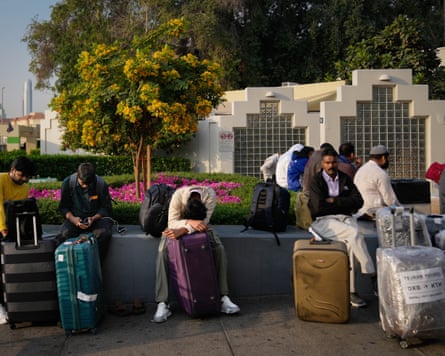
The restart of Emirates flights, a relief to the hundreds of thousands of passengers stranded worldwide, may not fully dispel the concerns raised by the past week's events. The UK Foreign Office in particular faced challenges in organizing delayed rescue flights out of neighboring Oman, highlighting the vulnerabilities of this transit-dependent system.
The Gulf region, with its strategically located airports and airlines, has become an indispensable node in the global aviation network. Dubai, Abu Dhabi, and other hubs have emerged as major transit points for travelers from Europe, Asia, and beyond, funneling them through the Middle East on their journeys.

This heavy reliance on the Gulf corridor has come into sharp focus as the recent airspace closures and flight restrictions disrupted travel plans for millions. The situation exposed the fragility of a system that has grown to depend on the uninterrupted flow of air traffic through this region.
While the restart of key operations provides relief, industry experts warn that the events of the past week may have lasting implications. The reliability and resilience of the Gulf's aviation infrastructure will likely come under increased scrutiny, as stakeholders assess the need for contingency planning and diversification of air travel routes.
The Gulf's strategic position as a global transit hub has been a boon for its economies, fueling the rise of mega-airlines like Emirates and Qatar Airways. However, the recent disruptions have highlighted the vulnerabilities inherent in this model, potentially prompting a re-evaluation of the region's role in the broader air travel ecosystem.
As the industry and travelers alike grapple with the aftermath of the Gulf airspace closures, the focus will be on how quickly normalcy can be restored and what lessons can be learned to strengthen the resilience of the global air travel network.
Source: The Guardian


