
Police Officers Mistaken for ICE Agents Amid Immigration Crackdown

Internal emails reveal law enforcement concerns that immigration enforcement operations are interfering with police work and endangering officers across the nation.
Exclusive internal correspondence and official documents obtained by The Guardian paint a troubling picture of confusion and concern among law enforcement agencies across the United States. Over the past year, police departments and municipal officials have raised serious alarms about how immigration enforcement operations are increasingly interfering with routine police work and creating dangerous situations for officers in their own communities.
The communications, which include confidential emails and internal briefing memos, reveal that officers are being mistaken for Immigration and Customs Enforcement (ICE) agents while performing their regular duties. This dangerous confusion has led to escalating threats directed at police officers, heightened community tensions, and widespread concern about the overlap between local law enforcement and federal immigration operations. The documents underscore a growing crisis of identity and trust that extends far beyond administrative inconvenience.
This development emerges at a time when the American public has become increasingly fearful and distrustful of law enforcement officers working in their communities. The Trump administration's aggressive approach to immigration enforcement, which critics and law enforcement officials alike have characterized as broad and sometimes indiscriminate, has created an environment of anxiety and suspicion among vulnerable populations.

The distinction between local police officers and federal immigration agents has become dangerously blurred in the minds of the public. Residents, particularly in communities with significant immigrant populations, are struggling to distinguish between officers whose primary responsibility is maintaining community safety and federal agents tasked with enforcement of immigration law. This confusion has profound implications for community policing efforts that have been developed over decades to build trust between law enforcement and residents.
Multiple police chiefs and municipal officials have expressed concern that the aggressive ICE raids and deportation enforcement activities are undermining their ability to effectively serve their communities. When residents fear that any interaction with local police could result in immigration enforcement action, they become less likely to report crimes, cooperate with investigations, or maintain the collaborative relationships that are essential to effective policing. This represents a fundamental challenge to the principle of community policing that has become a cornerstone of modern law enforcement strategy.
The internal correspondence reveals that officers themselves are experiencing heightened anxiety about their safety. Some have reported receiving threatening messages or encountering hostile reactions from community members who believe them to be ICE agents. This misidentification has created a hostile environment that makes it more difficult for police to perform their core functions of protecting and serving their communities. The emotional toll on officers dealing with this constant tension and fear cannot be understated.
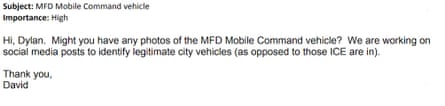
Law enforcement officials have also raised concerns about the operational challenges created by the overlap between local police work and federal immigration enforcement. Police departments have explained that when communities become fearful of any law enforcement presence due to concerns about immigration enforcement, it becomes exponentially more difficult to investigate serious crimes. Witnesses become reluctant to come forward, victims refuse to report offenses, and the fabric of community trust that enables effective policing begins to unravel.
The documents include accounts from police leaders who have attempted to clarify the distinction between their officers and ICE agents to the communities they serve. Many departments have implemented public awareness campaigns, issued statements explaining their role and limitations, and taken steps to distance their operations from federal immigration enforcement. Despite these efforts, the underlying anxiety remains, and trust continues to erode in many jurisdictions.
The timing of these concerns is particularly significant given the broader political context. The Trump administration has prioritized immigration enforcement as a central policy objective, resulting in increased raids, expanded detention operations, and more aggressive pursuit of undocumented immigrants. This intensified federal activity has inevitably created greater visibility and awareness of immigration enforcement among the general public, particularly in communities where deportations have directly affected families and social networks.
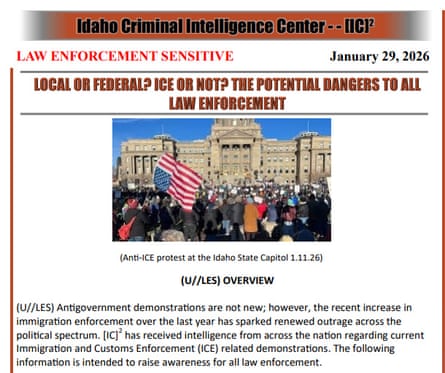
Police departments across various jurisdictions—from major metropolitan areas to smaller municipalities—have reported similar concerns in their internal communications. The consistency of these reports suggests that this is not an isolated phenomenon but rather a widespread challenge affecting police-community relations across the nation. Departments in states with significant immigrant populations have been particularly vocal about the challenges they face.
Some law enforcement agencies have begun implementing specific protocols to address the confusion. These measures include enhanced identification and communication with community residents, coordination with federal authorities to minimize overlap in operations, and public education efforts designed to help residents understand the different roles and responsibilities of local and federal enforcement agencies. However, these measures have had limited effectiveness in addressing the fundamental trust deficit that has developed.
The concerns raised by police leaders also reflect a broader philosophical tension within American law enforcement. Police departments have traditionally seen themselves as community institutions serving all residents, regardless of immigration status. Federal ICE enforcement operations, by contrast, are explicitly designed to identify and remove individuals based on immigration status. This fundamental difference in mission and approach creates inherent conflicts when both operate within the same communities.
Legal experts and civil rights organizations have weighed in on the issue, noting that the confusion between local police and ICE agents represents a genuine threat to constitutional protections and civil liberties. When immigrants become afraid to interact with any law enforcement officer, they lose access to critical services and protections that all residents should have. This chilling effect on community engagement with police has serious implications for public safety across the board.
The Guardian's investigation reveals that these concerns are not speculative but based on documented incidents and specific accounts from law enforcement officials. The internal emails and memos demonstrate that senior police leadership has been actively grappling with the consequences of this confusion and has sought ways to address it. However, many officials believe that a lasting solution requires policy-level intervention and clearer boundaries between local law enforcement and federal immigration enforcement.
As the situation continues to evolve, the challenge of distinguishing between different types of law enforcement officers remains a critical concern for communities across the nation. The widespread worry among police that their officers are being misidentified as ICE agents underscores the deep impact that federal immigration policy has on local law enforcement operations and community trust. This issue represents one of the most significant challenges facing American policing today, with consequences that extend far beyond the immediate concerns of immigration enforcement.


