
Pope Leo Denies Nuclear Weapons Support Amid Trump Clash

Pope Leo responds to Trump's accusations over Iran war stance, reaffirming Church's commitment to peace and rejecting claims of nuclear weapons endorsement.
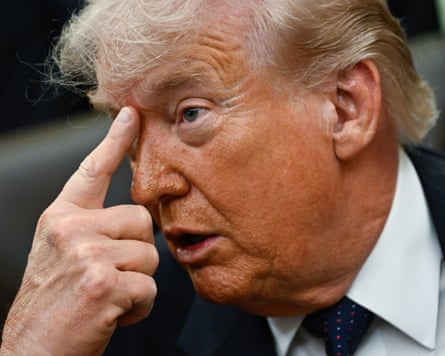
In a direct response to escalating tensions with the Trump administration, Pope Leo has firmly rejected allegations that he endorses nuclear weapons, emphasizing instead the Catholic Church's commitment to peace. The pontiff's statement comes after US President Donald Trump launched a pointed criticism, accusing the spiritual leader of "endangering a lot of Catholics" through his controversial stance on potential military intervention in Iran.
Speaking candidly to members of the international press corps on Tuesday evening following his departure from Castel Gandolfo, the papal retreat situated in the picturesque hills outside Rome, Pope Leo made a compelling case for the Church's peaceful mission. The first American-born pontiff to hold the position stated with conviction: "The mission of the church is to preach the gospel, to preach peace." His words underscored a fundamental philosophical divide between the Vatican's approach to international conflicts and the Trump administration's more interventionist stance.
The exchange represents one of the most significant confrontations between a sitting US president and a reigning pope in recent decades. Trump's public attack on Pope Leo's Iran policy has raised questions about the relationship between Washington and the Vatican, traditionally viewed as close allies on various geopolitical matters. The president's assertion that the pontiff is jeopardizing Catholic interests demonstrates the intensity of disagreement over how to handle the escalating Middle Eastern crisis.

The controversy surrounding Pope Leo's nuclear weapons stance emerged amid broader concerns about military escalation in the Persian Gulf region. Trump has been pushing for a more aggressive approach to Iran, while the Vatican has consistently advocated for diplomatic solutions and expressed deep moral reservations about nuclear armaments. This fundamental disagreement has exposed a rift in what many observers expected would be a harmonious relationship between the American president and the first US-born pope.
According to observers familiar with Vatican operations, Pope Leo's position on Iran war reflects decades of Church doctrine opposing weapons of mass destruction. The pontiff has previously spoken about the moral implications of nuclear warfare and its indiscriminate consequences for civilian populations. His statements align with papal teachings dating back to the Cold War era, when successive popes condemned nuclear proliferation as fundamentally incompatible with Christian ethics.
Trump's accusation that the pope is "endangering a lot of Catholics" appears designed to mobilize Catholic voters in the United States who might be sympathetic to a more hawkish foreign policy. This political strategy underscores the intersection of religious authority and secular power dynamics in contemporary American politics. However, the Pope's response suggests he is unwilling to compromise on Church doctrine regarding peace regardless of political pressure.
The timing of this confrontation is particularly significant given the current Middle East tensions. With military forces positioned throughout the Persian Gulf and international attention focused on potential conflict scenarios, the disagreement between Washington and the Vatican carries real-world implications for how Western powers might respond to regional crises. The Pope's emphasis on truth-telling appears to be a subtle jab at what he may perceive as misrepresentation of his actual positions.
Vatican sources have indicated that Pope Leo has never endorsed nuclear weapons in any context, and they characterize the Trump administration's claims as a misreading of the pontiff's nuanced positions on international relations. The Pope's statements acknowledge the complexity of geopolitical challenges while maintaining unwavering commitment to non-violent solutions. This balancing act reflects the Vatican's role as a neutral player on the world stage, despite its obvious Christian values.
The Pope's rejection of nuclear weapons support represents a continuation of established Catholic teaching that traces back through multiple pontificates. The Church has long held that while nations have the right to self-defense, the use of indiscriminate weapons that threaten civilian populations crosses ethical boundaries. This position has made successive popes critical voices in debates about military spending and weapons development.
Religious analysts suggest that Trump's attack on Pope Leo may reflect frustration with what the administration views as inconsistent American Catholic support for its foreign policy agenda. The Pope's independent stance demonstrates that the Church, while headquartered in the heart of Europe, maintains its own distinct foreign policy interests that don't always align with any particular nation's strategic objectives. This autonomy is central to the Vatican's identity as a sovereign entity.
The broader implications of this conflict extend beyond the immediate Iran question. The confrontation signals that Pope Leo and Trump represent fundamentally different worldviews regarding the use of force, the role of religion in politics, and America's place in global affairs. Such high-profile disagreements can influence how millions of Catholics worldwide perceive their obligations regarding political loyalty versus religious conscience.
In his statement to journalists, Pope Leo emphasized the importance of truthful discourse in public debate. This emphasis on honesty appears to be a direct challenge to what the Vatican may view as mischaracterization of papal positions by the Trump administration. The Pope's insistence on truth-telling reflects traditional Catholic emphasis on moral integrity and intellectual honesty.
Moving forward, observers will watch closely to see whether this public disagreement translates into further deterioration of US-Vatican relations or whether diplomatic channels can resolve the tension. The Pope's careful response suggests he is not seeking escalation but rather clarification of his actual positions. His commitment to peace advocacy remains unwavering despite external political pressure.
The incident underscores the enduring tension between prophetic religious leadership and pragmatic political power. Pope Leo's willingness to challenge the American president on matters of conscience demonstrates that papal authority, while reduced from medieval times, still carries significant moral weight in global affairs. The outcome of this disagreement may shape Church-state relations for years to come.
Source: The Guardian


