
Powell's Final Rate Decision: Key Takeaways

Jerome Powell's last conference as Fed chair addressed US-Israel tensions, inflation trends, legal challenges, and Federal Reserve independence.
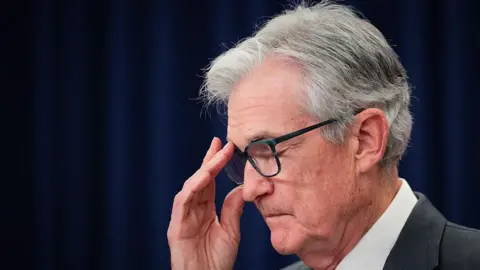
Federal Reserve Chair Jerome Powell delivered what may be his final interest rate decision and press conference, addressing a complex landscape of economic challenges and geopolitical tensions. The meeting covered critical issues ranging from inflation trends to the escalating conflict between the United States and Israel with potential Iranian involvement. Powell's comments during the conference reflected the multifaceted pressures facing the nation's central bank as it continues to navigate monetary policy in uncertain times.
The Federal Reserve's rate decision to hold rates steady came amid mounting concerns about regional stability in the Middle East. Powell took the opportunity to discuss how geopolitical events could potentially impact the American economy, including disruptions to energy markets and global trade flows. His acknowledgment of these international developments signaled the Fed's awareness that monetary policy cannot operate in isolation from broader world events.
Inflation remains a central concern for Powell and the Fed's leadership. Despite progress in recent months, the central bank continues to monitor price pressures closely, particularly in sectors most affected by supply chain disruptions and energy costs. Powell reiterated the Fed's commitment to achieving its two percent inflation target while maintaining employment levels, a balancing act that requires careful calibration of interest rates.
One of the most notable aspects of Powell's final conference involved his response to what he characterized as legal attacks on the Federal Reserve's independence. Powell defended the institution's autonomy in setting monetary policy, emphasizing that political interference could undermine the Fed's credibility and effectiveness. He stressed that the central bank's ability to make decisions based on economic data rather than political pressure is essential for long-term economic stability.
The question of Federal Reserve independence has become increasingly contentious in recent years, with various political figures questioning the Fed's decisions and authority. Powell's remarks underscored the historical importance of maintaining the Fed's insulated position within the government structure. He pointed to international examples where central banks faced political pressure, resulting in destabilized currencies and volatile inflation, cautioning against repeating such mistakes domestically.
Powell's discussion of the US-Israel conflict and potential Iranian involvement highlighted the interconnected nature of global economics and geopolitics. Energy market stability, which is crucial for maintaining inflation control, could be disrupted by escalation in the Middle East. The Fed chair acknowledged that while the central bank cannot directly influence foreign policy, it must remain vigilant about potential economic spillover effects from international tensions.
The rate decision announcement reflected the Fed's assessment that current policy remains appropriately calibrated for current economic conditions. Powell explained the rationale behind maintaining the status quo, citing the need for more data on inflation trends before considering future adjustments. This cautious approach represents the Fed's determination to avoid premature policy shifts that could reignite inflation concerns.
Throughout his tenure as Fed chair, Powell has consistently advocated for data-dependent monetary policy. His final conference reaffirmed this principle, as he presented the economic indicators informing the Fed's decision-making process. Employment figures, inflation metrics, and wage growth data all featured prominently in his explanation of the rate decision.
The topic of inflation control dominated much of the discussion, with Powell acknowledging both progress and persistent challenges. Core inflation, which excludes volatile food and energy prices, continues to exceed the Fed's target, though it has shown improvement compared to previous years. Powell emphasized that the Fed would remain patient but vigilant in pursuing its price stability mandate.
Powell's remarks on legal challenges to the Fed's authority represented a significant moment in the press conference. He detailed various attempts to constrain the Fed's regulatory and policy-making powers, characterizing them as threats to institutional independence. Powell argued that such challenges, whether through legislation or litigation, could fundamentally undermine the Fed's ability to function effectively during economic crises.
The geopolitical component of Powell's final conference cannot be overstated. As tensions between the United States, Israel, and Iran escalated, questions arose about potential economic implications. Powell addressed these concerns directly, explaining how the Fed monitors international developments and their potential transmission mechanisms to the American economy through energy prices, financial markets, and trade patterns.
Looking at employment trends, Powell noted the resilience of the American labor market despite tightening monetary policy. Unemployment remains relatively low, though there are signs of moderation in job creation. The Fed chair stressed that maintaining maximum employment remains a core objective, requiring ongoing assessment of labor market conditions.
Powell's perspective on the broader economic outlook emphasized cautious optimism tempered by recognition of uncertainties. The American economy continues to demonstrate strength despite challenges from higher interest rates, inflation pressures, and international tensions. However, Powell warned that the path forward remains uncertain and will require continued careful monitoring and calibration of policy.
The question of monetary policy effectiveness in the face of geopolitical shocks received particular attention during the conference. Powell explained how the Fed adjusts its thinking when external shocks occur, such as supply disruptions from regional conflicts. The challenge lies in distinguishing between temporary disruptions and persistent structural changes requiring sustained policy adjustments.
As Powell prepares to transition leadership of the Federal Reserve, his final rate decision conference served as a comprehensive statement of the institution's current thinking. The address covered economic fundamentals, institutional independence, international context, and forward guidance for stakeholders. Powell's emphasis on maintaining Fed independence while remaining responsive to economic data sets the tone for continuity in American monetary policy.
The takeaways from this historic press conference underscore the complexity of modern central banking. Interest rate policy cannot be made in a vacuum but must consider global developments, political pressures, and long-term institutional credibility. Powell's final message emphasized the importance of allowing the Fed to operate according to its statutory mandate, free from political interference, to ensure the best outcomes for the American economy and its citizens.
Moving forward, the Federal Reserve faces continued challenges from inflation, employment fluctuations, and geopolitical uncertainties. Powell's final conference established clear principles for how the institution will navigate these challenges: through data-dependent decision-making, steadfast commitment to independence, and careful monitoring of both domestic and international economic developments. His leadership has positioned the Fed to continue fulfilling its critical role in maintaining price stability and maximum employment for the American economy.
Source: BBC News

