
Powys Wildfires Continue: Fifth Day of Intense Firefighting Efforts

Mid and West Wales firefighters battle persistent wildfires in Elan valley for fifth consecutive day. Public urged to avoid area as crews fight to protect biodiverse landscape.
The Elan valley wildfires in Powys, Wales, continue to pose significant challenges for emergency responders as firefighting efforts stretch into their fifth consecutive day. Since the fires first erupted on Sunday, the Mid and West Wales fire and rescue service has mobilized extensive resources to combat the spreading flames across this picturesque region of mid-Wales. The ongoing battle against these wildfires represents one of the most challenging operations the service has undertaken in recent months, with teams working around the clock to prevent further devastation.
The scenic Elan valley, renowned for its natural beauty and ecological significance, has become the epicenter of this environmental crisis. Firefighters continue to deploy specialized equipment and personnel across the challenging terrain, navigating difficult topography while attempting to contain the flames. The complexity of the operation is compounded by the valley's landscape, which includes steep hillsides and remote areas that are difficult to access, making conventional firefighting methods particularly challenging in this context.
Authorities have issued urgent warnings for the public to remain away from the affected areas to allow emergency crews to work safely and effectively. The closure of access routes and designation of exclusion zones has been put in place to protect both residents and visitors from potential danger. These precautions are essential as firefighting operations continue to intensify across the valley, with crews rotating in shifts to maintain operational capacity and firefighter safety.
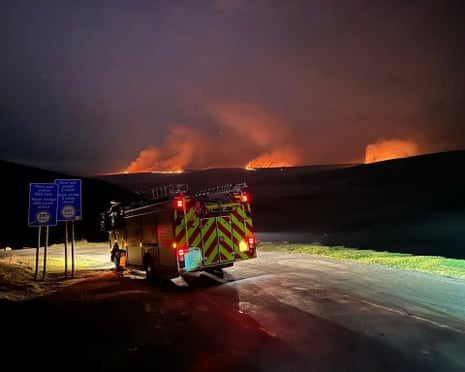
Environmental concerns loom large as the fires continue to ravage the landscape. The Elan valley contains exceptional biodiversity, with 80% of the area designated as sites of special scientific interest, making it a location of considerable ecological importance. This designation reflects the area's status as a habitat for numerous plant and animal species, many of which may be vulnerable to the destructive impact of large-scale wildfires. The potential loss of flora and fauna in this protected region has raised alarm among conservation groups and environmental organizations.
The full extent of damage to the biodiverse ecosystem remains unclear at this stage of the emergency response. Fire investigators and environmental specialists are beginning preliminary assessments, though active firefighting efforts currently take priority over comprehensive damage evaluation. The combination of high temperatures, challenging access routes, and the rapid spread of flames across dry vegetation has created a particularly volatile situation that continues to demand intensive resource allocation.
The Mid and West Wales fire and rescue service has coordinated with regional emergency services to ensure adequate staffing and equipment deployment. Additional personnel have been called in from neighboring districts to bolster firefighting capacity, demonstrating the scale of the challenge facing responders. Mutual aid agreements between different fire services have been activated to ensure that resources are optimized across the affected region and surrounding areas.
Weather conditions have played a significant role in the progression of the Powys wildfires, with dry weather patterns and variable winds making it difficult to predict fire behavior. Meteorological forecasts are being carefully monitored by incident commanders to anticipate how conditions might affect flame spread and smoke dispersion. Wind direction changes can quickly alter the tactical situation on the ground, requiring firefighting teams to adapt their strategies and repositioning in real-time.
The economic and social impact of the fire extends beyond the immediate environmental concerns. Local communities in and around the Elan valley have been disrupted by the emergency response, with some residents evacuated or advised to remain vigilant. Local businesses dependent on tourism and outdoor recreation have experienced interruptions as access restrictions remain in place. The disruption to normal activity underscores the broad-ranging consequences of large-scale wildfire incidents in populated regions.
Historical context provides some perspective on these events. Wales has experienced notable wildfire seasons in previous years, with climate change and shifting weather patterns potentially contributing to increased fire risk. The Elan valley, despite its environmental protection status, is not immune to these broader trends affecting fire frequency and intensity across the United Kingdom. Experts have noted that vegetation management and landscape planning may need to evolve to address emerging wildfire challenges in sensitive ecosystems.
The firefighting response has required specialized techniques suited to the terrain and environmental sensitivities of the location. Ground crews, supported by water sources available in the valley, work in coordination with aerial reconnaissance teams to monitor fire progression. The presence of reservoirs in the Elan valley has provided some advantage in terms of water availability for firefighting operations, though transporting and distributing water across difficult terrain remains operationally complex.
Official statements from the fire service emphasize the critical importance of public cooperation and adherence to safety warnings. The presence of unauthorized individuals in the affected area could compromise emergency operations, impede firefighter movement, or place civilians at risk from rapidly changing fire conditions. Clear communication from authorities regarding access restrictions and safety protocols remains essential throughout the duration of this extended emergency response.
As the fifth day of firefighting efforts continues, the determination of emergency responders remains unwavering. The commitment to protecting both human life and the ecological integrity of the Elan valley represents a complex challenge that demands sustained effort and resources. Updates on the situation are expected to be provided regularly by the Mid and West Wales fire and rescue service as the situation develops and firefighting teams work toward bringing the wildfires under control and fully extinguishing all active flames across the affected region.
Source: The Guardian


