
Pret Boss Reveals What Customers Really Want

Pano Christou shares insights on consumer behavior, value perception, and workplace trends shaping the food retail industry today.
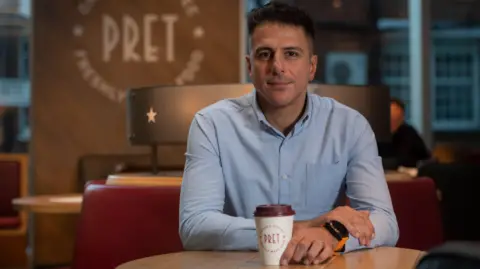
Pano Christou, the visionary leader of Pret A Manger, has offered remarkable insights into modern consumer behavior and workplace dynamics that are reshaping the food retail industry. In a candid discussion about market trends and customer preferences, Christou revealed that the perception of value extends far beyond simply offering the lowest prices. His observations paint a nuanced picture of contemporary consumers who are willing to pay premium prices when they perceive genuine quality and worthiness in their purchases.
The food retail sector has undergone significant transformation over the past decade, driven by changing work patterns and evolving customer expectations. Christou's leadership at Pret has positioned him at the forefront of understanding these shifts, giving him a unique vantage point from which to observe purchasing habits and workplace trends. His perspective challenges conventional retail wisdom that assumes price sensitivity is the primary driver of consumer decisions across all demographics and market segments.
One of the most striking observations Christou has made relates to bread consumption patterns among Pret's customer base. The data reveals a notable decline in bread-based product sales, suggesting a shift in dietary preferences and lunch habits. This trend reflects broader changes in how professionals structure their eating patterns, particularly among those working in urban centers where Pret maintains a significant presence. The reduction in bread consumption isn't necessarily indicative of declining restaurant traffic, but rather a reshuffling of product preferences within the customer's basket.
The emergence of work-from-home arrangements has fundamentally altered commuting patterns and lunch-hour behaviors in major cities. As companies have embraced flexible working models, including dedicated work-from-home Fridays, the foot traffic in traditional business districts has become less predictable. Christou's observations suggest that these scheduling changes have had measurable impacts on daily sales patterns and product demand cycles. Understanding these fluctuations has become crucial for retailers operating in high-density commercial areas.
Christou's insights into customer value perception demonstrate sophisticated understanding of modern consumer psychology. Rather than viewing customers as purely price-driven entities, he recognizes that contemporary shoppers evaluate purchases through a multifaceted lens. This includes considerations of product quality, brand reputation, convenience, health attributes, ethical sourcing, and overall experience. When customers perceive strong value in these dimensions, they demonstrate considerable willingness to exceed their baseline spending expectations, even in economically challenging periods.
The emphasis on value rather than cheapness reflects a maturation in retail markets where undifferentiated discount strategies no longer guarantee competitive advantage. Premium positioning has become increasingly viable for brands that can effectively communicate their unique value propositions and deliver consistent quality experiences. Pret's own market positioning aligns closely with this philosophy, emphasizing freshly prepared products and quality ingredients rather than competing primarily on price.

The workplace trends that Christou references carry significant implications for food service businesses that have historically relied on predictable daily commuting patterns. As hybrid work models become standard across professional sectors, retailers must adapt their operational strategies to accommodate more variable demand. This might involve adjusting inventory management, modifying promotional calendars to account for lower Friday traffic, or developing new product offerings that appeal to at-home workers.
Understanding these macro trends provides essential context for retail business strategy in the contemporary marketplace. Companies that merely react to declining foot traffic risk missing the opportunity to fundamentally reimagine their value propositions and customer engagement approaches. Christou's perspective suggests that successful retailers will be those who recognize changing patterns not as threats but as signals for strategic innovation and evolution.
The intersection of workplace flexibility and consumer behavior creates both challenges and opportunities for food retail operators. Companies must now consider how their products and services appeal to professionals during different work scenarios—whether in traditional office environments, hybrid arrangements, or fully remote settings. This requires deeper consumer insight and more sophisticated market segmentation than traditional retail approaches.
Christou's leadership philosophy appears grounded in the recognition that sustainable business growth depends on genuinely understanding and serving customer needs rather than simply chasing the lowest cost positioning. This approach requires continuous investment in market research, product development, and customer experience optimization. It also demands organizational agility—the capacity to respond quickly to emerging trends while maintaining consistency in brand promise and quality standards.
The broader retail industry can benefit from Christou's articulated insights about the disconnect between price competition and true customer value. As economic pressures mount across consumer segments, the temptation to compete primarily on cost intensifies. However, brands that successfully maintain premium value positioning often outperform those that succumb to discount-driven competition. This requires confidence in one's product quality and clear communication of the benefits that justify higher price points.
Looking ahead, food retail businesses must grapple with several interconnected trends that Christou's observations illuminate. The normalization of flexible work arrangements appears irreversible, suggesting permanent changes to urban commuting patterns and weekday foot traffic distributions. Consumer preferences continue to evolve in response to health consciousness, sustainability concerns, and experiential value. Retailers that successfully integrate these insights into their strategic planning will be better positioned to thrive in an increasingly competitive and fragmented market landscape.
Consumer expectations have fundamentally shifted from a generation ago, when the primary retail competition centered on selection and availability. Today's sophisticated consumers evaluate their purchases through an increasingly complex decision matrix that incorporates emotional, environmental, health, and ethical considerations alongside traditional price-value relationships. Pret's continued success in premium-priced food retail demonstrates the viability of this evolved positioning.
The insights shared by Christou serve as a valuable reminder that successful retail leadership requires more than operational efficiency—it demands deep empathy for customer circumstances, willingness to challenge conventional assumptions, and courage to maintain strategic direction even when short-term pressures suggest otherwise. His observations about bread consumption patterns and work-from-home impacts are merely symptoms of deeper transformations in how professionals live, work, and consume. By understanding these foundational shifts, retailers can position themselves not merely to survive but to flourish in tomorrow's marketplace.
Source: BBC News


