
Progressive Christians Challenge Trump's Religious Authority

Faith leaders and progressive Christians organize against Trump administration policies, reclaiming their religious identity. Discover how they're redefining Christianity.
The Trump administration has made persistent efforts to align itself with Christian values and messaging, creating a narrative that positions the current government as champion of religious principles. Defense Secretary Pete Hegseth has been particularly vocal in invoking religious language, explicitly referencing warfare conducted "in the mighty and powerful name of Jesus Christ" during official statements and policy announcements. This rhetorical strategy has extended beyond traditional political discourse, with Trump himself engaging in controversial religious imagery that has sparked widespread debate among faith communities.
Most notably, Trump recently posted an artificial intelligence-generated image depicting himself in a Christ-like figure, a move that generated significant backlash from religious scholars and community leaders who viewed the imagery as sacrilegious and inappropriate. When questioned about the provocative image, Trump claimed he initially mistook it for a depiction of a doctor, a explanation that critics argue fails to address the broader pattern of religious appropriation evident throughout his administration's messaging strategy. Additionally, Trump has made public displays of engaging with scripture, including a widely-publicized moment where he streamed himself reading passages from the Bible to his supporters and media outlets.
However, this attempt to monopolize Christian identity and values has encountered significant resistance from progressive Christian leaders and faith-based organizations across the country. These religious figures, representing diverse denominational backgrounds including mainline Protestants, evangelical progressives, and socially conscious Catholics, argue that the Trump administration's policies fundamentally contradict core Christian teachings about compassion, justice, and human dignity. They contend that the government's approach to immigration enforcement, military interventionism, and social welfare directly opposes the message of Jesus as understood through careful biblical interpretation and Christian theological tradition.

Throughout the nation, faith-based organizing has intensified as religious communities mobilize against specific Trump administration policies. Anti-war Christian coalitions have formed to oppose military expansion and intervention abroad, pointing to biblical passages emphasizing peace and reconciliation. Simultaneously, Catholic and Protestant organizations focused on immigration justice have launched coordinated campaigns challenging Immigration and Customs Enforcement (ICE) practices they characterize as inhumane and contradictory to Christian hospitality principles. These movements represent a deliberate reclamation of religious authority by faith leaders who believe their theological perspectives have been systematically marginalized in contemporary political discourse.
The progressive Christian movement has become increasingly visible and vocal in recent months, with religious leaders publishing open letters, organizing protests, and engaging in civil disobedience to demonstrate their opposition to policies they view as fundamentally unchristian. These leaders argue that the Trump administration's rhetoric appropriates Christian language while implementing policies that cause measurable harm to vulnerable populations including immigrants, refugees, and the economically marginalized. Their activism draws on deep theological wells, citing Jesus's teachings about caring for the poor, welcoming strangers, and refusing to participate in violence as foundational to authentic Christian witness.
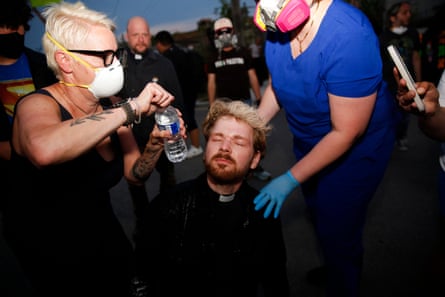
A notable tension has emerged between the Trump administration's religious rhetoric and the actual policies it pursues, creating a significant credibility gap that progressive faith leaders have worked to expose and critique. Many observers note that while administration officials invoke Christian authority for military actions and restrictive immigration policies, they simultaneously dismiss or downplay the concerns of established Christian denominations and religious organizations that have expressed moral opposition to these same policies. This disconnect has prompted unprecedented levels of coordination among previously fragmented religious groups, who now recognize common cause in defending what they understand as authentic Christian principles.
The influence of Defense Secretary Pete Hegseth in promoting a militaristic interpretation of Christianity has particularly concerned progressive religious scholars and leaders. Hegseth's public statements equating Christian faith with military might and aggressive foreign policy represent what critics characterize as a dangerous distortion of Christian ethics. Progressive theologians point out that such rhetoric contradicts centuries of Christian teaching emphasizing nonviolence, peacemaking, and the sanctity of human life regardless of national borders or political affiliation. This theological dispute has become increasingly central to broader debates about the future direction of American Christianity and religious influence in political life.
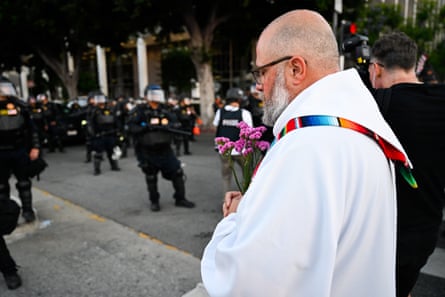
Faith-based organizing against Trump administration policies has demonstrated remarkable effectiveness in mobilizing constituencies and drawing media attention to religious critiques of government action. Progressive Christian organizations have successfully leveraged their theological authority to challenge the administration's religious legitimacy, arguing that their interpretation of Christian teaching represents the true voice of faith in America. These efforts include launching social media campaigns, organizing community forums, creating educational resources about Christian teaching on social justice, and participating in political advocacy aimed at shifting policy direction on issues from immigration to military spending.
The broader debate about Christianity and politics has intensified as progressive Christian leaders increasingly insist that their religious perspective deserves equal consideration in public discourse. They argue that establishment media and political commentators have often privileged conservative evangelical interpretations of Christianity while marginalizing progressive faith perspectives, creating a false impression that Trump's policies enjoy widespread Christian support. By organizing visibly and speaking authoritatively about their religious convictions, progressive Christian leaders are working to correct this distortion and reclaim Christian identity from what they view as political hijacking.
Recent developments have also seen Pope Francis, the leader of the global Catholic Church, making statements that progressive Christians interpret as subtle but significant rebukes of the Trump administration's policies and rhetoric. While the Pope has not directly condemned Trump by name, his statements on immigration, military intervention, and economic justice stand in sharp contrast to the policies pursued by the Trump administration. Progressive Catholics have seized upon these papal statements as validation of their own positions, using them as additional authority in their arguments that the Trump administration's policies contradict authentic Christian and Catholic teaching.
The emergence of strong progressive Christian opposition to Trump administration policies represents a significant development in contemporary American religion and politics. These faith leaders and their organizations are not merely offering isolated criticism; rather, they are engaged in systematic theological critique and counter-narrative development designed to reclaim Christian authority and redefine the public conversation about what Christianity teaches regarding justice, compassion, and human rights. Their efforts suggest that the religious landscape in America is considerably more diverse and ideologically complex than simplified narratives often acknowledge, with substantial numbers of Christians actively organizing around faith-based opposition to current government policies.
As the debate continues, progressive Christian voices continue to assert that authentic Christianity calls followers toward justice, peace, and compassionate treatment of vulnerable populations. These faith leaders contend that their interpretation of Christian teaching, rooted in careful biblical scholarship and centuries of theological tradition, represents the true heart of the Christian message. By organizing collectively and speaking boldly about their religious convictions, they aim to ensure that Christian perspectives critical of government overreach and harmful policies receive proper attention in the ongoing national conversation about faith, politics, and public policy.


