
Pussy Riot Stages Fiery Protest at Venice Biennale

Activist group Pussy Riot forces Russian pavilion closure during Venice Biennale preview, protesting Russia's arts festival participation with flares and punk music.
Pussy Riot, the internationally recognized activist collective known for their provocative performances and political statements, orchestrated a dramatic demonstration at one of the world's most prestigious art exhibitions. The Venice Biennale, a biennial contemporary art festival held in Venice, Italy, became the stage for their latest act of artistic protest when the group targeted the Russian pavilion on the second day of the preview period. The protest resulted in the temporary closure of the pavilion and sparked widespread discussion about artistic freedom, political expression, and the role of major art institutions in addressing global conflicts.
Members of the activist group arrived at the Russian pavilion dressed in their signature pink balaclavas, the distinctive headwear that has become synonymous with their brand of political activism. The protesters gathered outside the pavilion entrance where they staged an intense demonstration featuring pyrotechnics and performance art elements. As they played punk music at high volume, they ignited bright pink, blue, and yellow flares while chanting powerful slogans aimed at condemning Russia's continued participation in international cultural institutions.
The slogans shouted during the demonstration were deliberately provocative and designed to draw attention to the humanitarian costs of conflict. Among their chants was the particularly striking phrase "Blood is Russia's Art," a reference to accusations of war crimes and human rights violations. Another powerful message that echoed through the Venice venue was "Curated by Putin, dead bodies included," directly linking the Russian government and its leadership to the ongoing humanitarian crisis. These statements reflected the group's broader criticism of Russia's international actions and their position that cultural institutions should not provide platforms to nations engaged in what they view as unjust military aggression.

The Venice Biennale protest marked another chapter in Pussy Riot's long history of using art, music, and public performance as vehicles for social and political commentary. The group, which emerged from Russia in the early 2010s, has consistently employed unconventional tactics to challenge governmental authority and highlight issues of human rights and freedom of expression. Their methods often combine elements of punk rock, performance art, and street activism, creating visually striking and emotionally resonant moments that capture media attention and public imagination.
The Russian pavilion's temporary closure during the preview period underscored the seriousness of the protest and the significant security concerns it raised for festival organizers. Preview days at major art biennales are typically invitation-only events attended by curators, critics, collectors, and other art world professionals. The disruption during this exclusive period meant that the demonstration had an outsized impact on influential figures within the contemporary art establishment. Festival officials were forced to implement heightened security measures and make immediate decisions about managing ongoing access to the Russian pavilion during the public exhibition period.
The inclusion of Russia in the Venice Biennale had already become a contentious issue within the international art community, with many institutions and artists calling for the country's exclusion from major cultural events. The Venice Biennale 2024 decision to maintain the Russian pavilion's participation had drawn criticism from various quarters, including human rights organizations and artists from countries affected by Russian military actions. Some in the art world argued that continuing to provide platforms for Russian cultural participation normalized a government they viewed as engaged in aggressive territorial expansion and violations of international law.
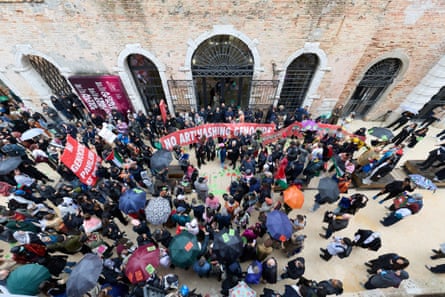
Pussy Riot's intervention represented a direct challenge to the Biennale's institutional stance on Russia's participation. Rather than relying solely on petitions, statements, or official channels, the group chose a method that guaranteed visibility and created an immediate, undeniable impact on the festival's operations. This approach reflected their philosophy that art and activism are inseparable, and that conventional modes of protest are insufficient when addressing matters of grave human rights concern. The group has long rejected polite forms of dissent in favor of provocative, disruptive actions designed to shock audiences and force uncomfortable conversations.
The protest itself functioned as a form of performance art, transforming a political statement into a sensory experience. The combination of visual elements—the brightly colored flares and distinctive pink balaclavas—created striking imagery that was immediately recognizable and highly photogenic. The use of punk music added an auditory dimension that complemented the group's messaging and reinforced their historical connection to punk rock as a vehicle for social resistance. These artistic choices ensured that the protest would generate significant media coverage and extend its impact far beyond those physically present at the Venice Biennale.
The incident raises broader questions about the role of major cultural institutions in responding to geopolitical tensions and human rights concerns. Biennale organizers face complex decisions about balancing artistic freedom and international representation with ethical considerations about which governments and nations receive platforms for cultural expression. The Venice Biennale's traditional position of openness to all nations has been tested by contemporary geopolitical realities. Festival leaders must navigate between their commitment to artistic pluralism and growing pressure from artists, activists, and the public to take moral and political stances on issues of international significance.
Pussy Riot's continued activism around major cultural events demonstrates how contemporary artists and activists leverage high-profile platforms to advance political causes. The group has previously staged protests and demonstrations at international venues, recognizing that major cultural events attract global media attention and can serve as amplification devices for their message. By targeting the Venice Biennale, one of the most prestigious and widely covered art exhibitions in the world, Pussy Riot ensured that their protest regarding Russian participation would reach a massive international audience and stimulate conversation among art professionals, journalists, and cultural commentators.
The temporary closure of the Russian pavilion, while brief, represented a symbolic victory for the protesters and highlighted the power of direct action in disrupting business as usual. The incident captured headlines worldwide and forced festival organizers, media outlets, and art world figures to address questions they might have preferred to leave unexamined. Whether the protest ultimately influences the Venice Biennale's future policies regarding national pavilions and geopolitical considerations remains to be seen, but the demonstration clearly demonstrated that activism and artistic protest remain vital tools for challenging institutional decisions and drawing attention to issues of global importance.
Source: The Guardian


