
Ramaswamy Secures GOP Nod for Ohio Governor

Vivek Ramaswamy wins Republican nomination for Ohio governor after campaign criticizing pandemic response. Learn about his path to victory.
Vivek Ramaswamy has successfully secured the Republican nomination for Ohio governor, marking a significant milestone in his political career and setting the stage for a competitive general election battle. The pharmaceutical entrepreneur and political newcomer emerged victorious from a crowded field of candidates vying for the GOP's endorsement, demonstrating considerable support among Ohio's Republican base. His nomination represents a notable shift in the state's political landscape as Republicans prepare to challenge the incumbent Democratic leadership in one of America's most important swing states.
Throughout his campaign, Ramaswamy made the state's handling of the Covid-19 pandemic a central pillar of his political messaging and platform. He repeatedly attacked the Democratic nominee and current administration's approach to pandemic management, arguing that their policies caused unnecessary economic hardship and infringed upon personal freedoms. The entrepreneur positioned himself as an alternative voice, contending that Ohio residents had suffered under policies he characterized as overly restrictive and economically damaging to the state's communities and small businesses.
Ramaswamy's critique of the pandemic response resonated with many Republican voters who felt frustrated by lockdowns, business closures, and vaccine mandates that were implemented during the height of the health crisis. His messaging focused on the balance between public health and economic prosperity, arguing that the state's Democratic leadership had failed to adequately weigh both considerations. By highlighting these concerns, he effectively mobilized a significant portion of the Republican electorate who were searching for a candidate willing to forcefully challenge the incumbent administration's record.
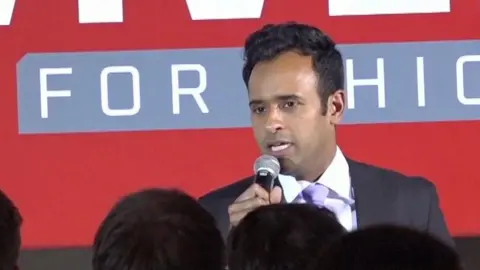
The path to the GOP nomination was highly competitive, with multiple candidates presenting their visions for Ohio's future and leadership. Ramaswamy distinguished himself through aggressive campaigning and media presence, effectively communicating his message about pandemic mismanagement across television, digital platforms, and at grassroots campaign events throughout Ohio. His background as a successful businessman and pharmaceutical industry executive provided him with credibility on economic matters, which became a major selling point to Republican voters concerned about the state's financial trajectory.
In securing the nomination, Ramaswamy benefited from strong support in rural and suburban areas of Ohio where pandemic-related frustrations ran particularly deep. His anti-establishment messaging and willingness to directly challenge the Democratic incumbent's record appealed to voters seeking a fresh political voice. The nomination victory also demonstrated that Ohio Republicans were looking for a candidate who could energetically prosecute the case against the current administration while simultaneously articulating a positive vision for the state's future under different leadership.
As the Republican nominee, Ramaswamy now faces the formidable challenge of competing in a general election in Ohio, a state that has become increasingly competitive in recent election cycles. The former Democrat's pandemic-focused campaign messaging will likely continue to feature prominently in his general election strategy, as polling suggests these issues remain significant concerns for independent and swing voters. His victory in the primary demonstrates that his anti-pandemic critique struck a chord with Republican voters, but general election voters may have different priorities and concerns that will shape the broader campaign narrative.
The nomination also reflects broader national Republican Party trends, with multiple candidates across the country emphasizing criticism of pandemic policies and positioning themselves as opponents of government overreach during the Covid-19 crisis. This messaging strategy has proven effective in Republican primary contests nationwide, indicating deep voter frustration across multiple states with how officials managed the pandemic response. Ramaswamy's successful deployment of this strategy in Ohio suggests that pandemic-related political grievances remain potent motivating factors in Republican politics heading into the general election.
Looking ahead, Ramaswamy's campaign will need to expand beyond pandemic messaging to address other critical issues affecting Ohio voters, including economic growth, job creation, education, and public safety. While the pandemic response criticism helped him win the primary, general election voters typically care about a broader range of policy issues and governing competence. The nominee will need to demonstrate that he possesses the experience and depth of knowledge required to effectively govern one of America's largest and most economically significant states.
The Ohio gubernatorial race has drawn significant national attention, as the state's outcome could have implications for broader Republican and Democratic strategies heading into subsequent election cycles. Ramaswamy's nomination represents the Republican Party's choice to pursue a confrontational approach to the outgoing Democratic administration's record, particularly on pandemic management. His campaign will test whether anti-incumbent messaging centered on pandemic policies can prove decisive in a general election where voters will evaluate candidates on multiple dimensions of leadership and policy vision.
The pharmaceutical entrepreneur's path to nomination was notable for its emphasis on direct confrontation with Democratic leadership, a strategy that appears to have resonated strongly with Ohio's Republican base. His aggressive campaign style and willingness to make bold claims about mismanagement distinguished him from other candidates in the field who pursued more traditional political approaches. The success of this strategy in the primary will likely influence how he positions himself throughout the general election campaign.
Ramaswamy's victory also underscores the importance of economic concerns and government accountability in shaping contemporary Republican politics at the state level. Ohio voters, like Americans across the country, have expressed strong views about how their elected officials handled the unprecedented challenges posed by the pandemic. The Republican nominee's ability to effectively articulate these grievances and present himself as a solution to the problems he identified will be crucial in determining his competitiveness in the general election against the Democratic challenger and other potential opponents.
Source: BBC News


