
Rapid Snowmelt Shocks Experts Across Western US

Unprecedented spring warmth has caused critical snowpack levels to plummet to record lows, leaving key regions facing dire water shortages in the months ahead.
Experts across the American West are sounding the alarm after this year's historically low snowpack levels, a direct result of the brutal spring heat wave that has swept through the region. Snow surveys conducted in recent weeks have painted a grim picture, with critical snowpack measurements reaching unprecedented lows not seen in decades of recorded data.
According to leading climate scientists, the combination of a warm winter and searing March temperatures has accelerated the rate of snowmelt to an alarming degree, leaving key river basins in uncharted territory as the dry summer months approach. Even if additional snowfall were to materialize in the coming weeks, experts say it would likely be too little, too late to replenish the severely depleted snowpack.
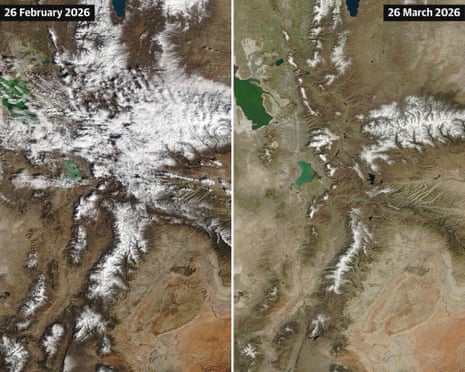
Nowhere is the crisis more apparent than in California, where the Sierra Nevada snowpack - a critical source of water for the entire state - currently stands at a mere 30% of the annual average. "We're on a whole other level here," said Sarah Thompson, a hydrologist with the California Department of Water Resources. "I've never seen anything like the rate of melt-off we've experienced over the past month."
The implications of this snowpack collapse are dire, with severe water shortages looming for agriculture, municipalities, and ecosystems across the Western US. Reservoir levels have already begun to plummet, and experts warn that many rivers and streams could dry up entirely by midsummer if the current trend continues.
"This is truly uncharted territory," said climatologist Dr. Emily Chen. "We're looking at a scenario where key water sources could be depleted to critical levels within a matter of weeks. The cascading effects on the region's economy, environment, and way of life will be devastating if we don't see a dramatic shift in the weather patterns very soon."
While the immediate focus is on preparing for the impending drought, scientists are also underscoring the broader implications of this snowpack crisis. Climate change is undoubtedly a major driver, with rising temperatures altering historical precipitation and melt patterns across the West. Addressing this systemic issue will require comprehensive, long-term solutions that extend far beyond emergency drought response.
For now, all eyes remain fixed on the sky, with any hope resting on the possibility of a late-season snow event that could help stave off the worst-case scenarios. But as the days grow warmer, that hope continues to fade, leaving the American West bracing for an exceptionally challenging - and potentially calamitous - summer ahead.
Source: The Guardian


