
Record-Breaking Solar Drone Lost at Sea After Historic Flight

Solar-powered aircraft with 236-foot wingspan crashes after eight-day record flight. Skydweller Aero's modified Solar Impulse 2 lost during US military test mission.
A groundbreaking solar-powered drone has been lost in the ocean following an extraordinary eight-day flight that took place between late April and early May, marking a significant setback for renewable energy aviation research. The tragic incident also represents the end of an era for the pioneering Solar Impulse 2 aircraft, which had previously achieved remarkable milestones by completing the world's first solar-powered crossings of both the Atlantic and Pacific oceans before being repurposed as an uncrewed experimental platform for advanced US military operations.
The aircraft, constructed from lightweight carbon-fiber materials, was capable of maintaining extended flights powered entirely by renewable solar energy and sophisticated battery systems, thanks to its extraordinarily large 236-foot (72-meter) wingspan—a dimension that rivals the massive wings of a Boeing 747 jumbo jet. This enormous wingspan was meticulously covered with more than 17,000 individual solar cells, creating a highly efficient power generation system that allowed the aircraft to sustain flight for extended periods without conventional fuel sources. The engineering achievement represented years of research and development in sustainable aviation technology.
Skydweller Aero, the company responsible for acquiring and extensively modifying the original Solar Impulse 2 design, transformed the aircraft into an advanced test platform specifically engineered for perpetual uncrewed flight capabilities. The enhanced version was designed with the capacity to carry up to 800 pounds (363 kilograms) of specialized payload equipment, making it suitable for a wide range of mission profiles and scientific research applications. This substantial payload capacity distinguished it from earlier unmanned aircraft designs and expanded its potential operational versatility.
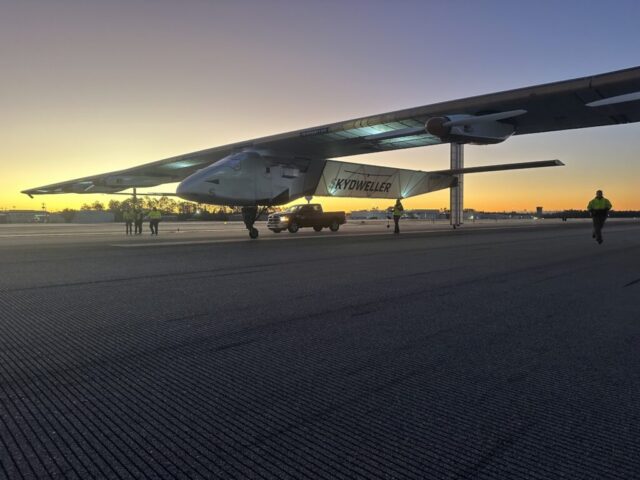
The company had been actively conducting comprehensive test flights to evaluate the aircraft's performance in maritime patrol mission scenarios in partnership with the United States military. Skydweller Aero had secured multiple defense contracts, including significant agreements with both the Navy and Air Force branches of the military, demonstrating strong confidence in the technology's potential for national security applications. These partnerships reflected the military's growing interest in long-endurance, fuel-free surveillance and reconnaissance platforms.
The eight-day flight duration achieved during this mission represented a remarkable demonstration of the aircraft's extended flight capabilities and the effectiveness of solar power as a viable energy source for long-duration aviation operations. The ability to remain airborne for such an extended period without conventional fuel consumption highlighted the tremendous potential for this technology to revolutionize military reconnaissance, environmental monitoring, and scientific research missions. Such endurance capabilities would typically require multiple aircraft operating in shifts using traditional fuel-based systems.
The loss of the aircraft at sea raises important questions about the reliability and recovery systems necessary for advanced unmanned platforms operating over open water environments. While the crash represents a setback for the program, the data collected during the eight-day flight provides valuable insights into solar-powered aircraft performance, battery management, structural integrity, and control systems operating under sustained flight conditions. This information will likely prove invaluable for future development of similar technologies.
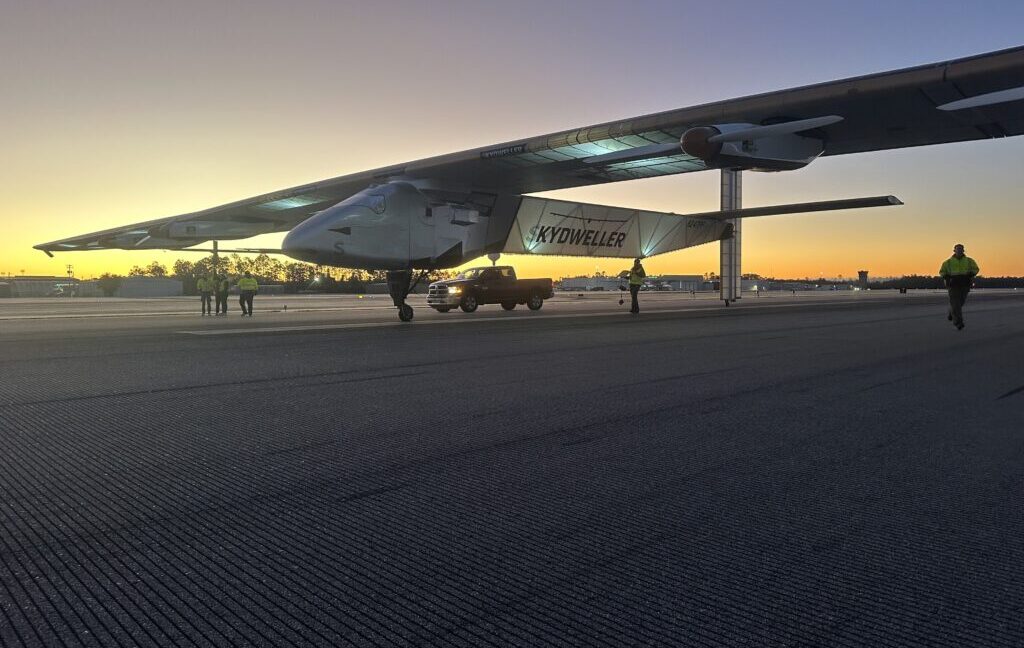
The original Solar Impulse 2 aircraft, before its acquisition by Skydweller Aero, had completed historic polar flights and ocean crossings that captured global attention and demonstrated the feasibility of long-distance solar-powered aviation. The aircraft had served as both an inspiration and a proof-of-concept for the broader aviation and renewable energy communities, proving that human ingenuity could overcome the inherent limitations of solar power at altitude. Its journey had been documented in extensive media coverage and scientific literature.
Skydweller Aero's acquisition of this historic aircraft represented a strategic decision to leverage proven design principles and engineering excellence while adapting the platform for military and commercial applications. The modification process involved integrating modern avionics, military-grade surveillance equipment, and advanced power management systems designed specifically for unmanned operations. This transformation represented a significant engineering undertaking that combined historical preservation with cutting-edge technological innovation.
The crash incident underscores the technical challenges inherent in developing long-endurance unmanned aircraft systems, particularly when operating in maritime environments where recovery and retrieval of lost assets becomes extremely difficult. The saltwater environment presents unique challenges for aircraft recovery and forensic analysis, potentially limiting the company's ability to fully investigate the cause of the loss. Environmental factors such as wind, weather systems, and oceanic conditions add layers of complexity to extended flight operations.
Despite this setback, the successful completion of an eight-day flight demonstrates substantial progress in renewable energy aviation technology and validates the fundamental design principles that enabled such extended flight durations. The data and experience gained from this mission will inform the next generation of solar-powered aircraft development, potentially accelerating the timeline for operational deployment of similar systems. Future iterations may incorporate redundant systems, improved recovery mechanisms, and enhanced weather prediction integration to mitigate such losses.
The technology's military applications extend beyond simple reconnaissance, with potential uses in border patrol, disaster assessment, environmental monitoring, and communications relay missions where long endurance and minimal operating costs provide significant tactical advantages. The ability to maintain station for extended periods without fuel resupply offers strategic flexibility that conventional aircraft cannot match. As military budgets increasingly prioritize efficiency and sustainability, solar-powered platforms are likely to receive continued development investment despite occasional setbacks.
The loss of the modified Solar Impulse 2 marks the end of a remarkable chapter in aviation history, but the technology it pioneered continues to advance through ongoing research and development efforts. Skydweller Aero and other organizations remain committed to perfecting solar-powered flight systems and expanding their operational capabilities. The eight-day flight achievement, despite the unfortunate conclusion, represents a significant milestone that will inspire continued innovation in sustainable aviation technology for years to come.
As the aviation industry continues its transition toward sustainability and reduced carbon emissions, the lessons learned from both the successes and failures of solar-powered aircraft development become increasingly valuable. The Solar Impulse 2's legacy, extending from its record-breaking ocean crossings through its service as a military test platform, exemplifies the potential for innovative thinking in addressing the energy challenges of modern aviation. Future aerospace engineers will undoubtedly build upon these accomplishments while addressing the operational limitations revealed by incidents such as this crash.
Source: Ars Technica


