
Reform UK's Migrant Detention Plan Slammed

Reform UK faces backlash over proposal to site migrant detention centres in Green-voting areas ahead of local elections. Critics call plan 'grotesque' and 'un-British'.
Reform UK's controversial proposal to establish migrant detention centres in areas represented by Green Party politicians has sparked fierce condemnation from across the political spectrum. The announcement, made by Zia Yusuf, the party's shadow home secretary, came at a strategically significant moment—just days before millions of voters headed to polling stations for local elections across the nation. The policy pledge has been widely dismissed by political opponents as divisive, impractical, and fundamentally at odds with British democratic values.
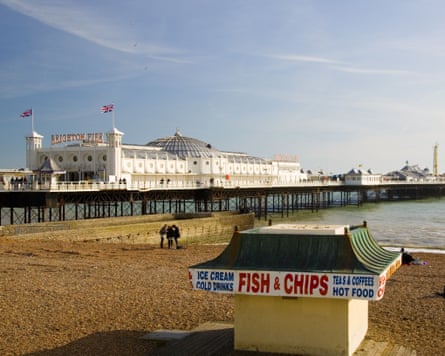
Yusuf unveiled the detention centre strategy during a campaign appearance in Brighton, where he deliberately positioned himself against the constituency's backdrop to emphasize his target areas. Standing on the beachfront of the district that sent Britain's first Green MP to Parliament, Yusuf articulated the policy with what observers described as deliberate provocation. He stated that a Reform government would 'prioritise' the siting of migrant detention facilities specifically in regions with Green Party representation, whether at municipal or parliamentary level.
The timing of the announcement raised eyebrows among political analysts and commentators. With local elections imminent, the proposal appeared calculated to energize Reform's voter base while simultaneously attacking the environmental party that has gained considerable ground in recent years. However, the strategy appears to have backfired, generating negative publicity that has overshadowed Reform's campaign messaging on other policy areas.

Political opponents have been swift and unsparing in their criticism. Representatives from multiple parties, spanning the traditional left-right spectrum, have condemned what they characterize as a punitive and vindictive approach to immigration policy. Labour figures called the proposal "not a serious policy," suggesting it was little more than political theater designed to provoke rather than address genuine governance challenges. Conservative commentators also distanced themselves from the announcement, with several questioning whether such territorial targeting serves any legitimate policy objective.
Critics have characterized the detention centre plan as fundamentally contrary to established British constitutional principles. Multiple observers have labeled the approach "profoundly un-British," arguing that using infrastructure placement as a mechanism to punish political opponents represents a dangerous precedent. The distinction between policy disagreement and geographic punishment based on electoral outcomes has become central to the broader debate surrounding the proposal.
The Lib Dems, who hold significant influence in local government, expressed particular concern about the implications for community planning and democratic governance. They argued that allowing immigration enforcement infrastructure to be sited based on the political color of local representation would create perverse incentives and undermine the principle that government decisions should be based on objective criteria rather than partisan considerations.
Environmental and civil rights organizations have also joined the chorus of condemnation. Groups focused on immigration justice and human rights law have questioned both the ethics and legality of such an approach. Legal experts have suggested that selecting locations for detention facilities based on the political representation of an area could expose any government implementing such a policy to significant judicial review challenges. The lack of any transparent, objective framework for site selection has been identified as a critical weakness in the proposal.
The migration and detention facility debate has become increasingly contentious in British politics as immigration has climbed the priority list for many voters. However, most serious policy proposals in this area have attempted to ground themselves in practical considerations: proximity to transport links, availability of suitable infrastructure, capacity requirements, and community impact assessments. Yusuf's proposal notably abandoned these conventional criteria in favor of a purely political selection mechanism.
Reform UK's position within the broader immigration debate has consistently emphasized stricter enforcement and reduced asylum intake. The party has built considerable support among voters concerned about immigration levels, and many of its policy positions align with concerns about border security and asylum processing. However, this particular detention centre proposal appears to have extended beyond conventional policy debate into territory that even sympathetic observers found difficult to defend.
The announcement has also drawn scrutiny regarding what it reveals about Reform's broader political strategy. By explicitly targeting Green-voting areas, the party has drawn attention to what critics view as weaponization of infrastructure policy for partisan gain. This approach contrasts sharply with the technocratic, evidence-based framework that typically guides decisions about public facility placement, whether detention centres, prisons, hospitals, or other major institutions.
Green Party representatives have responded with particular intensity, with some describing the proposal as reflecting a hostility toward environmental concerns more broadly. They have suggested that the targeting reflects deeper disagreements between Reform and the Greens on climate policy, with the detention centre proposal representing an escalation in what had previously been standard policy disagreement. Some Green spokespeople characterized the move as indicative of Reform's willingness to pursue divisive tactics when facing electoral competition from smaller parties.
The local election context has amplified the significance of the announcement. Local elections often turn on specific community issues and represent one of the few opportunities for smaller parties like the Greens to gain real electoral power. By explicitly targeting areas where Greens have won local representation, Reform has essentially declared these constituencies zones of particular political competition. This raises questions about what other policy decisions might be influenced by partisan calculations rather than objective governance principles.
The broader implications of the detention centre proposal have prompted reflection among political observers about standards and norms in British democracy. While aggressive political rhetoric is commonplace, the explicit linking of government infrastructure decisions to electoral outcomes represents something distinct—a suggestion that public resources would be deployed as instruments of political punishment rather than rational governance. This distinction has resonated with critics who might otherwise engage substantively with Reform's immigration policy positions.
As the local election campaign continues, the proposal remains a flashpoint in discussions about Reform's role in British politics and the direction the party intends to take the immigration debate. Whether the controversial announcement ultimately helps or hinders Reform's electoral prospects will likely depend on whether voters view the proposal as an innovative political strategy or an example of governance irresponsibility that should disqualify the party from consideration.
Source: The Guardian


