
Repair Lorry Gets Stuck in Somerset Sinkhole

A repair vehicle became trapped in a sinkhole it was sent to fix near Walton, Somerset. The dramatic incident left the lorry at a steep angle.
In an ironic twist of events, a repair lorry became trapped in the very sinkhole it had been dispatched to fix on a Somerset road. The incident, which occurred on Butleigh Drove near Walton, has drawn attention to the challenges faced by road maintenance contractors when dealing with deteriorating road conditions and unstable ground surfaces.
Contractors from Stabilised Pavements, a company specializing in road repair and pavement stabilization, arrived at the site to address the developing sinkhole that had formed beneath the road surface. However, as the heavy vehicle maneuvered into position to begin remedial work, the compromised ground beneath failed to support the weight of the equipment and personnel on board. The dramatic collapse resulted in the lorry becoming lodged at a precarious near 45-degree angle, transforming what should have been a routine repair operation into a complex extraction challenge.
The incident highlights the unpredictable nature of ground subsidence and the risks inherent in repairing road infrastructure that has been compromised by underground voids, drainage failures, or soil instability. When contractors assess a sinkhole, they must carefully calculate whether the surrounding terrain can safely bear the weight of heavy machinery needed for repairs. In this case, the ground assessment proved insufficient to prevent the equipment from sinking further into the void below.
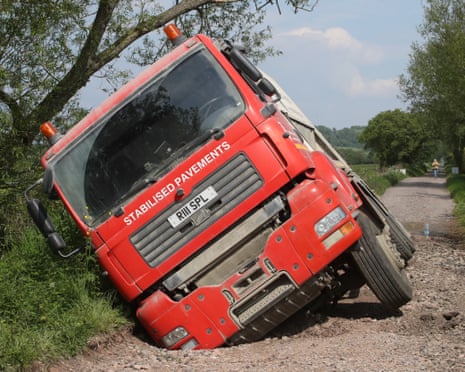
The Somerset sinkhole incident exemplifies common challenges faced by highway maintenance teams across the United Kingdom. Sinkholes and subsidence issues can develop due to multiple factors, including aging underground utilities, water erosion, natural geological features, and poor drainage systems. The East Somerset area, like many regions in England, has experienced an increase in reports of road surface failures and subsidence events in recent years, creating significant operational demands on local authorities and contracted maintenance firms.
Extracting a large lorry from a deep sinkhole requires specialized equipment, careful planning, and expertise in heavy recovery operations. The task becomes exponentially more complicated when the vehicle is positioned at such a steep angle and when the surrounding ground remains unstable. Recovery teams must assess the structural integrity of the equipment, determine the safest extraction method, and often call upon specialist heavy recovery services equipped with powerful cranes and stabilization apparatus.
The incident on Butleigh Drove adds to a growing list of documented sinkhole incidents that have affected road networks throughout the United Kingdom. From sudden collapses in urban areas to developing voids beneath rural roads, these situations pose risks to vehicle safety, disrupt traffic flow, and demand immediate attention from local authorities responsible for road maintenance. The costs associated with investigating, stabilizing, and properly repairing sinkholes can run into thousands or tens of thousands of pounds per incident.
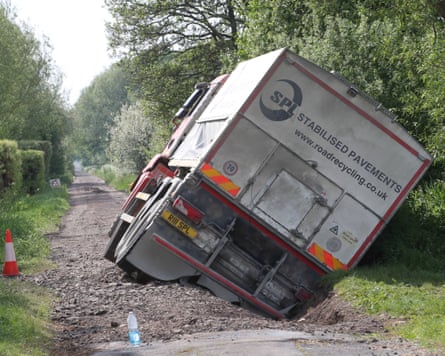
Stabilised Pavements, the contractor involved in this incident, specializes in innovative techniques for stabilizing compromised pavement structures. Their work typically involves assessing subsurface conditions, implementing stabilization measures, and restoring road surfaces to safe operational standards. The company's expertise in pavement engineering made them an appropriate choice for the original repair task, though the severity of the ground failure in this instance exceeded expectations.
The recovery and subsequent repair of both the sinkhole and the trapped lorry will likely involve multiple stages of work. Initially, recovery personnel must focus on safely extracting the vehicle without causing further damage to the surrounding road structure or the equipment itself. Once the lorry is removed, specialists must then conduct comprehensive ground investigations to determine the root cause of the subsidence and implement appropriate long-term stabilization and repair solutions.
Local residents and road users in the Walton area experienced disruption as a result of the incident, as the road would have required closure during both the initial emergency response and the subsequent recovery operations. Such disruptions, while temporary, underscore the importance of promptly addressing infrastructure concerns before they escalate into more serious problems affecting public safety and accessibility.
This particular incident serves as a reminder of the broader infrastructure challenges facing rural areas throughout England. Road maintenance in less densely populated regions often requires contractors to work in challenging conditions with complex geological factors at play. The incident also demonstrates why proper site assessment, ground investigation, and risk evaluation are essential prerequisites before undertaking any repair work on compromised road surfaces.
The experience of the Stabilised Pavements team on Butleigh Drove, while undoubtedly frustrating and requiring additional recovery resources, provides valuable lessons for the road repair industry. It reinforces the importance of conservative load calculations, staged repair approaches, and thorough subsurface investigation before commencing work on sinkhole remediation. Future repairs in similar circumstances may benefit from employing lighter equipment initially or using alternative stabilization techniques that place less immediate stress on already-compromised ground structures.
As the recovery operation proceeded and repairs were planned, the incident gained attention from both local media outlets and national news organizations, including The Times and The Guardian. The unusual nature of a repair vehicle becoming trapped in the very damage it was sent to fix made it a compelling human interest story, while also serving the important function of raising public awareness about the prevalence and seriousness of road subsidence issues across the country.
Source: The Guardian


