
Reporting in -30C: BBC's Arctic Expedition

BBC journalists brave extreme Arctic conditions in Canada, travelling with military rangers through sub-zero temperatures and frostbite risks.
Two intrepid BBC journalists recently completed an extraordinary assignment that took them to one of the most inhospitable environments on Earth. Nadine Yousif and Eloise Alanna embarked on a challenging five-day expedition through Canada's Arctic, accompanying the country's elite military rangers as they navigated treacherous terrain and life-threatening weather conditions. The duo documented their experiences in temperatures plummeting to -30 degrees Celsius, where every breath becomes a survival mechanism and exposed skin can develop frostbite within minutes.
The assignment represented a significant undertaking for the broadcasting organization, requiring meticulous planning, specialized equipment, and extensive preparation before the team even set foot in the frozen wilderness. Both journalists underwent rigorous training to understand the dangers of extreme Arctic conditions and learned essential survival skills from seasoned military professionals. Their commitment to bringing authentic stories from remote corners of the world exemplifies the lengths journalists go to in order to deliver compelling narratives directly from the source, regardless of personal discomfort or risk.
Travelling alongside Canada's military rangers provided the journalists with unprecedented access to daily operations in the Arctic region. These highly trained soldiers are responsible for patrolling vast stretches of Canada's northern territories, monitoring environmental changes, and maintaining national sovereignty in one of the world's most strategically significant areas. The rangers are accustomed to operating in these extreme conditions, yet even they must follow strict protocols to prevent cold-related injuries and maintain operational effectiveness in an environment where a single mistake can have catastrophic consequences.
The experience of reporting in such extreme temperatures presents unique challenges that distinguish Arctic journalism from conventional news gathering. Standard equipment often becomes unreliable in sub-zero conditions, with battery technology failing prematurely and mechanical components becoming brittle and prone to malfunction. Frostbite represents a constant threat that requires continuous vigilance, as the condition can develop rapidly without proper protection and awareness. The journalists had to wear specialized cold-weather gear designed specifically for Arctic exploration, including insulated layers, protective face coverings, and heated equipment to maintain both their safety and their ability to document the story effectively.
Beyond the physical hardships, the psychological demands of reporting in Canada's Arctic proved equally significant. The isolation, monotonous landscape, and perpetual darkness during winter months can affect mental resilience and focus. However, both Yousif and Alanna demonstrated remarkable determination throughout the expedition, maintaining their journalistic standards and curiosity despite the challenging environment. Their ability to remain engaged and professional while battling the elements speaks to the dedication required of modern journalists who pursue stories in the world's most remote locations.
The five-day journey provided valuable insights into Arctic operations and the experiences of those who work and live in this vast region. The military rangers' knowledge of the terrain, their survival techniques, and their understanding of the Arctic ecosystem proved invaluable resources for the journalists. Throughout their expedition, Yousif and Alanna gained firsthand understanding of the challenges associated with Arctic reporting and the importance of human-centered storytelling in conveying the realities of life in extreme environments. Their documentation serves as a testament to the resilience of both the journalists and the military professionals who call the Arctic their workplace.
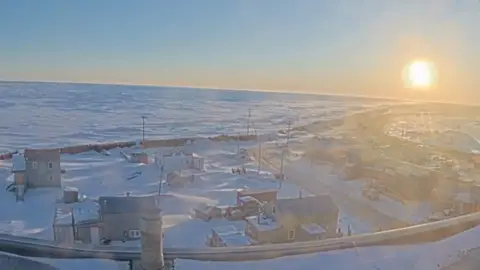
The logistics of maintaining communication and transmitting content from such a remote location required sophisticated planning and backup systems. Modern journalism in the Arctic demands not only physical resilience but also technical expertise in managing equipment that functions reliably in extreme conditions. The team had to consider how to power their devices, protect their technology from moisture and cold, and ensure they could transmit their findings back to BBC headquarters across vast distances with minimal connectivity. These technical challenges add another layer of complexity to an already demanding assignment.
Climate change has become an increasingly important topic in Arctic journalism, as the region experiences dramatic transformations at rates faster than most other parts of the planet. By documenting conditions and speaking with military personnel and local inhabitants, the journalists contributed to public understanding of how Arctic climate impacts Canada's northern territories. The expedition allowed them to visually capture the landscape and environmental conditions that scientists and researchers have documented in their own investigations, helping to bridge the gap between scientific data and public comprehension.
The risks undertaken by these journalists highlight the broader commitment within news organizations to cover important stories regardless of location or difficulty. The BBC's decision to send a team to report from Canada's Arctic demonstrates the value placed on authentic, on-the-ground journalism. Such assignments require significant financial investment, extensive preparation, and acceptance of personal risk by the journalists involved. Yet stories emerging from such expeditions often provide readers and viewers with unique perspectives and intimate understandings that cannot be replicated through remote reporting or secondary sources.
The experience shared by Nadine Yousif and Eloise Alanna will undoubtedly inform their future reporting and provide them with insights applicable to other challenging assignments. Journalists who have covered stories in extreme environments often develop heightened awareness of human adaptability and resilience that enriches their subsequent work. The five-day Arctic expedition served as both a news-gathering mission and a personal journey that expanded the journalists' understanding of global geography, human endurance, and the importance of documenting stories from the planet's most remote and significant regions.
For audiences consuming the resulting content, the story of how these journalists gathered their reporting in -30 degree temperatures adds meaningful context to the information they receive. Understanding the effort, risk, and dedication involved in bringing Arctic stories to the public enhances appreciation for international journalism and encourages critical engagement with news from remote locations. The assignment ultimately reinforces why certain stories warrant the extraordinary measures necessary to report them accurately and authentically from the source.
Source: BBC News


