
RFK Jr's Christian Nationalist Health Agenda

Explore how Robert F Kennedy Jr's leadership of HHS reflects a troubling fusion of religious ideology and public health policy, raising concerns about evidence-based medicine.
The arrival of Robert F Kennedy Jr as secretary of the Department of Health and Human Services in February 2025 marked a significant and controversial shift in America's approach to public health administration. In his opening remarks to the federal agency tasked with safeguarding the nation's health infrastructure, Kennedy presented a worldview that extended far beyond conventional medical and epidemiological concerns. His assertion that America's paramount challenge was not merely the epidemic of chronic disease sweeping the nation, but rather a pervasive "spiritual malaise"—a fundamental soul-sickness rooted in the country's perceived moral deterioration—signaled a dramatic departure from traditional evidence-based health policy frameworks.
This theological framing of public health challenges represents a troubling manifestation of what scholars and critics increasingly describe as Christian nationalist ideology infiltrating federal health governance. The integration of religious worldviews into medical policy decisions raises profound questions about the separation of church and state, the scientific method's role in health administration, and the potential consequences for vulnerable populations who depend on impartial, evidence-driven health recommendations. Kennedy's rhetoric suggests that spiritual remedies and moral frameworks should inform medical decision-making at the highest levels of government health administration.
The implications of this ideological shift extend throughout the sprawling HHS bureaucracy, which oversees agencies including the FDA, CDC, NIH, and CMS—organizations responsible for regulating pharmaceutical approvals, monitoring disease transmission, funding medical research, and managing Medicare and Medicaid programs. When the leadership of such consequential institutions begins to conceptualize health challenges through a primarily religious and moral lens rather than scientific methodology, the potential for policy decisions disconnected from empirical evidence increases substantially. This represents a fundamental threat to the integrity of American public health institutions that have, despite their imperfections, relied upon peer-reviewed research and scientific consensus to guide health policy.

Kennedy's tenure has been marked by rhetoric that demonizes conventional health experts and institutions, positioning them as adversaries rather than colleagues in the pursuit of public wellness. His characterization of career epidemiologists, immunologists, and public health officials as obstacles to be overcome rather than valued experts reflects a concerning distrust of institutional knowledge and scientific methodology. This adversarial stance toward the medical establishment risks undermining public confidence in health guidance at precisely the moment when coordinated, evidence-based health communication is essential for addressing emerging infectious diseases, chronic health epidemics, and public health emergencies.
The prescription of what Kennedy and his allies describe as spiritual warfare as a legitimate public health intervention is perhaps the most alarming manifestation of this ideological approach. This framework suggests that moral failings and spiritual deficiencies are causative factors in disease patterns, a perspective that contradicts decades of epidemiological research demonstrating that chronic disease is influenced by socioeconomic factors, environmental exposures, access to healthcare, nutrition, and genetic predisposition. By privileging spiritual explanations for disease, policy makers may neglect the material, social, and environmental interventions that scientific evidence demonstrates can meaningfully improve health outcomes across populations.
The dangerous potential of this ideological approach becomes apparent when examining historical examples of religious governance affecting health policy. Nations that have allowed religious ideology to supersede scientific evidence in medical decision-making have consistently experienced worse health outcomes and increased suffering among their populations. From restriction of reproductive healthcare to resistance against vaccination campaigns to denial of evidence-based treatment protocols, the historical record demonstrates the human cost of prioritizing theological doctrine over empirical medical science.

The Christian nationalist worldview Kennedy appears to be advancing is not simply a matter of personal religious belief, which Americans are constitutionally protected to hold. Rather, it represents an attempt to institutionalize particular religious doctrines within federal health agencies responsible for serving all Americans, regardless of their religious beliefs or lack thereof. This represents a direct contradiction to the foundational American principle of separation between religious institutions and government functions, a principle designed specifically to protect both religious freedom and the integrity of secular institutions like public health agencies.
Critics of Kennedy's appointment have expressed concern about his well-documented skepticism toward vaccine safety, his promotion of alternative medicine approaches not supported by rigorous clinical evidence, and his previous association with anti-vaccine advocacy groups. When combined with his current promotion of spirituality-based health frameworks, these positions suggest a comprehensive rejection of evidence-based medicine as the foundation for health policy decision-making. The HHS secretary's role requires making decisions that affect millions of Americans' access to medications, vaccines, and health services—decisions that demand grounding in the most current and robust scientific evidence available.
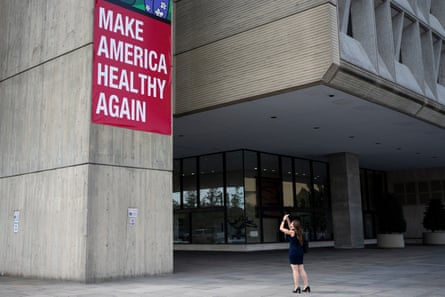
The bureaucratic apparatus of HHS is enormous and complex, encompassing hundreds of thousands of employees and touching virtually every aspect of American healthcare delivery and health policy. The infiltration of religious ideology into the leadership of such an institution risks creating systematic barriers to evidence-based decision-making throughout its agencies and programs. Career scientists and public health professionals within these organizations may face pressure to conform their recommendations to ideological frameworks rather than scientific findings, potentially leading to suppression of inconvenient research findings or marginalization of experts whose work contradicts the dominant religious worldview.
For patients and communities most dependent on federal health programs, the consequences of ideology-driven health policy could be particularly severe. Low-income Americans relying on Medicaid, seniors depending on Medicare, and vulnerable populations accessing services through federally-supported health centers have limited alternatives if federal health policy becomes disconnected from evidence-based practice. The promotion of unproven spiritual interventions as primary health strategies, combined with potential skepticism toward established treatments, could disproportionately harm those with fewest resources to seek alternative medical care.
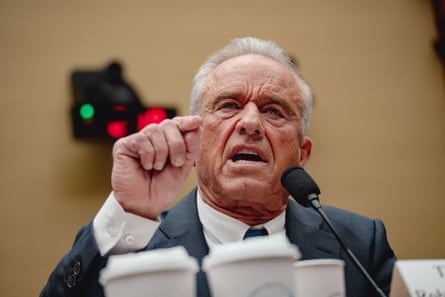
The slow demolition of US public health governance appears to be underway, not through dramatic policy announcements but through the gradual reorientation of the world's largest health bureaucracy toward frameworks that prioritize religious ideology over scientific evidence. This process threatens to unravel decades of institutional learning about how to prevent disease, promote health equity, and respond to public health emergencies. The question facing American policymakers and citizens is whether this ideological transformation will be permitted to continue, or whether the fundamental importance of evidence-based public health will be reasserted as the guiding principle for federal health administration.
The stakes of this struggle extend far beyond abstract debates about methodology or institutional philosophy. Real people—children, elderly individuals, chronically ill patients—depend on health policies informed by the best available evidence. As the American health system faces unprecedented challenges from chronic disease, emerging infectious threats, and health inequities, the leadership of federal health institutions must remain grounded in rigorous science rather than ideological commitments. The future of American public health depends on whether institutional resistance to this ideological transformation can be mobilized before the damage becomes irreversible.

