
Rising Red Diesel Costs Force Farmers Into Financial Crisis

Lincolnshire agricultural grower reveals how soaring red diesel prices are devastating farm finances, forcing difficult decisions about family expenses and business viability.
A Lincolnshire farmer has opened up about the severe financial strain caused by skyrocketing red diesel prices, revealing that the increased costs have become so burdensome that she is being forced to make difficult decisions about her family's most basic expenses. The agricultural producer, who relies heavily on red diesel fuel to power her farming operations, explained how the combination of rising energy costs and inflation has created a perfect storm affecting her livelihood and personal finances.
The farmer's situation exemplifies a broader crisis affecting UK agricultural businesses across the nation, where farming costs have spiraled beyond what many producers can sustain. Red diesel, also known as agricultural diesel, is a lower-taxed fuel specifically designated for use in farming equipment and machinery. When prices for this essential commodity surge, the ripple effect throughout agricultural operations becomes immediately apparent, impacting everything from crop production to livestock management.
According to the grower's account, the financial pressure has become so acute that she is now reconsidering fundamental family decisions, including the ongoing expense of her son's nursery fees. This difficult choice highlights how agricultural price volatility doesn't just affect farming operations—it permeates entire family budgets and forces parents to prioritize survival over developmental opportunities for their children. The stress of managing both business and personal finances under these circumstances has become overwhelming for many farming families.
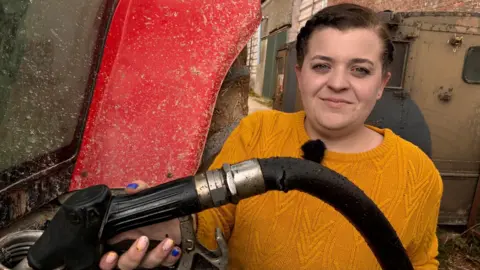
The issue of fuel costs in farming has become increasingly prominent in agricultural communities throughout England, particularly in regions like Lincolnshire, which has a significant proportion of intensive crop and livestock production. Farmers depend on red diesel to operate tractors, combine harvesters, irrigation systems, grain dryers, and numerous other pieces of essential equipment. When fuel prices increase dramatically, the margin between profitability and loss narrows considerably, sometimes disappearing entirely.
Industry experts have pointed out that the recent surge in red diesel prices stems from several interconnected factors, including global oil market fluctuations, supply chain disruptions, and geopolitical tensions that have affected energy commodity trading worldwide. Additionally, changes to taxation policies and fuel duty rates have contributed to the overall increase in costs that farmers face when purchasing fuel at the pump. These external pressures have left agricultural producers with little control over their most significant operational expenses.
The Lincolnshire grower is far from alone in her struggle. Farming unions across the United Kingdom have reported widespread distress among their members regarding unsustainable fuel costs and their impact on food production capacity. Many farmers have indicated that they are operating at losses or significantly reduced margins, leading them to scale back operations, delay equipment maintenance, or even consider exiting the industry entirely after decades of family farming heritage.
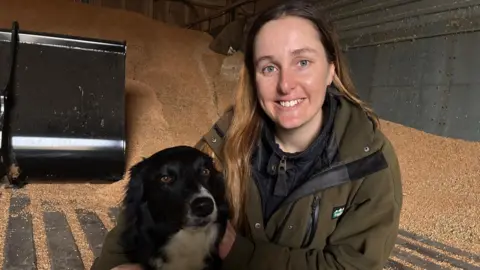
The personal toll of this crisis extends beyond balance sheets and profit margins. Families like the one described in this account are being forced into agonizing decisions about their children's education and development. Nursery fees represent an investment in early childhood education and care, services that are already stretched thin and increasingly expensive across the United Kingdom. For working farmers who depend on childcare to continue their agricultural operations, these costs become doubly critical and doubly painful when financial constraints force reconsideration.
Agricultural organizations have been advocating for government intervention to address the farming cost crisis that is threatening the viability of rural food production. Proposals have included temporary reductions in fuel duty, subsidies to offset fuel costs, or other financial support mechanisms designed to help farmers weather this period of unprecedented economic pressure. These organizations argue that without intervention, the United Kingdom risks losing significant agricultural capacity and self-sufficiency in food production.
The broader implications of this crisis are significant for food security and rural communities. When farmers cannot afford to operate efficiently, production costs increase, which typically gets passed along to consumers through higher food prices. The interconnected nature of modern agricultural economies means that fuel costs affecting Lincolnshire farmers have downstream effects on supermarket shelves across the nation and on the budgets of families struggling with food affordability.
Looking forward, the Lincolnshire farmer and others like her remain uncertain about what the coming months and years will hold. The immediate outlook suggests that fuel price volatility may continue, driven by factors largely outside the control of individual agricultural producers. Many farmers are exploring alternative strategies, including investments in more fuel-efficient equipment, diversification into renewable energy-powered operations, or strategic partnerships that might help distribute costs more broadly across multiple enterprises.
The situation facing this Lincolnshire grower serves as a potent reminder of the challenges confronting modern agricultural producers who operate within increasingly complex economic systems. While consumers benefit from affordable food production, the human cost to farming families—who are making impossible choices between business viability and family wellbeing—deserves greater public awareness and consideration. As discussions about agricultural support policies continue at national and local levels, the voices and experiences of farmers like this one must be central to finding sustainable solutions that protect both farming livelihoods and food security for the nation.
Source: BBC News


