
Romania's Pro-Europe Government Falls in Confidence Vote

Romania's liberal government led by Ilie Bolojan collapses after losing confidence vote amid austerity measures and rising far-right political influence.
Romania's pro-European government has experienced a dramatic collapse following a failed confidence vote, triggering a fresh wave of political instability just under a year after the current coalition administration was formally inaugurated. The unexpected governmental crisis arrives at a particularly volatile moment, with far-right political movements experiencing significant momentum in public opinion polls and the nation grappling with multiple economic and social challenges.
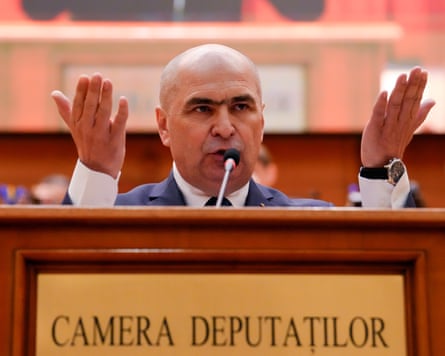
Prime Minister Ilie Bolojan, representing the liberal PNL party, faced Parliament on Tuesday to defend his administration against a censure motion initiated by opposition forces. In an impassioned address before the parliamentary chamber, Bolojan vehemently rejected the motion as fundamentally illegitimate. "This censure motion is false, cynical and artificial," the liberal prime minister declared to parliamentarians before the pivotal vote. "Any country in a multitude of crises would try to consolidate governments, not to change them."
Despite Bolojan's spirited defense and appeals for stability during turbulent times, the confidence vote proceeded to its conclusion, with the government ultimately unable to secure sufficient parliamentary support to remain in office. The loss of confidence represents a significant setback for the coalition, which had campaigned on a pro-Western platform and commitment to European integration. The timing of this governmental collapse has raised serious concerns about Romania's political trajectory and its ability to maintain continuity in pursuing European Union-aligned policies.
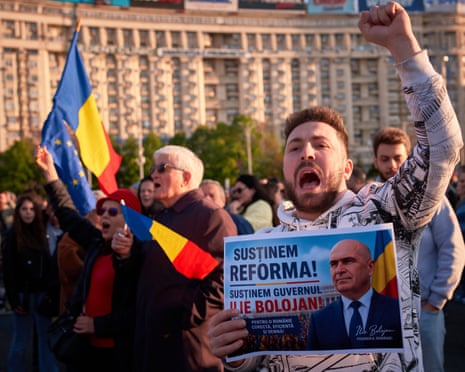
The austerity drive implemented by the Bolojan administration appears to have contributed substantially to the government's political vulnerability and ultimate downfall. These fiscal consolidation measures, while intended to address structural economic imbalances and improve long-term fiscal sustainability, have proven deeply unpopular among various segments of the population. Labor unions, public sector employees, and lower-income citizens have all voiced strong opposition to the spending restrictions and wage adjustments imposed as part of the government's economic program.
Adding complexity to Romania's already precarious political situation is the remarkable ascent of far-right political parties in recent polling data and public opinion surveys. These parties have capitalized on widespread discontent with traditional political establishments and economic hardship, offering nationalist and populist alternatives that resonate with voters frustrated by conventional center-right and centrist governance. The surge in far-right support suggests that subsequent elections could produce dramatically different parliamentary compositions and fundamentally reshape Romania's political landscape.
The collapse of the pro-Europe government raises troubling questions about Romania's future orientation and its commitment to European Union values and institutions. A political transition toward governments with less enthusiasm for European integration could potentially jeopardize Romania's relationships with EU partners and complicate the nation's participation in broader European policy initiatives. The European Union has been monitoring Romania's political developments with considerable interest, particularly regarding democratic standards and the rule of law.
The governmental crisis also reflects broader challenges confronting Romania's economy and society. The nation continues to contend with inflation pressures, labor market complications, and questions about wage levels and public sector sustainability. These economic headwinds have created fertile ground for political dissatisfaction and have enabled opposition parties to construct compelling narratives about mismanagement and failed policies. The confidence vote therefore represents not merely a parliamentary procedural matter but rather a manifestation of deeper popular discontent with current governance approaches.
The timing of this political upheaval, occurring less than a year into the coalition's tenure, suggests that the government was unable to effectively manage expectations or build sufficient consensus for its policy program. The coalition's failure to secure durable parliamentary support indicates either miscalculations in political strategy or fundamental disagreements among coalition partners regarding budgetary priorities and policy direction. Such instability can severely hamper governmental effectiveness and make it difficult to implement coherent long-term programs.
Romania now faces an uncertain political future as it navigates the aftermath of governmental collapse. Potential pathways forward include government reorganization attempts, negotiations for alternative coalition formations, or potentially new elections that could substantially alter the parliamentary balance. Each scenario carries distinct implications for Romania's European integration trajectory and its ability to address pressing domestic challenges. The coming weeks will prove critical in determining whether Romanian political actors can construct stable governance arrangements or whether the nation will experience prolonged institutional uncertainty.

International observers will be scrutinizing Romania's political developments closely, particularly given the strategic importance of Romanian stability within broader European security and integration frameworks. The European Union and NATO have significant interests in seeing Romania maintain institutional stability and continue its pro-Western orientation. The rise of anti-European political movements in Romania thus carries implications extending well beyond the nation's borders and affects the broader geopolitical balance in Central and Eastern Europe.
The confidence vote outcome demonstrates the fragility of contemporary political coalitions and the challenges democratic governments face when implementing unpopular but economically necessary policies. Bolojan's government discovered that defending fiscal responsibility and long-term economic stability, while politically essential, generates short-term political liabilities that opposition parties can effectively exploit. This fundamental tension between economic necessity and political viability will likely continue to challenge Romanian policymakers regardless of which parties ultimately control the government.
Source: The Guardian


