
Russia Deploys Operational Anti-Satellite Weapons

US Space Command confirms Russia is operationalizing co-orbital ASAT weapons targeting American spy satellites in low-Earth orbit.
In a significant escalation of space-based military capabilities, the commander of US Space Command has publicly acknowledged that Russia has transitioned from testing to actively deploying operational anti-satellite weapons in low-Earth orbit. The revelation comes as tensions between the two superpowers extend beyond terrestrial conflicts into the critical domain of outer space, where vital American surveillance infrastructure now faces direct threats from advanced Russian military systems.
Gen. Stephen Whiting, the four-star general commanding US Space Command, made this assessment during a high-profile briefing this week, marking one of the most direct official acknowledgments of Russia's space warfare capabilities to date. While Whiting refrained from naming the specific system in his public remarks, intelligence analysts and space security experts have long tracked a classified Russian military program designated as Nivelir, which represents a fundamentally different approach to anti-satellite warfare than traditional kinetic kill vehicles or directed energy weapons.
The Nivelir program represents a concerning evolution in space-based military threats. Since its inception, the program has successfully launched four satellites into low-Earth orbit, each one strategically positioned to shadow vital US spy satellites belonging to the National Reconnaissance Office. These NRO satellites form a critical component of American intelligence-gathering capabilities and are indispensable for monitoring threats across the globe, making them prime targets for adversarial nations seeking to degrade US strategic capabilities.
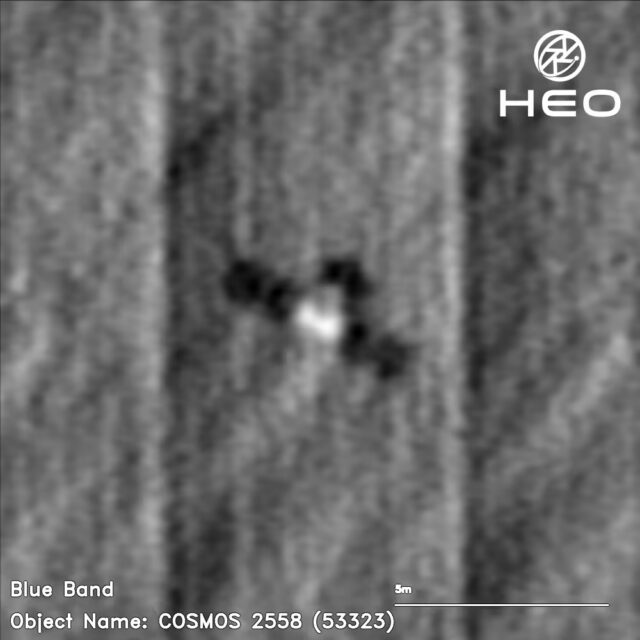
What makes the Nivelir system particularly distinctive and concerning is its layered, multi-component architecture that has earned it comparisons to the traditional Russian nesting doll, known as a Matryoshka doll. The outer shell of each Nivelir satellite conceals smaller spacecraft within, creating a system that obscures the true nature and capabilities of the weapon system until its components are deployed. This design philosophy represents a fundamental shift in how Russia is approaching co-orbital anti-satellite weapons, moving away from visible, single-purpose systems toward more complex, deceptive platforms that can mask their intentions and capabilities.
The functionality of these nested satellites has become increasingly apparent through careful observation by US intelligence agencies. Once a Nivelir satellite achieves orbit and positions itself alongside its American target, the smaller vessels contained within begin their own independent maneuvers. These secondary spacecraft perform complex orbital mechanics that allow them to closely approach, shadow, and potentially conduct operations against other satellites in orbit. The level of precision and control required for these maneuvers demonstrates significant advances in Russian spaceflight technology and autonomous systems.
Most alarmingly, during a test of the Nivelir system in 2020, one of these released secondary spacecraft fired what US analysts determined to be a projectile at high velocity. The nature and composition of this projectile immediately captured the attention of American space security experts, who quickly concluded that the object appeared to be a kinetic munition specifically designed to be fired at another satellite. This capability represents a direct and demonstrable threat to the constellation of American satellites that provide essential services for national defense, intelligence operations, and strategic communications.
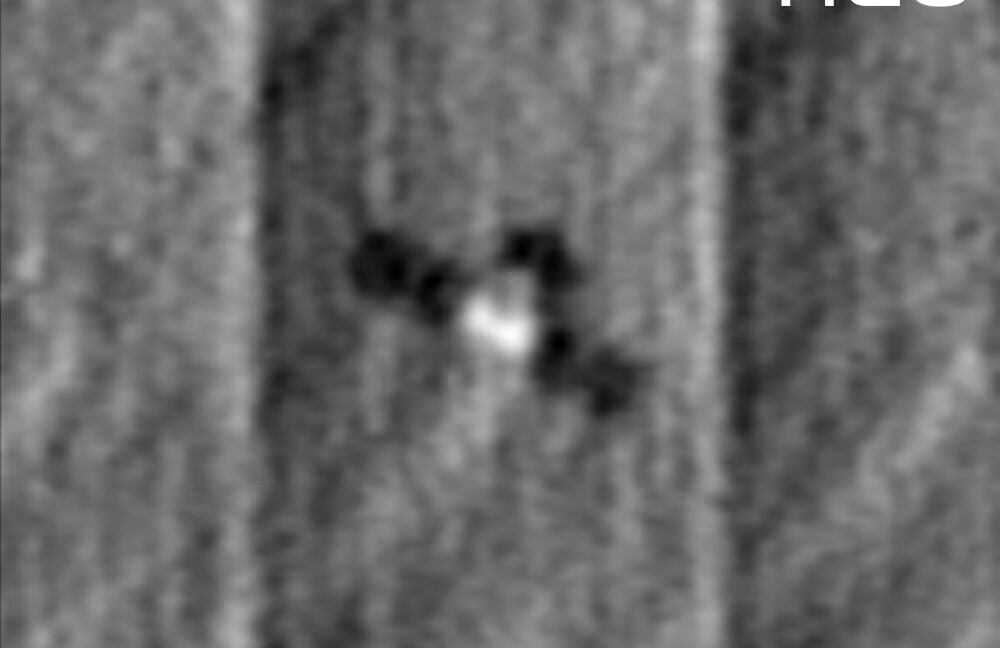
The implications of Russia's operational deployment of these ASAT weapons extend far beyond the military competition between two superpowers. The anti-satellite systems represent a fundamental threat to the rules-based international order governing space activities. The creation of debris from destroyed satellites poses a cascading risk known as Kessler syndrome, wherein destroyed satellites create debris that damages other satellites, generating more debris in an exponential chain reaction. Such an event could render entire orbital regions unusable for decades and threaten not only military but also civilian space infrastructure.
The timing of Gen. Whiting's public acknowledgment suggests a deliberate strategic choice by US military leadership to alert Congress, allies, and the American public to the seriousness of Russian space-based threats. By publicly confirming the operational status of these weapons, the general is signaling that the threat is no longer theoretical or limited to test phases. Russia now possesses the capability and demonstrated willingness to employ anti-satellite weapons against American space assets during a potential conflict scenario. This represents a critical vulnerability in American space superiority, a domain that the US military has long taken for granted.

The National Reconnaissance Office satellites targeted by Nivelir systems are among the most sensitive and valuable assets in the American intelligence apparatus. These reconnaissance platforms provide real-time imagery and signals intelligence from across the globe, supporting military operations, diplomatic efforts, and strategic decision-making at the highest levels of government. The loss or degradation of these satellites would represent a catastrophic intelligence failure with potentially severe consequences for American national security interests.
From a technical standpoint, the Nivelir program demonstrates Russian engineers' sophisticated understanding of orbital mechanics and space operations. The ability to design and deploy a system with multiple independent components that can maneuver in orbit with precision suggests extensive investment in research and development over many years. This level of capability typically requires not only financial resources but also accumulated expertise and technological foundations developed through decades of spaceflight operations. Russia's deep heritage in space exploration has clearly provided the foundation for these advanced military applications.
The emergence of co-orbital anti-satellite weapons has prompted urgent discussions within the US military and intelligence communities about how to protect American space assets. Traditional defenses such as maneuvering satellites or creating decoys become exponentially more expensive and complicated when the threat system is itself maneuvering and operating under autonomous control. Defense planners must now contend with a threat that can adapt and respond to American countermeasures in real-time, rather than following a predetermined trajectory like previous generations of space weapons.
International space law provides limited guidance on how to respond to active threats in orbit. The Outer Space Treaty of 1967, which both the United States and Russia have signed, prohibits weapons of mass destruction in space but contains ambiguous language regarding conventional anti-satellite weapons. This legal gray area has allowed Russia to develop and test Nivelir systems with limited international pushback, though many space security experts argue that the system's design and demonstrated capabilities clearly violate the spirit if not the letter of international space agreements.
The broader geopolitical context of Russia's anti-satellite weapons development cannot be ignored. As Russia faces potential isolation and economic sanctions due to its aggressive military posture, the development of space-based weapons offers a way to impose costs on the United States without direct military confrontation on Earth. By threatening American space assets, Russia can hold critical infrastructure at risk and create uncertainty about American capabilities during potential future conflicts. This represents a form of strategic leverage that extends Russian power projection capabilities beyond its borders.
Looking forward, the US military and intelligence communities must develop comprehensive strategies to address the threat posed by Russian anti-satellite weapons systems like Nivelir. These strategies may include redundancy in satellite constellations, development of countermeasures and defensive capabilities, improved detection systems for tracking threatening spacecraft, and potentially diplomatic initiatives to establish clearer rules governing space operations. The challenge remains daunting, as protecting space assets against sophisticated, maneuvering threats represents one of the most complex military problems facing American defense planners in the coming decades.
Source: Ars Technica


