
Russia Scales Back Moscow Victory Day Parade

Russia announces reduced Victory Day parade in Moscow, citing security threats from Ukraine. Military vehicles and cadets excluded from annual WWII commemoration.
Russia has announced a significant reduction in scale for its annual Victory Day parade in Moscow, marking a notable departure from the nation's traditional celebration of Soviet triumph during World War Two. The decision comes amid escalating tensions with Ukraine and what Russian officials characterize as emerging security threats to the capital city. This year's commemoration will notably exclude military vehicles and cadet formations that have historically been central to the pageantry and grandeur of the event.
The Moscow Victory Day festivities, typically held on May 9th each year, have long served as a cornerstone of Russian national pride and commemoration. The parade traditionally features an extensive display of military hardware, including tanks, armored vehicles, and advanced weaponry, along with processions of military personnel, cadets, and civilians celebrating the Soviet Union's role in defeating Nazi Germany during the Second World War. However, this year's scaled-back version represents a stark contrast to the elaborate productions that have characterized recent years.
Russian authorities have cited security threats from Ukraine as the primary justification for the reduced military presence at the parade. The ongoing conflict between Russia and Ukraine, which intensified following Moscow's full-scale invasion in February 2022, has created an environment of heightened tension and concern regarding potential attacks on Russian territory. Officials have suggested that the absence of military vehicles and personnel formations is a precautionary measure designed to protect civilians and maintain order during the public commemoration.
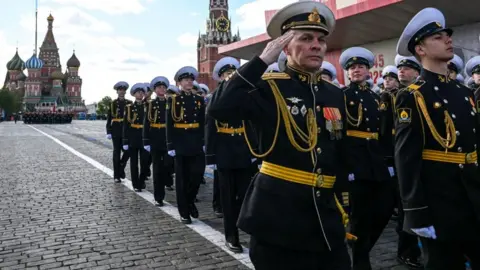
The annual celebration has undergone various transformations throughout Russian history, reflecting the political and social conditions of different eras. During the Soviet period, Victory Day parades were grandiose affairs that showcased military might and served as propaganda tools demonstrating state power. In the post-Soviet era, particularly following Vladimir Putin's rise to power, the parades have been revived and expanded, becoming major national events with international media coverage and participation from dignitaries from various countries.
The decision to exclude military vehicles from this year's proceedings marks a significant strategic shift in how Russia chooses to present its military commemoration to the world. Analysts suggest that the move reflects genuine security concerns regarding drone attacks and other potential threats that have become increasingly prevalent in the Russia-Ukraine conflict. Ukrainian forces have demonstrated capability and willingness to conduct operations deep within Russian territory, utilizing advanced drone technology and strategic planning to target military installations and infrastructure.
The exclusion of cadets from the parade also represents an important change in the ceremonial structure. Military academy students and young cadets have traditionally marched prominently in the procession, symbolizing the continuity of military tradition and the preparation of younger generations to serve in the armed forces. Their absence this year suggests that Russian authorities have prioritized the safety of young military personnel over the symbolic importance of their participation in the public demonstration.
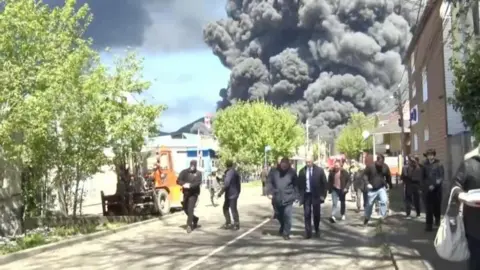
Domestic observers within Russia have responded with mixed reactions to the announcement of the scaled-back parade. Some citizens and officials view the reduction as a necessary and prudent response to legitimate security threats, while others see it as a symbolic erosion of Russia's ability to conduct normal national ceremonies. The decision has reignited discussions about the broader implications of the conflict on Russian society and the economy, as well as questions about the sustainability of Russia's current military posture.
The Ukraine conflict has profoundly reshaped Russian priorities and resource allocation, affecting everything from military spending to civilian infrastructure investment. The shift in how Russia conducts its most significant patriotic commemoration underscores the extent to which the ongoing war has permeated aspects of Russian national life that were previously considered secure and routine. This transformation serves as a visible indicator of the conflict's deeper impact on Russian society and governance.
International observers and geopolitical analysts have noted that the reduced parade may carry symbolic significance beyond the immediate security concerns. The decision reflects a departure from Russia's traditional approach to projecting military strength and national unity through large-scale public demonstrations. In previous years, the parades have served as opportunities for Russia to display advanced weaponry and military capabilities to both domestic audiences and the international community, making this year's reduction particularly notable in that context.
The security measures implemented for the modified parade will likely include enhanced perimeter controls, increased law enforcement presence, and potentially restricted access to certain areas of the parade route. Russian authorities have indicated that while the parade will proceed in some form, it will be substantially different from the traditional format that citizens and international observers have come to expect. This adaptation demonstrates how the conflict is forcing Russia to recalibrate its approach to public events and national ceremonies.
The absence of the customary military vehicle display will fundamentally alter the visual spectacle that has defined recent Victory Day celebrations. The parade's traditional highlight—the procession of advanced weaponry including the latest tanks, missile systems, and armored vehicles—will not occur, potentially disappointing many Russians who view these displays as affirmations of their nation's military capabilities and technological advancement. This represents a significant concession in what has been a centerpiece of Putin's strategy to reinvigorate patriotic sentiment and national pride.
Looking forward, the question of whether this year's scaled-back format will become the new standard for Victory Day celebrations in Moscow remains uncertain. Much will depend on the trajectory of the Russia-Ukraine conflict and the security situation in the coming months. If the conflict continues at its current intensity or escalates further, Russia may face persistent pressure to maintain reduced-scale parades for the foreseeable future. Conversely, if diplomatic progress occurs or military circumstances shift significantly, the traditional parade format might be restored in subsequent years.
The announcement also raises broader questions about the role of military symbolism and public ceremony in maintaining national morale during wartime. Russia has historically relied on patriotic displays and military demonstrations as tools for rallying public support for government policies and military operations. The reduction in this year's parade, whether viewed as prudent or unfortunate, represents a pragmatic acknowledgment that security considerations now take precedence over the traditional pageantry associated with the annual celebration.
Russian officials have emphasized that despite the reduced military components, the Victory Day commemoration will still honor the sacrifices made by Soviet forces during World War Two and acknowledge the millions of lives lost in that conflict. The event will likely feature speeches, wreath-laying ceremonies, and civilian participation, preserving some of the ceremonial aspects that connect contemporary Russians to their historical heritage. However, the absence of military grandeur will undoubtedly leave the celebration feeling somewhat diminished compared to recent years' iterations.
Source: BBC News


