
Russian Drones Strike Ukraine as Ceasefire Ends

Ukraine faces renewed Russian drone attacks killing nine civilians after temporary ceasefire expires. President Zelensky warns of escalating military operations.
Ukraine braced for intensified military operations as Russian drone attacks resumed with devastating force following the expiration of a temporary ceasefire agreement. The renewed assault claimed the lives of at least nine civilians and left numerous others injured across multiple regions of the war-torn nation. President Volodymyr Zelensky issued urgent warnings to the Ukrainian population, alerting them to prepare for what he described as "more waves" of incoming strikes expected throughout Wednesday and beyond.
The latest round of drone strikes on Ukraine represents a significant escalation in Russia's aerial campaign, which has increasingly targeted civilian infrastructure and residential areas. Military analysts noted that the coordinated nature of the attacks suggests a deliberate strategy to inflict maximum damage on civilian populations and critical infrastructure systems. The strikes occurred across multiple locations simultaneously, overwhelming local air defense systems and emergency response capabilities in several regions.
Zelensky's stark warning underscores the vulnerability of Ukrainian airspace and the persistent threat posed by Russia's extensive drone arsenal. The president emphasized the need for continued international support in supplying advanced air defense systems to protect civilian populations. His communications highlighted the psychological toll of living under constant threat of aerial bombardment, as communities grappled with repeated evacuations and shelter-in-place orders.
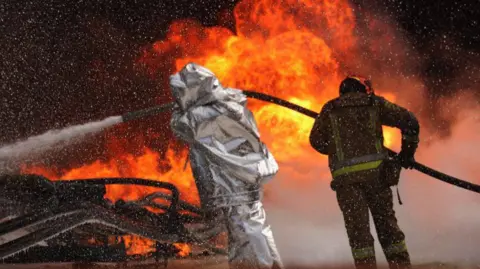
Emergency services across Ukraine mobilized rapidly in response to the attacks, with rescue teams working tirelessly to extract survivors from collapsed structures and damaged buildings. Medical facilities reported being overwhelmed with casualties, prompting urgent calls for additional medical supplies and personnel from international aid organizations. The scale of destruction varied across different impact zones, with some areas experiencing complete devastation of entire residential blocks while others suffered more localized damage.
The ceasefire agreement that had provided temporary relief to Ukrainian civilians was originally established to allow for humanitarian operations and the evacuation of vulnerable populations. However, its expiration marked the resumption of full-scale hostilities and renewed the pattern of aerial bombardment that has characterized the conflict for months. Defense officials expressed concern that the renewed attacks signaled Russia's intention to intensify its campaign in the coming weeks.
Regional administrators reported significant damage to essential infrastructure, including power generation facilities, water treatment plants, and communication networks. The destruction of these vital systems compounds the humanitarian crisis facing millions of Ukrainians already displaced by the conflict. Emergency authorities warned that prolonged disruptions to utilities could create dangerous conditions, particularly for elderly residents and those with medical vulnerabilities requiring electricity-dependent equipment.
International observers noted that Russia's drone attacks have evolved in sophistication and scale since the beginning of the conflict. The drones employed in recent operations demonstrate improved range, accuracy, and payload capacity compared to earlier models used in the war. Military strategists suggested that Russia's defense industry has implemented lessons learned from previous operations to enhance the effectiveness of aerial weapons systems.
The humanitarian impact of Russian attacks extends far beyond immediate casualties, creating long-term psychological trauma and displacing thousands of additional civilians from their homes. Relief organizations working on the ground documented accounts of entire families losing everything in seconds, with survivors struggling to find shelter and basic necessities. The cumulative effect of repeated attacks has created a pervasive sense of uncertainty and fear among the general population.
President Zelensky's administration continued diplomatic efforts to secure additional military aid and international support despite the ongoing attacks. High-level officials maintained that Ukraine's ultimate victory depended not only on military prowess but also on sustained international commitment to supplying weapons, intelligence, and financial resources. The government emphasized that continued international assistance remained critical to Ukraine's ability to defend itself against superior Russian military capabilities.
Defense analysts examining the strategic implications of the renewed attacks suggested that Russia intended to degrade Ukraine's military capabilities while simultaneously terrorizing the civilian population. The coordinated drone assault appeared designed to test Ukrainian air defenses and identify gaps in coverage that could be exploited in future operations. Intelligence reports indicated that Russia had stockpiled significant quantities of unmanned aerial vehicles specifically for sustained bombing campaigns.
Local communities across Ukraine organized mutual aid networks and emergency response systems to support neighbors and coordinate evacuation efforts. Citizens developed sophisticated warning systems and early alert protocols to maximize the time available for sheltering or evacuating before drone strikes occurred. These grassroots initiatives demonstrated remarkable resilience and determination among Ukrainian civilians facing extraordinary circumstances.
The expiration of the ceasefire also raised questions about the prospects for diplomatic negotiations and potential future peace agreements. International mediators expressed concern that the resumption of large-scale attacks would further entrench both sides and reduce the likelihood of negotiated settlement in the near term. However, Ukrainian leadership remained adamant that any future negotiations would need to address issues of territorial integrity and security guarantees.
Zelensky's warnings of additional waves of attacks proved prophetic as Ukraine faced relentless aerial bombardment throughout the week following the ceasefire expiration. The president's communications served both as public alerts to allow civilians time to seek shelter and as messages to the international community emphasizing Ukraine's ongoing vulnerability. His statements reinforced calls for increased military support and highlighted the existential nature of the threat Ukraine faced.
Source: BBC News


