
Russian Satellites Accused of Aiding Iran's Attacks on US Bases

Ukraine claims Russian satellites provided detailed imagery of military facilities in the Middle East, leading to attacks by Iran shortly after being surveyed.
Russian satellites made detailed imagery of military facilities and critical sites across the Middle East including US bases and other targets that were attacked by Iran soon afterwards, according to a Ukrainian intelligence assessment. Reuters reported that the assessment cited at least 24 surveys of areas in 11 Middle Eastern countries from 21-31 March, covering 46 "objects" including US and other military bases and airports and oilfields. Within days of being surveyed, military bases and headquarters were targeted by Iranian ballistic missiles and drones, the assessment said.
Russian satellites were actively surveying the strait of Hormuz, according to the Ukrainians. Reuters said a western military source and a separate regional security cited their own intelligence in backing up the claims. Reuters said the Iranian foreign ministry had no immediate comment and the defence ministry in Russia did not respond to a request for comment.
Reuters said its regional security source confirmed a specific incident where a Russian satellite imaged Prince Sultan airbase in Saudi Arabia days before Iran struck the facility on 27 March, hitting a sophisticated US E-3 Sentry airborne warning and control system aircraft. The next day a Russian sate...
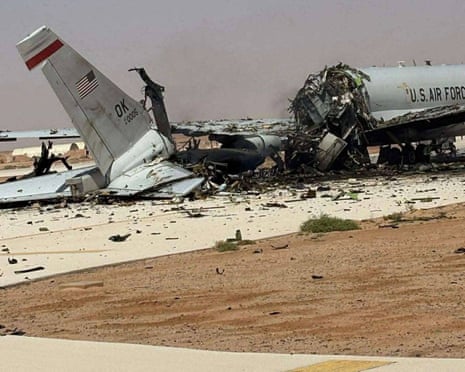
The Ukrainian intelligence assessment highlights the growing concern over the potential for Russian military cooperation with Iran, particularly in the wake of the Ukraine invasion. Russia's extensive satellite surveillance capabilities could provide valuable targeting information to Iran, enabling more precise and devastating attacks on US and allied assets in the region.
The revelations come as tensions remain high in the Middle East, with Iran continuing to flex its military muscle and US forces on high alert. The potential for escalation is a major concern, and the Ukrainian assessment underscores the need for close monitoring and coordination between allies to mitigate the risks.
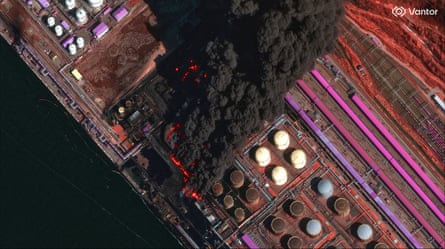
Despite denials from Iran and Russia, the evidence presented in the Ukrainian assessment appears compelling. The timing and locations of the attacks suggest a clear link between Russian satellite surveillance and Iranian strikes, raising serious questions about the nature of the relationship between the two countries.
As the war in Ukraine continues to rage, the potential for a wider conflict involving Russia, Iran, and the US and its allies in the Middle East remains a serious concern. The Ukrainian assessment highlights the complex geopolitical dynamics at play and the need for vigilance and diplomacy to prevent further escalation.


