
Russian Strikes Kill Seven in Ukraine Overnight

Russian drone and missile attacks across Ukraine kill at least seven people, with Dnipro bearing the brunt. Dozens injured in largest assault in days.
In a significant escalation of military operations, Russian airstrikes have claimed the lives of at least seven people across Ukraine during an intensive overnight bombardment. The attacks, which continued throughout the early morning hours, represent one of the most substantial assaults the country has experienced in recent days, drawing international attention and raising concerns about civilian casualties in the ongoing conflict.
The city of Dnipro experienced the heaviest impact from the Russian drone and missile strikes, with five confirmed deaths reported in the regional hub. Ukrainian local authorities confirmed the fatalities while simultaneously reporting that at least 34 people sustained injuries from the coordinated assault. According to Oleksandr Hanzha, the regional head of Dnipropetrovsk, the bombardment persisted relentlessly throughout the night, with survivors and emergency responders struggling to account for all those affected by the devastating attacks.
Beyond Dnipro's borders, the cities of Odesa and Kharkiv also came under fire during the nighttime assault. These simultaneous strikes on multiple population centers underscore the scale and coordination of the Russian military campaign, which appears designed to spread damage and strain Ukrainian defensive capabilities across several critical regions. The geographic distribution of targets suggests a deliberate strategy to maximize disruption across the country's infrastructure and civilian population centers.
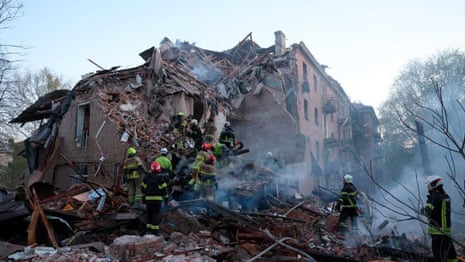
Emergency crews worked through the early morning hours on Saturday conducting search and rescue operations amid the rubble. The bodies of four individuals were discovered within the ruins of a single residential structure that was completely destroyed during the overnight assault. This particular building's collapse highlighted the destructive potential of the missile and drone attacks, as rescue workers continued combing through debris searching for additional victims who may still be trapped beneath the wreckage.
The intensity of the overnight bombardment, which Ukrainian officials characterized as lasting "practically all night," demonstrates the relentless nature of the ongoing military campaign against Ukrainian civilian and military targets. Search and rescue operations that commenced at first light continued into Saturday morning as authorities worked to establish a complete casualty count and provide emergency medical assistance to the injured. The coordination required for such extensive operations across multiple cities reflected both the scale of the attacks and the preparedness of Ukrainian emergency response teams.
Civilian infrastructure bore significant damage from the strikes, with residential areas, public buildings, and essential services all appearing to have been targeted or affected by the bombardment. The pattern of attacks on population centers raises ongoing concerns about the protection of civilians in conflict zones and compliance with international humanitarian law regarding the distinction between military and civilian targets.
The overnight assault represents one of the largest coordinated Russian military operations conducted in several days, suggesting an intensification of efforts to damage Ukrainian morale and infrastructure. The timing of the strikes, concentrated during nighttime hours when civilian populations are typically at their most vulnerable, adds another dimension to concerns about the conduct of military operations. This particular bombardment follows a pattern of recent attacks that have targeted population centers rather than military installations, raising questions about the strategic objectives behind the campaign.
Ukrainian authorities have committed to providing regular updates on the casualty count and search operations as information becomes available. Regional officials like Oleksandr Hanzha emphasized the ongoing nature of rescue efforts and the likelihood that final casualty figures might increase as search teams access all areas of affected buildings. The coordination between local emergency services, regional authorities, and national officials has been critical in mounting an effective response to the disaster.
International observers have noted that such attacks on civilian population centers, if confirmed to target non-military objectives, could potentially violate international conventions regarding the protection of civilians in armed conflict. The targeting of cities like Dnipro, Odesa, and Kharkiv—major population and economic centers rather than frontline military positions—suggests a strategy aimed at degrading civilian morale and infrastructure capacity rather than achieving direct military objectives.
The aftermath of the overnight airstrike campaign has prompted discussions about air defense capabilities and the ongoing challenge of protecting civilian populations against sustained aerial bombardment. Ukrainian air defense systems have been working continuously to intercept incoming threats, though the volume and coordination of the attacks clearly exceeded defensive capacity on this particular night. The successful penetration of defenses by multiple missiles and drones underscores the ongoing vulnerability of Ukrainian cities to sustained aerial assault.
Residents of affected cities have described scenes of devastation and chaos as emergency sirens wailed throughout the night and explosions rocked residential neighborhoods. Survivors have provided harrowing accounts of seeking shelter, hearing the impacts, and emerging to find their homes destroyed or severely damaged. Such personal testimonies document the human toll of the military campaign and the profound disruption caused to civilian life by sustained military operations.
The incident adds to the growing death toll and casualty count from months of military operations in the region. Each significant attack on population centers generates international concern and calls for humanitarian assistance, medical support, and investigation into the circumstances and legality of the strikes. Organizations focused on human rights and conflict monitoring have pledged to document the incidents and assess compliance with international law regarding conduct in armed conflict.
As Saturday progressed, the full extent of damage and casualty figures remained subject to revision as rescue operations continued and additional affected areas were assessed. Ukrainian officials maintained that the overnight bombardment represented one of the most significant assaults in recent days, with the scale and coordination of the attacks suggesting intensive military effort directed at multiple strategic targets. The response from emergency services, volunteer organizations, and international humanitarian groups would be critical in the coming hours and days as affected communities worked to recover and assist those injured or displaced by the violence.
Source: The Guardian


