
Russian Vigilante Group Raids Birthday Party

Brutal attack on woman's birthday celebration sparks concerns about rise of Russian vigilante groups enforcing traditional values through violent raids.
A disturbing incident unfolded during what should have been a joyful celebration, as members of a Russian vigilante group launched a violent raid on a woman's birthday party, raising serious concerns about the emergence of extrajudicial enforcement movements across Russia. The attack, carried out by members of Russkaya Obshina, has reignited debates about vigilantism, mob justice, and the breakdown of civil order in Russian communities where traditional values have become increasingly politicized and weaponized by extremist organizations.
Russkaya Obshina, which translates to "Russian Community" in English, has positioned itself as a self-appointed guardian of what its members define as traditional Russian values. The group conducts regular raids and confrontations targeting individuals and gatherings they believe violate conservative social norms and cultural standards. These operations are often documented and shared on social media, serving as propaganda tools to recruit like-minded individuals and justify their controversial tactics to sympathetic audiences within Russia's growing conservative movement.
The birthday party raid exemplifies the group's modus operandi, wherein members identify gatherings they deem incompatible with their ideological framework and forcibly intervene. The violent confrontation at the celebration represents an escalation in the group's activities, demonstrating their willingness to use physical aggression to enforce their vision of societal conduct. Witnesses to the incident reported shocking levels of brutality and intimidation, raising questions about the safety and security of ordinary Russians living under the threat of vigilante intervention.

The emergence and growth of Russkaya Obshina reflects broader trends within Russian society, where the government has increasingly promoted traditional values through legislation and rhetoric over the past decade. President Vladimir Putin's administration has championed conservative ideology as a cornerstone of national identity, positioning Russia as a defender of traditional family structures and religious principles against what it characterizes as Western liberal decadence. This state-level endorsement of traditionalism has provided ideological cover for extremist groups that interpret these government signals as license to pursue vigilante enforcement.
The group's activities have intensified significantly in recent years, with documented raids targeting various gatherings, events, and individuals perceived as threats to their defined standards. Members conduct surveillance operations, identify targets, and execute raids with military-like precision, often arriving in organized groups equipped with recording devices. Their strategy of publicizing these confrontations through videos and social media posts has amplified their reach and influence, creating a chilling effect on citizens' freedom of assembly and expression throughout affected communities.
Legal experts and human rights organizations have expressed alarm at the rise of such vigilante enforcement movements operating with apparent impunity in Russian cities and towns. The incidents represent a fundamental challenge to the rule of law, as ordinary citizens take it upon themselves to police behavior and punish perceived violations of their moral code. This represents a dangerous erosion of civil society and democratic principles, replacing legitimate legal processes with mob-administered justice that operates outside any framework of due process or accountability.
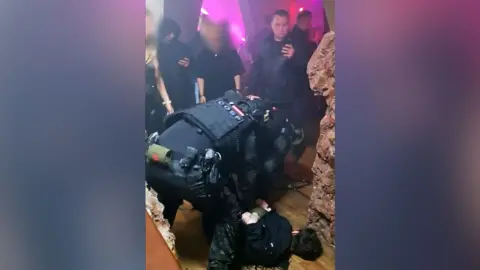
The specific context of the birthday party raid underscores how Russkaya Obshina's ideology translates into real-world harassment and violence targeting ordinary citizens. The group views celebrations and social gatherings, particularly those involving alcohol, music, or activities they classify as morally questionable, as legitimate targets for intervention. This aggressive approach to policing social behavior has created an atmosphere of fear and self-censorship in various Russian communities, where residents increasingly modify their behavior to avoid attracting unwanted attention from vigilante groups.
Government response to the rise of these vigilante groups has been notably muted, with authorities often declining to prosecute members for violence committed during raids. This apparent tacit approval has emboldened organizations like Russkaya Obshina to expand their operations and increase the intensity of their confrontations. The lack of law enforcement intervention sends a troubling message that official structures tolerate or even encourage extrajudicial enforcement of conservative social norms, further undermining the legitimacy of Russia's legal system.
International observers and civil rights organizations have raised concerns about this trend as indicative of broader democratic backsliding in Russia. The normalization of vigilante violence and the targeting of citizens for engaging in lawful activities represent serious human rights violations. These developments reflect a concerning pattern wherein state-promoted ideological messaging translates into grassroots enforcement mechanisms that suppress individual freedoms and establish alternative systems of social control operating outside legal frameworks.

The birthday party incident serves as a watershed moment for discussing the future of civil liberties in Russia and the consequences of allowing vigilante groups to operate without meaningful oversight or consequences. Citizens across the country are grappling with the reality that ordinary social activities can be disrupted by organized extremists determined to impose their interpretation of moral conduct on their communities. The psychological impact of such raids extends far beyond the immediate victims, creating a broader climate of fear that affects how entire communities interact and socialize.
Moving forward, the situation demands urgent attention from international bodies, human rights advocates, and progressive forces within Russian civil society. Legal reforms are essential to address the impunity granted to vigilante actors and to reestablish robust protections for freedom of assembly and association. Without meaningful intervention at both governmental and societal levels, the trajectory suggests that such incidents will become increasingly common, fundamentally altering the character of Russian communities and the daily lived experience of ordinary citizens seeking to exercise basic freedoms that many democracies take for granted.

The rise of Russkaya Obshina and similar organizations represents a critical juncture for Russia's future, with implications extending far beyond individual incidents of vigilante violence. The clash between state-promoted traditionalism and individual liberty, mediated through vigilante enforcement, threatens to create a society where fear and conformity replace genuine community values and authentic human connection. As Russia grapples with these challenges, the experiences of those targeted by vigilante groups like Russkaya Obshina offer cautionary lessons about the dangers of allowing ideology to override law and justice.
Source: BBC News


