
Rutgers Cancels Commencement Over Pro-Palestine Posts

Rutgers University cancels graduation speech by prominent alum Rami Elghandour due to pro-Palestinian social media posts, raising free speech concerns.
Rutgers University made headlines this week by rescinding its invitation to a distinguished alumnus who was preparing to deliver the commencement address at the university's New Brunswick, New Jersey campus. The controversial decision came after student complaints regarding social media posts the speaker had shared regarding Palestine, sparking intense debate about free speech and institutional values on college campuses.
Rami Elghandour, a successful tech entrepreneur and graduate of Rutgers' prestigious School of Engineering, found his invitation revoked just days before he was scheduled to address graduating students on May 15th. The decision represents a significant moment in ongoing discussions about how universities navigate politically sensitive topics and the role of graduation speakers in representing institutional perspectives. Elghandour's prominence in the technology sector and his involvement in award-winning film production made his selection initially a point of institutional pride.
Beyond his entrepreneurial ventures, Elghandour has gained recognition as an executive producer for the Oscar-nominated documentary film "The Voice of Hind Rajab," which examines Palestinian experiences during recent conflicts. His multifaceted career spanning technology innovation and socially conscious filmmaking had positioned him as an influential voice among Rutgers alumni, making his selection as commencement speaker a strategic choice for the university's ceremony.

In an exclusive interview with The Guardian, Elghandour expressed his concerns about the university's decision, characterizing it as sending a "dangerous" message to the student body. He articulated deep disappointment that his pro-Palestinian advocacy, which he views as humanitarian and consistent with his values, became the basis for institutional censorship. The entrepreneur emphasized that his positions on Middle Eastern affairs are rooted in genuine concern for human rights and represent legitimate political discourse rather than extremist viewpoints.
The cancellation has ignited substantial debate within the academic community about the boundaries of acceptable expression and the responsibilities of universities in fostering environments that encourage diverse perspectives. Faculty members and student organizations have publicly questioned whether Rutgers' decision reflects institutional policy or was made in response to pressure from specific constituencies within the campus community. The incident underscores broader tensions at American universities regarding Palestinian activism and the treatment of pro-Palestine voices in institutional spaces.
Elghandour's case adds to a growing list of similar incidents at universities nationwide where speakers have faced disinvitations or cancellations due to their political positions on the Israeli-Palestinian conflict. Educational institutions have increasingly found themselves navigating contentious terrain between supporting diverse viewpoints and responding to student concerns about speakers' stated positions. The pattern suggests that universities are struggling to establish consistent principles for evaluating speakers and determining what constitutes unacceptable speech.
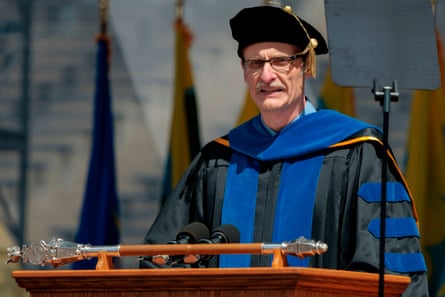
The timing of Rutgers' decision, coming just days before the scheduled commencement ceremony, created logistical challenges and practical complications for the university in identifying a replacement speaker. Additionally, the abrupt nature of the cancellation raised questions about whether adequate due process had been followed or whether Elghandour was afforded an opportunity to respond to specific complaints before the university made its final determination. Such procedural concerns have historically been central to debates about institutional fairness and adherence to principles of academic freedom.
Elghandour's documentary work demonstrates his commitment to amplifying marginalized voices and presenting perspectives often underrepresented in mainstream media. "The Voice of Hind Rajab" received international recognition for its poignant examination of civilian experiences during conflict, suggesting that his artistic contributions extend beyond technological innovation into documentary storytelling with humanitarian dimensions. His work has resonated with audiences seeking more nuanced understandings of complex geopolitical situations.
The incident raises fundamental questions about the purpose of graduation ceremonies and whether they should serve as platforms for intellectually challenging discourse or as occasions designed primarily for celebration and community affirmation. Educational philosophy debates often center on whether universities should protect speakers who express unpopular views or whether institutional leaders have responsibility to protect student experiences from speakers whose positions students find objectionable. These tensions have become increasingly pronounced in contemporary higher education environments.
Observers within the academic community have noted that the cancellation decision may set precedents affecting future speaker selections at Rutgers and potentially influence how other institutions evaluate prospective commencement speakers. If social media activism and political advocacy become disqualifying factors for speakers, universities may face pressure to select individuals with minimal public political engagement, potentially diminishing the intellectual caliber and diversity of perspectives represented at graduation ceremonies. The long-term implications for academic discourse remain uncertain.
The Rutgers situation exemplifies broader societal tensions regarding how different communities interpret free expression, institutional responsibility, and the balance between accommodating diverse student perspectives and maintaining open dialogue. Supporters of the cancellation argue that universities have responsibility to ensure all students feel welcomed and respected during significant ceremonies, while critics contend that intellectual diversity and exposure to varied viewpoints constitute essential educational experiences. These competing values continue to shape contemporary debates on American campuses.
As universities continue wrestling with these complex issues, the Elghandour case serves as a significant illustration of the challenges institutional leaders face when attempting to satisfy multiple constituencies with fundamentally different expectations about appropriate speech and speaker selection. Moving forward, Rutgers and peer institutions will likely need to develop more transparent, consistent frameworks for evaluating speakers and addressing student concerns about controversial figures invited to campus events. The path forward requires careful consideration of institutional values, educational missions, and commitments to both academic freedom and inclusive community environments.
Source: The Guardian


