
Safety Concerns Rise as Workers Rush Pool Renovation

Union warns of safety risks as contractors race to complete DC reflecting pool restoration before July 4th celebrations ordered by Trump.
As the nation prepares to celebrate its 250th anniversary, construction workers are facing mounting pressure to complete a high-profile renovation project at one of America's most iconic landmarks. The reflecting pool on Washington DC's National Mall, a site steeped in American historical significance and cultural importance, has become the focal point of a heated debate surrounding worker safety and accelerated timelines. Union representatives have raised serious concerns about the conditions workers face as they rush to meet an ambitious deadline set for the nation's independence day celebrations.
The Trump administration ordered the transformation of this historically significant water feature, directing contractors to drain the reflecting pool and initiate comprehensive upgrades to prepare it for the July 4th festivities. This project carries enormous symbolic weight, given the pool's role as the backdrop for Martin Luther King Jr.'s legendary 1963 "I Have a Dream" speech, one of the most pivotal moments in American civil rights history. The combination of the site's historical prominence and the compressed project timeline has created a complex situation that demands careful consideration of worker welfare alongside project completion.
The reflecting pool, which stretches across the heart of the National Mall between the Lincoln Memorial and the Washington Monument, serves as a powerful symbol of national unity and American ideals. With public access restricted and the site fenced off to facilitate the renovation work, the area has been transformed into an active construction zone. Contractors and laborers have been tasked with not only repainting the structure but also modernizing its infrastructure to ensure it meets contemporary standards while maintaining its historic character and visual impact.

Trade union officials monitoring the construction site have documented their concerns about the working conditions and safety protocols being implemented during this accelerated renovation effort. The urgency to complete the project by the July 4th deadline has reportedly created pressure that may be compromising standard safety procedures and best practices in the construction industry. Union representatives have emphasized that while ambitious project timelines are not uncommon in the construction sector, they must not come at the expense of worker health, safety, and welfare.
The specific safety concerns raised by union monitors include issues related to the pace of work, environmental conditions on the site, and the adequacy of safety equipment and protocols being employed. Workers are reportedly operating under tight schedules that may not allow sufficient time for proper break periods, adequate hydration, and necessary safety checks. The union has warned that these conditions could lead to accidents, injuries, or long-term health complications for the workers involved in this high-visibility project.
Historical context adds another layer of complexity to this situation. The reflecting pool has been a canvas for American expression and reflection for decades, hosting countless visitors who come to contemplate the nation's founding principles and ongoing journey. The decision to renovate the pool during this particular moment in American history, with the 250th anniversary celebrations serving as the impetus, demonstrates the significance officials place on presenting this iconic site in optimal condition for the commemorative events planned for early July.
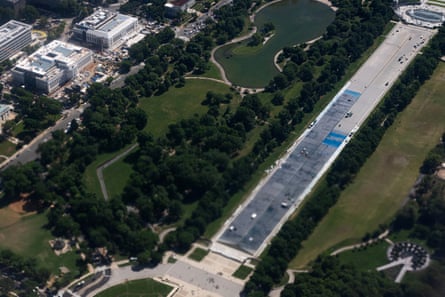
The tension between meeting ambitious deadlines and maintaining worker safety standards reflects broader concerns within the construction industry about how projects are managed when political or public pressure mounts. Industry observers note that while contractors and project managers are incentivized to meet completion dates, workers on the ground are the ones bearing the physical and health-related consequences of accelerated timelines. The union's intervention serves as a reminder that construction projects, regardless of their public profile or symbolic importance, must adhere to established safety regulations and ethical labor practices.
Project administrators have not publicly commented extensively on the union's safety allegations, though construction officials have indicated their commitment to completing the pool renovation project on schedule. The contractors involved have presumably developed management strategies to balance the timeline pressures with necessary safety considerations, though specific details about these approaches have not been widely disclosed to the public or media outlets covering the story.
As work continues at the site, multiple stakeholders remain invested in the outcome of this renovation. The Trump administration views the completed project as a centerpiece of the 250th anniversary celebrations, symbolizing national renewal and progress. Union representatives continue to advocate for worker protections and safe working conditions. Meanwhile, the public anticipates the restoration of this beloved landmark, eager to see how the upgraded reflecting pool will appear for the July 4th festivities and beyond.
The reflecting pool renovation represents more than just a construction project; it embodies questions about how America balances ambition with responsibility, progress with worker welfare, and symbolic importance with practical implementation. As the deadline approaches, all parties involved must navigate these competing priorities while ensuring that the workers undertaking this challenging task are properly protected and fairly treated. The outcome of this project will likely influence how future high-profile renovation initiatives are approached, particularly when tight timelines are involved.


