
Samsung Strike Suspended: Union Vote on Historic Deal

Samsung workers pause planned walkout as union members vote on tentative agreement. Discover what's at stake in this pivotal labor negotiation.
A significant labor dispute at Samsung Electronics has reached a critical juncture as union representatives announced a temporary suspension of the planned walkout that was scheduled to commence on Thursday. The decision to halt the industrial action comes as workers prepare to cast their votes on a tentative labor agreement that could reshape working conditions and compensation structures across the company's South Korean operations. This development marks a crucial moment in one of the most contentious labor negotiations the technology giant has faced in recent years.
The Samsung union strike was initially set to proceed following weeks of contentious negotiations between company management and union leadership over wages, benefits, and workplace conditions. However, union officials determined that pausing the action would provide adequate time for the entire membership to thoroughly review and deliberate on the proposed terms before making their final decision. The voting period represents a democratic process that could significantly influence the trajectory of labor relations within the company and potentially set precedents for other technology manufacturers in the region.
Union leaders have framed the tentative deal as a meaningful victory for workers, though specific details of the agreement remain partially undisclosed pending the outcome of the membership vote. The negotiated terms reportedly address several key demands that workers have championed throughout the bargaining process, including wage increases and improved benefits packages that align with worker expectations. This suspension of planned industrial action demonstrates both the potential for constructive dialogue and the underlying tensions that continue to simmer beneath the surface of the negotiation.
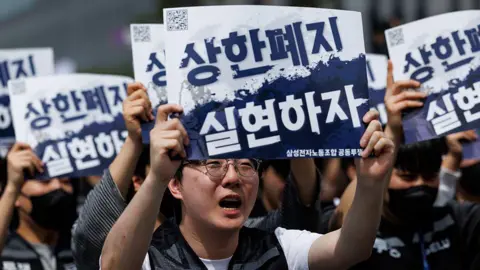
The background to this labor dispute extends back several months, with workers expressing frustration over wage stagnation and demanding enhanced compensation relative to the company's substantial profitability. Samsung Electronics has consistently ranked among the world's most valuable technology companies, yet workers have argued that they have not proportionally benefited from the company's financial success. The disparity between corporate earnings and worker compensation became a focal point of union organizing efforts, mobilizing thousands of employees across multiple facilities to support the collective bargaining effort.
Throughout the negotiation process, tensions escalated as initial company proposals failed to meet worker expectations, prompting union leadership to authorize the threatened walkout. The prospect of industrial action sent ripples through global supply chains, as Samsung produces critical semiconductor components that feed into various industries worldwide. The potential disruption to production timelines and delivery commitments created additional pressure on both parties to reach an acceptable resolution before any work stoppage could materialize.
Industry analysts have noted that the outcome of this labor dispute carries implications extending beyond Samsung's operations. A successful worker victory could embolden labor movements across South Korea's technology sector, potentially leading to similar organizing efforts at competitor companies like SK Hynix and LG Electronics. Conversely, if management successfully limits concessions, it may establish a ceiling for worker expectations across the industry. The balance achieved in this tentative agreement will likely influence labor dynamics throughout the region for years to come.
The decision to suspend the strike while union members vote reflects strategic thinking by labor leadership, who recognize that maintaining member unity is essential for long-term bargaining strength. By allowing the democratic process to unfold fully, union officials can claim legitimacy for whatever outcome emerges from the membership vote. This approach also provides breathing room for both parties to assess whether the tentative deal truly represents the best achievable outcome or whether additional negotiation might be necessary.
Worker perspectives on the proposed agreement appear mixed, with some members expressing cautious optimism while others remain skeptical about whether the concessions achieved adequately address their primary concerns. Social media discussions among union members have highlighted varying priorities, with some focusing on immediate wage increases while others prioritize longer-term benefits security and job protection provisions. This diversity of opinion underscores the challenge facing union leadership in building consensus around the tentative deal.
The Samsung labor negotiations have also drawn attention from international labor organizations and worker advocacy groups, who have monitored the process closely. Representatives from various countries have expressed solidarity with Samsung workers, recognizing the broader significance of labor disputes within major global corporations. International labor standards and worker rights have become increasingly salient in discussions about corporate responsibility, particularly as companies operate across multiple jurisdictions with varying labor protections.
Management's position throughout these negotiations has emphasized Samsung's commitment to maintaining competitive operational costs while acknowledging worker concerns. Company officials have argued that excessive wage increases could impact the company's ability to invest in research and development, potentially compromising its technological leadership in highly competitive markets. This framing of the issue as a choice between worker compensation and corporate investment has been contested by union representatives, who argue that Samsung's profitability can adequately support both objectives.
The suspension of the strike, while temporarily easing tensions, has not eliminated the underlying conflict between labor and management perspectives. If union members vote to reject the tentative agreement, industrial action would likely resume with increased intensity, as workers would have demonstrated their willingness to endure the consequences of prolonged negotiation. Conversely, if members approve the deal, Samsung management will need to successfully implement the agreed-upon terms while rebuilding relationships damaged by the contentious bargaining process.
Looking forward, the outcome of this vote will determine whether Samsung and its workers enter a new phase of collaborative relationship-building or whether deeper divisions will persist. The stakes extend beyond immediate compensation questions to encompass fundamental issues about worker dignity, corporate responsibility, and the distribution of wealth created through collective enterprise. How Samsung navigates these challenges will influence not only the experiences of its own employees but also serve as a model—either positive or cautionary—for labor relations throughout the technology industry globally.
Union observers have emphasized that this moment represents a crucial test of worker power and solidarity within one of the world's largest corporations. The decision to pause industrial action rather than proceed with the strike demonstrates strategic patience, but it also reflects confidence that union members will ultimately support whatever leadership recommends. The coming days will prove pivotal as workers review the tentative agreement details and prepare to cast their votes, determining whether this labor dispute moves toward resolution or escalates toward more contentious confrontation.
Source: BBC News


