
San Francisco's Iconic Vaillancourt Fountain Faces Demolition

The legendary Vaillancourt fountain, a divisive San Francisco landmark since the 1970s, is being dismantled. Skateboarders mourn the loss of this cultural icon.
The Vaillancourt fountain, an enormous brutalist sculpture that has dominated San Francisco's Embarcadero Plaza since its installation in the 1970s, met a dramatic and symbolic end when it burst into flames during its early May dismantling. This dramatic finale encapsulated decades of controversy surrounding one of the Bay Area's most polarizing public artworks, marking the conclusion of an era that saw the structure become embedded in the city's cultural identity, particularly within the skate culture community that had claimed it as their own.
The decision to dismantle the iconic fountain represents a significant turning point in San Francisco's approach to urban public spaces and architectural heritage. After the city council voted to potentially replace the sculptural landmark with an open, grassy park design, a coalition of concerned citizens—particularly skateboarders and urban athletes—voiced their opposition to what they viewed as the erasure of an important cultural touchstone. For generations of Bay Area residents who grew up navigating the fountain's unique architectural features, the removal signified the loss of more than just concrete and steel; it represented the disappearance of a chapter in San Francisco's distinctive urban identity.
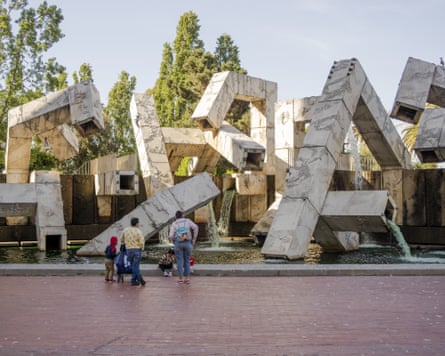
The fountain's journey from celebrated public art to controversial eyesore illustrates the complex relationship between architectural ambition and urban functionality. Designed as a monumental statement piece, the structure's imposing angular arms and towering form were intended to inspire awe and contemplation. However, what began as an architectural marvel gradually transformed into a structure that divided public opinion along generational and cultural lines, with some viewing it as an eyesore while others—particularly the skateboarding community—embraced it as a functional and inspirational landmark that defined their relationship with urban space.

The skateboarding community's connection to the Vaillancourt fountain represented something deeper than mere recreational enthusiasm; it symbolized a form of cultural resistance and creative adaptation. Skaters had transformed the fountain from its original intended purpose into an urban playground, discovering in its geometric form perfect lines and angles for tricks and maneuvers. This repurposing of public space reflected a broader pattern in skateboarding culture where urban infrastructure becomes reimagined as terrain for artistic expression and athletic achievement. The fountain's concrete surfaces, varied elevations, and architectural complexity made it an ideal location for skate sessions that drew enthusiasts from across the Bay Area.
Over the decades, the Vaillancourt fountain became deeply embedded in San Francisco's urban culture and heritage. Musicians recorded videos at its base, photographers used its dramatic form as a backdrop for artistic projects, and countless tourists marveled at its imposing presence. Yet this very prominence also made it a lightning rod for criticism from those who believed the fountain detracted from the otherwise scenic waterfront location. The structure's brutalist aesthetic, with its raw concrete and aggressive geometry, represented a particular moment in architectural history that had fallen out of favor with many urban planners and developers who preferred more open, accessible public spaces.
The decision to remove the fountain did not emerge overnight but rather represented the culmination of decades of debate about San Francisco's public spaces and priorities. City officials increasingly pointed to successful park renovations in other parts of the city as models for what Embarcadero Plaza could become. They argued that replacing the fountain with an open park space would create a more inclusive environment that could accommodate a wider range of activities and serve more diverse segments of the population. Proponents of the removal emphasized accessibility, family-friendliness, and the opportunity to create a green space that would enhance the waterfront experience for all San Francisco residents.
The skateboarding community, however, articulated compelling counterarguments about cultural erasure and the importance of preserving spaces that had become meaningful to marginalized or subcultural groups. They pointed out that the fountain represented a unique piece of San Francisco's architectural legacy that reflected a specific era of artistic ambition and urban design philosophy. Moreover, skaters argued that the removal of the fountain would eliminate one of the few remaining authentic urban spaces where their culture could flourish without constant pressure from property developers and city officials seeking to sanitize and commodify public spaces. The tension reflected broader anxieties about San Francisco's rapid transformation and the displacement of long-standing cultural practices.
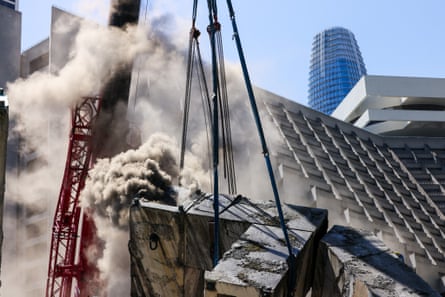
The physical dismantling of the Vaillancourt fountain occurred in phases throughout May, with crews carefully removing sections of the monumental structure. The dramatic fire that erupted during this process seemed almost metaphorical—a final, spectacular moment that underscored the emotional weight attached to the removal. For those who had grown up with the fountain as a permanent fixture in their urban landscape, the sight of it being systematically taken apart represented a tangible loss, a removal of something that had seemed as immovable and eternal as the city itself.
The future of Embarcadero Plaza remains uncertain, with preliminary designs suggesting a redesigned space that emphasizes openness and accessibility. City officials hope that a newly reimagined plaza will become a vibrant community gathering space that serves a broader cross-section of San Francisco residents. However, the removal of the Vaillancourt fountain raises important questions about how cities balance progress and preservation, and whether in pursuit of modernization, San Francisco may be erasing important components of its distinctive cultural identity. The debate surrounding the fountain's demolition extends beyond a single structure to encompass larger questions about whose interests are prioritized in urban planning decisions and what constitutes valuable public art and heritage.
The legacy of the Vaillancourt fountain will likely persist long after the last piece of concrete has been carted away. For those who spent countless hours at the structure—whether skating, creating art, or simply experiencing an unconventional urban landscape—the fountain will remain a symbol of a particular moment in San Francisco's cultural evolution. As the city continues to transform, debates about the removal of the fountain may serve as a catalyst for more thoughtful conversations about urban preservation and the importance of maintaining spaces that reflect the city's diverse subcultures and artistic traditions, ensuring that future generations can connect with the authentic, unpolished character that once defined San Francisco's unique appeal.
Source: The Guardian


