
Sanders Warns: US Unprepared for AI Revolution Speed

Bernie Sanders urges Congress to act urgently on AI regulation after tech meetings, calling current moment 'most dangerous' in modern US history.
Following a series of high-level meetings with prominent technology industry leaders in California, Senator Bernie Sanders has issued a stark warning about America's preparedness for the rapidly accelerating artificial intelligence revolution. The Vermont senator delivered his sobering assessment during a public appearance at Stanford University on Friday, emphasizing that both Congress and the American public remain woefully uninformed about the unprecedented pace and massive scope of AI development currently underway.
Speaking alongside Representative Ro Khanna in the heart of Silicon Valley, Sanders pulled no punches in his characterization of the current situation. He described the present moment as potentially "the most dangerous moment in the modern history of this country," underscoring the gravity of the challenges posed by AI development proceeding at breakneck speed without adequate oversight or public understanding.
The senator's urgent call for action comes as major technology companies continue their fierce competition to develop increasingly sophisticated and powerful AI systems. This race has intensified dramatically in recent years, with companies pouring billions of dollars into research and development while regulatory frameworks struggle to keep pace with technological advancement.
Sanders emphasized the critical need for policymakers to "slow this thing down" through immediate legislative intervention. His comments reflect growing concerns among some lawmakers and experts that the current trajectory of AI development may be outpacing society's ability to understand and manage its implications effectively.
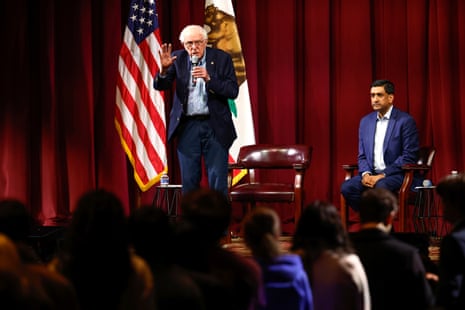
The meetings with unspecified tech industry leaders that preceded Sanders' Stanford appearance appear to have reinforced his concerns about the disconnect between the rapid pace of technological development and public policy responses. While the specific participants in these discussions were not disclosed, Sanders' subsequent comments suggest these conversations provided him with insider insights into the scale and timeline of upcoming AI breakthroughs.
Representative Ro Khanna, who joined Sanders for the Stanford discussion, brings significant credibility to these concerns given his position representing Silicon Valley constituents and his extensive experience working with technology companies. Khanna's participation in these discussions signals bipartisan recognition that AI regulation represents a critical policy challenge requiring immediate attention from Congress.
The senator's characterization of widespread ignorance about AI's implications extends beyond just policymakers to include the general American public. This knowledge gap represents a significant challenge for democratic governance, as effective policy responses typically require some degree of public understanding and support for regulatory measures.
Sanders' warning comes at a time when artificial intelligence capabilities are advancing at an unprecedented rate across multiple domains. From natural language processing to image generation, from scientific research to creative endeavors, AI systems are demonstrating capabilities that were considered science fiction just a few years ago. The speed of these developments has caught many observers off guard, including seasoned technology policy experts.
The call to "slow this thing down" represents a notable departure from the traditionally tech-friendly approach that has characterized much of American technology policy in recent decades. This shift reflects growing recognition that the potential risks associated with advanced AI systems may require more proactive regulatory intervention than has been typical for emerging technologies.
Industry leaders and technology companies have generally resisted calls for regulatory constraints on AI development, arguing that such measures could handicap American competitiveness in a global race for AI supremacy. However, Sanders' meetings with tech leaders suggest that even some industry insiders may be expressing private concerns about the current pace and direction of development.
The senator's Stanford appearance highlights the particular importance of engaging with the academic and research community on these issues. Stanford University has played a pivotal role in AI research and development, making it an appropriate venue for discussing the intersection of technological advancement and public policy.
The timing of Sanders' warning coincides with increasing attention to AI governance issues at both the federal and state levels. Various government agencies and legislative bodies have begun exploring regulatory approaches, though comprehensive federal legislation remains elusive. The complexity of AI technology and its wide-ranging applications across different sectors makes crafting effective policy particularly challenging.
Sanders' characterization of the current moment as "the most dangerous" in modern American history places AI revolution concerns in the context of other major historical challenges. This comparison suggests that he views the potential consequences of uncontrolled AI development as comparable to threats like nuclear weapons, climate change, or major economic crises.
The senator's emphasis on the speed of AI development reflects concerns that the window for implementing effective governance measures may be rapidly closing. Unlike previous technological revolutions that unfolded over decades, AI capabilities appear to be advancing on a timeline measured in months or years rather than decades.
Public awareness campaigns and educational initiatives may need to accompany any regulatory efforts, given Sanders' observation that Americans generally lack understanding of AI's implications. This educational component represents a significant challenge, as AI technology involves complex technical concepts that can be difficult to communicate to general audiences.
The bipartisan nature of these concerns, evidenced by collaboration between Sanders and Khanna despite their different political backgrounds, suggests potential for broader legislative consensus on AI governance issues. However, translating this concern into specific policy proposals and legislative action will require sustained effort and careful navigation of competing interests.
Moving forward, Sanders' warning establishes a clear expectation for urgent Congressional action on AI policy. The senator's call for slowing down AI development will likely face resistance from industry groups and technology advocates who argue that regulatory constraints could undermine innovation and American technological leadership.
The effectiveness of any policy response will depend significantly on lawmakers' ability to quickly develop sophisticated understanding of AI technology and its implications. This learning curve represents a major challenge for a Congress that has historically struggled to keep pace with technological change in areas like social media regulation and data privacy.
Source: The Guardian


