
Scientist Who Revealed Star Secrets Gets Blue Plaque

Cecilia Payne-Gaposchkin, the brilliant astronomer who discovered stellar composition, honored with English Heritage plaque in Notting Hill.
Cecilia Payne-Gaposchkin, a pioneering astronomer whose groundbreaking research fundamentally transformed our understanding of the cosmos, has been officially recognized with an English Heritage blue plaque. The historic marker was unveiled at her childhood residence, 70 Lansdowne Road in Notting Hill, London, cementing her place among history's most influential scientists. This honor celebrates not only her remarkable contributions to astronomy but also her unwavering determination to pursue scientific discovery during a time when women faced significant barriers in academia.
Born in 1900 in Wendover, Buckinghamshire, Cecilia Payne-Gaposchkin displayed an extraordinary aptitude for mathematics and natural philosophy from an early age. Her family, while supportive of her intellectual pursuits, did not initially encourage her toward a scientific career, as was typical for young women of her generation. However, her passion for understanding the natural world proved irresistible, and she eventually pursued her education at Newnham College, Cambridge, one of the few institutions that admitted women at the time. The teenage years spent at her Notting Hill home represent a formative period during which her intellectual foundations were laid and her ambitions crystallized.
The blue plaque designation carries profound significance within British culture and heritage preservation. English Heritage blue plaques are awarded to buildings associated with historically important figures and events, recognizing their contributions to society and culture. By installing this marker at her childhood home, the organization acknowledges the transformative impact Payne-Gaposchkin had on scientific knowledge. Her commemoration joins the ranks of luminaries whose early lives were shaped within specific locations, making this recognition particularly meaningful for aspiring young scientists who may visit or read about the site.
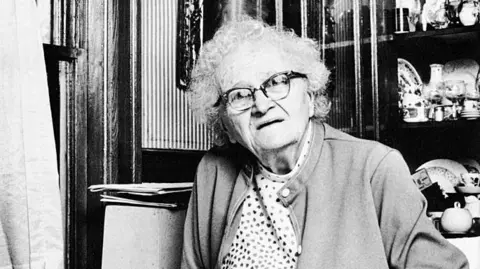
Payne-Gaposchkin is described by colleagues and historians as "a scientist of exceptional brilliance and determination," qualities that defined her entire career. Her most significant achievement came in 1925 when she completed her doctoral thesis at Radcliffe Observatory in Oxford, which proposed a revolutionary theory about stellar composition. At a time when the scientific establishment largely rejected her findings, she persisted in her research, eventually proving that stars consist primarily of hydrogen and helium—a discovery that fundamentally altered astronomical science. This breakthrough was initially underappreciated, with some contemporaries reluctant to accept conclusions that contradicted prevailing theories about stellar structure.
The journey to her groundbreaking discovery involved meticulous analysis of stellar spectra and innovative interpretations of spectroscopic data. Payne-Gaposchkin employed cutting-edge techniques available in the 1920s to examine light emitted by stars, using this information to deduce their chemical composition. Her methodology combined rigorous mathematical analysis with creative problem-solving, enabling her to make deductions that had eluded other researchers. The thesis itself, spanning hundreds of pages, presented comprehensive evidence supporting her hypothesis about the prevalence of hydrogen in stellar atmospheres.
Despite the significance of her work, Payne-Gaposchkin faced considerable professional challenges throughout her career. As a woman in early twentieth-century academia, she encountered systematic discrimination that limited her opportunities for advancement and recognition. Many universities refused to hire women in senior research positions, and even when her work was acclaimed, she sometimes struggled to receive appropriate credit. She eventually secured a position at Harvard Observatory, where she conducted much of her most important research and trained generations of younger astronomers who would themselves become distinguished scientists.
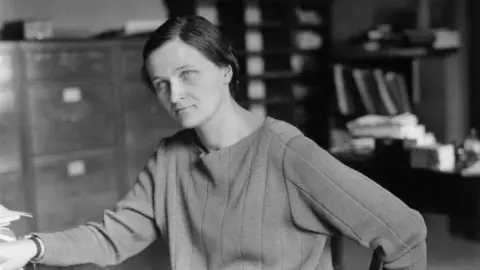
The significance of Payne-Gaposchkin's stellar discoveries extended far beyond her immediate findings about chemical composition. Her work established a foundation for modern astrophysics, enabling subsequent researchers to better understand stellar evolution, nucleosynthesis, and the life cycles of stars. By demonstrating that stars were composed of the same elements found on Earth, she helped bridge the gap between terrestrial and celestial science, reinforcing the principle of cosmic unity. This perspective became crucial for advancing numerous fields within astronomy and cosmology throughout the twentieth century.
Later in her career, Payne-Gaposchkin expanded her research interests to include the study of variable stars and stellar evolution. She published extensively, contributing numerous papers to peer-reviewed journals and authoring books that became standard references in the field. Her meticulous approach to observation and analysis set new standards for astronomical research, and her dedication to rigorous methodology influenced how subsequent generations of astronomers conducted their work. She remained active in research until her death in 1979, never slowing her pace despite the physical and professional obstacles she encountered.
The blue plaque recognition acknowledges not merely her scientific achievements but her role as a trailblazer for women in STEM fields. Her persistence in pursuing a scientific career despite societal expectations and institutional barriers demonstrated that intellectual capability transcends gender. For contemporary women scientists, Payne-Gaposchkin represents both an inspiration and a reminder of how far the scientific community has progressed, while also highlighting the distance still to travel toward full equality. Her story illustrates that scientific progress has often been achieved by individuals willing to challenge established orthodoxy and work persistently toward truth.

The unveiling ceremony at 70 Lansdowne Road brought together astronomers, historians, and members of the local community to celebrate Payne-Gaposchkin's legacy. Speakers discussed her contributions to science and her significance as a role model for young people interested in pursuing careers in research. The event highlighted how her childhood home in Notting Hill, now a building of historical importance, serves as a tangible connection between past and present, allowing visitors to engage with the birthplace of astronomical innovation. The blue plaque itself became a permanent fixture in the urban landscape, ensuring that future generations would encounter her name and be prompted to learn about her achievements.
Educational institutions have increasingly recognized the importance of studying Payne-Gaposchkin's life and work as part of science curricula. Her story demonstrates how scientific progress is achieved through dedication, creativity, and intellectual courage. Young students learning about stellar composition now encounter her name alongside the fundamental concepts she helped establish. Universities and observatories regularly acknowledge her pioneering role when teaching modern astrophysics, ensuring that new generations of scientists understand the historical context of contemporary knowledge.
The recognition afforded by the English Heritage blue plaque represents a broader cultural shift toward acknowledging the contributions of women scientists who were historically overlooked or underappreciated. Organizations and institutions worldwide are working to rectify gaps in historical records and ensure that pioneering women receive appropriate recognition for their achievements. Payne-Gaposchkin's commemorative plaque exemplifies this commitment, serving as both a tribute to her individual accomplishments and a statement about the scientific community's evolving values regarding inclusion and recognition.
The legacy of Cecilia Payne-Gaposchkin continues to shape contemporary astronomy and inspire individuals pursuing scientific careers. Her discoveries remain foundational to how scientists understand the universe, and her example demonstrates that truly transformative scientific insights can emerge from rigorous observation and bold thinking. As the English Heritage blue plaque now marks her childhood home at 70 Lansdowne Road, it stands as an enduring symbol of her exceptional contributions to human knowledge and her determination to unlock the secrets of the stars.
Source: BBC News


