
Scorpions Weaponize Metal to Strengthen Stingers

New research reveals scorpions deliberately incorporate zinc, manganese, and iron into their venom stingers and pincers as an evolutionary adaptation.
Scorpions have long fascinated scientists with their formidable arsenal of biological weapons. Armed with a pair of front pincers (scientifically termed chelae or pedipalp appendages) and a venom-injecting telson, or stinger, positioned on the posterior end of their tail, these arachnids are nature's perfectly designed predators. However, recent research has uncovered an even more sophisticated layer to their deadly toolkit: these creatures have evolved to reinforce their weapons with metallic elements, essentially creating biological armor enhanced by chemical engineering.
A detailed chemical analysis of scorpion anatomy revealed that their stingers and pincers contain significant concentrations of zinc, manganese, and iron. While the presence of these metals in scorpion weapons has been documented since the 1990s, scientists remained uncertain about whether this metallic incorporation represented a deliberate evolutionary strategy or simply an accidental accumulation of environmental minerals. This fundamental question about the nature of scorpion biology prompted researchers to undertake a comprehensive investigation into the matter.
"That the metals are there has been known since the 1990s," explained Sam Campbell, a biologist specializing in arthropod physiology at the University of Queensland in Australia. "What we didn't know was whether scorpions evolved to be like that or if it was accidental and they were just picking the metals up from the environment." Campbell's question represented a crucial distinction in understanding whether scorpions possessed an active biological mechanism for metal incorporation or merely benefited from environmental exposure.
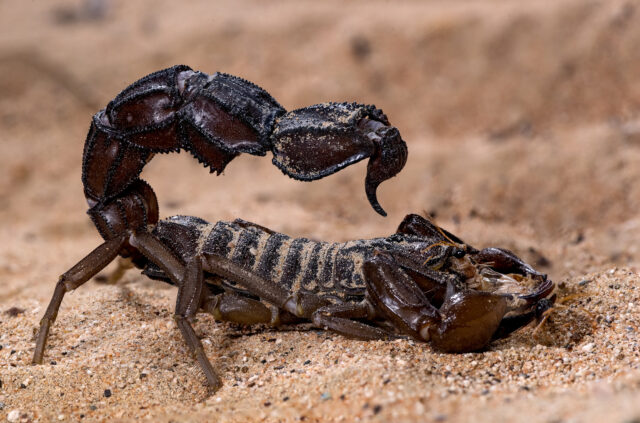
To investigate this compelling question, Campbell and his research team at the University of Queensland conducted an extensive examination of how metals are distributed across the stingers and pincers of numerous different scorpion species. Rather than assuming a random pattern of metallic accumulation, the researchers carefully mapped the precise locations and concentrations of zinc, manganese, and iron across various specimens. Their systematic approach involved collecting data from multiple species, analyzing the elemental composition at different anatomical locations, and comparing the patterns between individuals and species.
The findings from this meticulous investigation were detailed in a peer-reviewed study published in the prestigious Journal of The Royal Society Interface, one of the leading multidisciplinary scientific journals. The research presented compelling evidence that undermined the accidental accumulation hypothesis entirely. Instead, the data suggested a coordinated, intentional biological process that scorpions have perfected through evolutionary adaptation.
The distribution patterns of metals across scorpion weapons revealed a remarkable consistency and specificity that could not be attributed to random environmental uptake. Rather than finding random concentrations scattered throughout their exoskeletons, the researchers observed highly organized, targeted accumulation of metallic elements precisely where they would be most advantageous. This strategic placement suggested that scorpions had developed sophisticated biological mechanisms to actively incorporate and concentrate these elements within their weaponry.
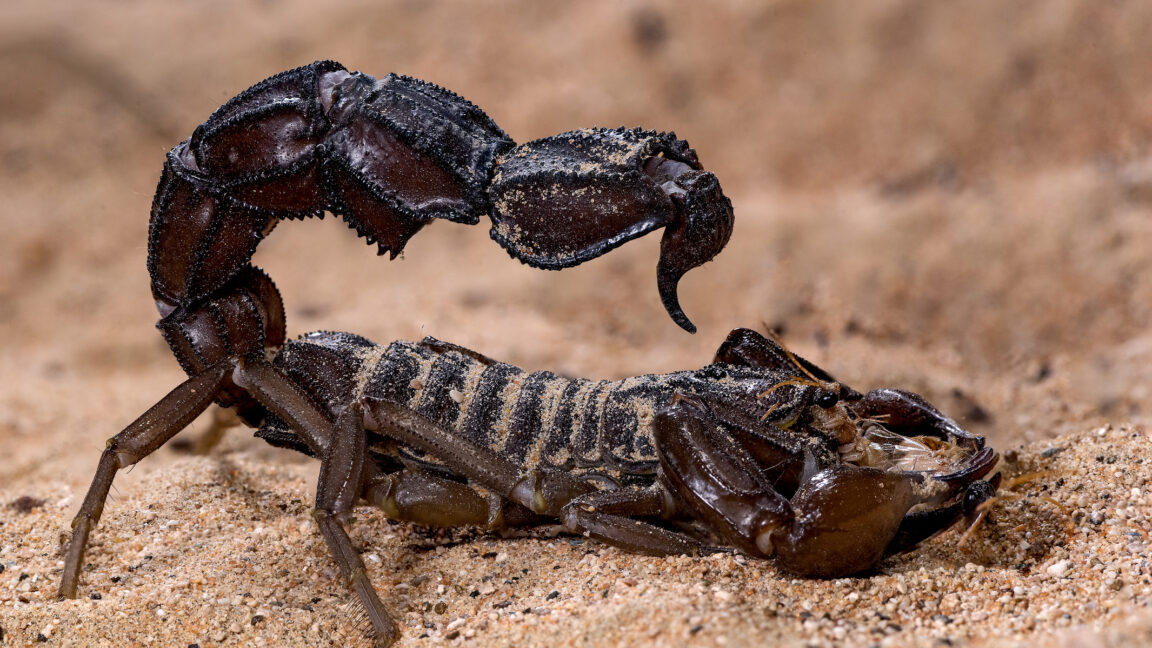
The implications of this discovery are profound for understanding arthropod biomineralization and weaponry evolution. By reinforcing their stingers and pincers with metallic elements, scorpions effectively increase the hardness, durability, and piercing capability of their weapons. Zinc, in particular, plays crucial roles in biological systems, enhancing structural integrity and enzymatic function. Manganese contributes to the mechanical properties of biological materials, while iron provides strength and resilience. When combined, these elements create a composite material that is considerably more effective than organic structures alone.
This discovery places scorpions alongside other animals known to use biomineralization as a weapon enhancement strategy. Certain mollusks incorporate minerals into their shells for protection, and some marine organisms utilize calcium compounds to strengthen their defensive structures. However, scorpions represent a particularly sophisticated example of weaponized biomineralization, as they concentrate metallic elements specifically in their offensive appendages rather than distributed throughout their bodies.
The research also provides valuable insights into the evolutionary pressures that shaped scorpion biology over millions of years. In competitive predator-prey interactions, even marginal improvements in weapon effectiveness could provide significant survival advantages. A stinger reinforced with metallic elements would penetrate prey defenses more effectively, increasing hunting success rates and allowing scorpions to subdue larger or more heavily armored prey species.

Furthermore, the study contributes to broader scientific understanding of how organisms manipulate their chemical environment to achieve specific biological outcomes. Rather than being passive recipients of their surroundings, scorpions actively extract and concentrate metallic elements from their environment, incorporating them into anatomical structures through sophisticated biological processes. This represents an elegant example of how natural selection has refined behavioral and physiological mechanisms to maximize survival and reproductive success.
The research team's work opens numerous avenues for future investigation. Scientists may explore the specific biological pathways through which scorpions absorb and concentrate metals, examine whether different species show varying degrees of metallic enhancement, and investigate how diet and environmental metal availability influence the composition of scorpion weapons. Additionally, this research could inspire biomimetic applications in materials science and engineering, where understanding how organisms naturally reinforce biological structures could lead to innovations in composite materials and protective equipment design.
As Campbell and his colleagues continue their investigations into scorpion biology, their findings remind us that nature has spent hundreds of millions of years perfecting sophisticated solutions to survival challenges. The ability to incorporate metallic elements into biological weaponry represents just one example of how evolution has equipped organisms with remarkable adaptations. Future research will undoubtedly reveal additional layers of complexity in how scorpions and other arthropods utilize chemistry and materials science in their biological arsenal.
Source: Ars Technica


