
Serial Killer Exhibit Sparks Debate on True Crime

A controversial new exhibit in New York raises questions about America's fascination with serial killers and whether the obsession has crossed ethical boundaries.
A sprawling new exhibition that recently opened its doors in Manhattan is forcing uncomfortable conversations about how American culture consumes and commodifies the stories of history's most notorious murderers. The Mind of a Serial Killer: the Experience has emerged as a lightning rod for debate surrounding the nation's seemingly insatiable appetite for true crime content, leaving visitors and critics alike questioning whether the line between education and exploitation has been irrevocably crossed.
The moment I submitted the required waiver to enter the experience, a nagging doubt crept into my mind – perhaps I should have scrutinized the legal document more carefully before agreeing to its terms. What exactly would unfold inside this peculiar attraction? The answer proved to be far more complex than a simple haunted house experience, though the aesthetic certainly bore resemblance to one. The exhibition aims to chronicle the criminal histories of some of America's most infamous murderers, including Ted Bundy, Jeffrey Dahmer, Ed Gein, and John Wayne Gacy, among others.
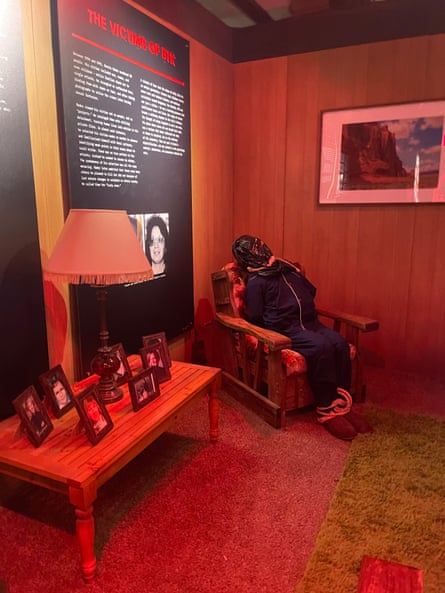
The exhibit, which recently made its way to New York following its initial debut in Dublin earlier in the year, presents itself as a serious attempt to examine the psychological motivations behind serial murder. Through a combination of meticulously recreated crime scenes, detailed wall text, and psychological profiles of the perpetrators, the exhibition purports to offer visitors a window into the minds of these killers. However, the execution raises profound questions about the appropriateness of such presentations and their impact on both the public consciousness and, more importantly, the families of the victims.

The true crime obsession gripping America has reached unprecedented levels in recent years, fueled by an endless stream of podcasts, documentaries, streaming series, and books dedicated to recounting the exploits of serial murderers. What was once a niche interest confined to academic circles and law enforcement professionals has transformed into mainstream entertainment, with millions of people consuming graphic details about real murders as casual entertainment. This cultural phenomenon reflects something troubling about contemporary society – a morbid fascination that transforms genuine tragedy into digestible content.
The museum-style presentation of these crimes walks a precarious tightrope between educational endeavor and sensationalism. While proponents argue that understanding the psychology of serial killers serves an important educational purpose, critics contend that recreating crime scenes and packaging the stories for entertainment fundamentally disrespects the victims and their families. The line between thoughtful examination and gratuitous exploitation becomes increasingly blurred when admission fees are charged and the experience is marketed with the same promotional tactics used for other entertainment venues.
One particularly troubling aspect of this exhibition is how it centers the perpetrators rather than their victims. The detailed psychological profiles and crime scene reconstructions inevitably shift focus toward the killers, making them the stars of the show. This narrative structure mirrors much of the true crime media landscape, where charismatic murderers like Ted Bundy receive celebrity-like treatment, complete with fans, merchandise, and devoted followings. Such romanticization can be dangerous, potentially inspiring copycat crimes and overshadowing the very real human suffering caused by these individuals.

The psychological impact on visitors cannot be overlooked either. Exposing oneself to graphic depictions of real murders, even in controlled museum settings, carries potential consequences for mental health and emotional well-being. For some visitors, the experience might trigger traumatic memories or exacerbate existing anxiety disorders. The casual nature with which society now consumes such content – during lunch breaks or weekend outings – suggests a troubling normalization of violence and suffering.
Furthermore, the international expansion of this exhibit, from Dublin to New York, indicates a growing global market for serial killer entertainment. This commercialization raises ethical questions about who benefits from these exhibitions and whether any portion of proceeds goes toward victim advocacy, mental health resources, or law enforcement education. Without such commitments, the enterprise appears to be purely profit-driven, capitalizing on human tragedy without contributing meaningfully to society.
The families of victims have often expressed their pain at seeing their loved ones' deaths packaged as entertainment. They describe the experience of encountering their tragedy displayed for strangers' amusement as a continued violation and re-traumatization. Yet their voices are frequently marginalized in discussions about these exhibitions, overshadowed by arguments about free speech and artistic expression. A more ethical approach would center victim families' perspectives and potentially involve them in decisions about how their relatives' stories are told and presented.
The broader question about America's true crime obsession extends beyond individual exhibitions to encompass our entire media ecosystem. Why has serial murder become such compelling entertainment? Psychologists and sociologists offer various theories – the desire to understand evil, the safety of experiencing danger from a distance, the appeal of intricate puzzles that need solving. Yet these explanations, while valid, don't fully justify the sheer volume and graphic nature of content being produced and consumed.
There exists a legitimate educational argument for studying criminal psychology and understanding what drives individuals to commit heinous acts. Law enforcement professionals, researchers, and students of criminal justice require access to detailed case information. However, there's a substantial difference between academic study and entertainment-focused exhibitions designed to attract paying customers seeking thrills. The blending of these purposes muddies the waters considerably, making it difficult to distinguish educational value from exploitation.
Moving forward, society must grapple with uncomfortable questions about where ethical boundaries should be drawn. Should such exhibitions be permitted to operate freely under free speech protections, or should regulations be implemented to ensure victim dignity and family consent? Should media companies be required to contribute portions of profits to victim support services? These questions lack easy answers, but they demand serious consideration as the true crime industry continues expanding.
The existence of exhibits like Mind of a Serial Killer: the Experience ultimately serves as a mirror reflecting contemporary cultural values and priorities. What we choose to spend money on, what we choose to consume for entertainment, and how we treat the stories of real victims all reveal something about our society. As America's serial killer fascination shows no signs of diminishing, the responsibility falls on cultural institutions, media companies, and individual consumers to consider the ethical implications of their engagement with these dark chapters of human history.
Source: The Guardian


