
Setbacks for Efforts to Silence Pro-Palestinian Voices on US Campuses

Despite a crackdown on protest over Israel and support for Palestinian rights, court rulings have found common pro-Palestinian speech to be constitutionally protected.
In recent years, the debate over whether criticism of Israel and Zionism constitutes antisemitism has become increasingly contentious. Pro-Israel groups have filed hundreds of lawsuits and legal actions in an effort to silence pro-Palestinian speech, particularly in the wake of the protest movement surrounding Israel's recent war in Gaza.
However, the most important rulings to have emerged from these cases have found that the speech and slogans at the heart of the controversies are in fact protected by the First Amendment. This represents a series of setbacks for those attempting to shut down pro-Palestinian discourse on US campuses and beyond.
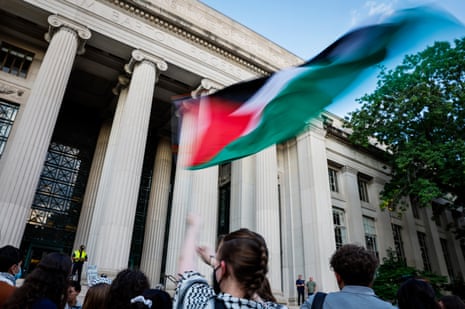
The crackdown on pro-Palestinian speech has taken various forms, including the loss of jobs and the use of allegations of antisemitism as a pretext for censorship. This has fueled an unprecedented effort to suppress protest over Israel and shows of support for Palestinian rights, particularly at universities.
Nevertheless, legal experts say that the rulings in these cases have made it clear that common pro-Palestinian speech is constitutionally protected, despite the efforts of pro-Israel groups to silence it. This represents an important victory for advocates of free speech and Palestinian rights, even as the battles continue.
The stakes in this debate are high, as the allegations of antisemitism have had real consequences, costing people their jobs and providing a pretext for censorship. The crackdown on pro-Palestinian speech has been particularly acute on university campuses, where the protest movement surrounding Israel's recent war in Gaza has been particularly pronounced.
Despite these challenges, the legal rulings that have emerged from the wave of lawsuits filed by pro-Israel groups represent an important victory for those who believe that criticism of Israel and Zionism is not inherently antisemitic and should be protected under the First Amendment. As the debate continues, this precedent may prove crucial in safeguarding the right to free expression on these issues.
Source: The Guardian


