
Shifting Sands: The Trump Administration's Evolving Rationale for War on Iran

Unraveling the ever-changing justifications for potential military action against Iran, from regime change to nuclear threat and beyond.
As the geopolitical tensions between the United States and Iran continue to escalate, the Trump administration has struggled to articulate a clear and consistent rationale for potential military action. The administration's shifting narrative has left many observers and global leaders questioning the true motives behind the brewing conflict.
When the United States launched Operation Epic Fury last Saturday, the White House found itself in a communications quagmire, tasked with explaining to the American public, Congress, and the international community why it had decided to go to war with Iran. The ever-changing justifications from administration officials have only served to further muddy the waters and raise concerns about the underlying strategic objectives.
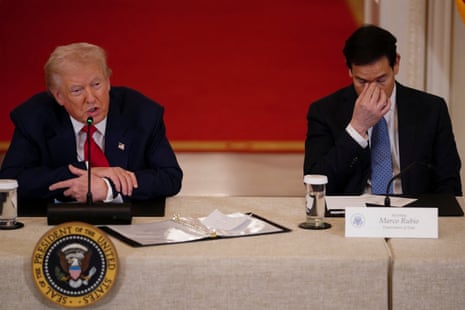
Initially, the administration pointed to the threat of Iran's nuclear program as the primary driver for military action, echoing similar rhetoric used to justify the invasion of Iraq in 2003. However, as international inspectors continued to verify Iran's compliance with the nuclear deal, this rationale began to crumble, leaving the White House to scramble for alternative explanations.
In the ensuing weeks, the narrative shifted to focus on Iran's support for regional proxy groups and its alleged involvement in attacks on U.S. interests in the Middle East. Administration officials argued that decisive action was necessary to curb Iran's destabilizing influence and protect American assets in the region.
Yet, even this justification has been met with skepticism, as critics point out that military force is unlikely to effectively address the complex geopolitical dynamics that have long driven Iran's regional influence. Some observers have even suggested that the true motivation for the war may be regime change – a controversial and historically fraught objective that has often led to unintended consequences.
As the administration continues to grapple with its messaging, the prospect of a full-scale war with Iran has become increasingly concerning for the international community. The lack of a coherent and consistent rationale has eroded trust in the U.S. government's decision-making process and raised fears about the potential for a protracted and costly conflict with far-reaching global implications.
In the face of these challenges, the Trump administration must strive to provide a clear and convincing explanation for its actions, one that is grounded in facts and aligns with the principles of international law and diplomacy. Failure to do so could further isolate the United States on the global stage and undermine its credibility as a reliable partner in addressing the complex geopolitical issues of the 21st century.
Source: The Guardian


