
Snack Brand Goes Monochrome Amid Iran Tensions

Global snack manufacturer shifts to black and white packaging due to supply chain disruptions caused by Iran conflict affecting ink availability worldwide.
A major snack company packaging redesign has made headlines as geopolitical tensions in the Middle East continue to disrupt critical supply chains affecting manufacturers worldwide. The transition represents one of the most visible consequences of ongoing regional instability, as businesses scramble to adapt to unprecedented resource shortages in the global market.
The Strait of Hormuz closure has emerged as a critical bottleneck in international commerce, with the waterway responsible for transporting a substantial portion of global energy resources. This strategic chokepoint, through which millions of barrels of oil pass daily, has experienced significant disruptions due to escalating tensions between regional powers, fundamentally altering the flow of essential petrochemicals and raw materials that industries depend upon.
Petrochemical derivatives used in modern ink formulations have become increasingly scarce, forcing manufacturers across multiple sectors to reconsider their packaging strategies. The global supply chain disruption has created a domino effect, impacting not only the cosmetics and beverage industries but also extending to food packaging manufacturers who rely heavily on specialty inks for branding and product information.
The snack giant's decision to implement black and white packaging represents a pragmatic response to constraints that have made traditional full-color printing significantly more expensive and difficult to source. Rather than waiting for supply normalization, the company has chosen to pivot toward a minimalist aesthetic that utilizes readily available inks while maintaining brand visibility and consumer recognition.
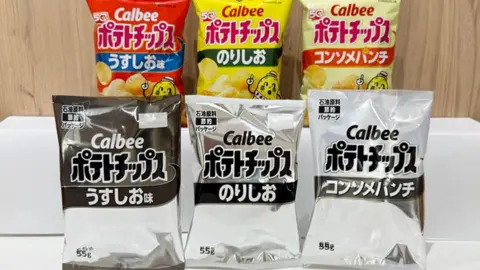
Industry analysts point out that this strategic shift reflects broader concerns about supply chain resilience in an increasingly interconnected global economy. Companies that have built their operations around just-in-time manufacturing principles now face significant challenges when unexpected geopolitical events disrupt key nodes in their sourcing networks. The inability to access specialized inks has forced many manufacturers to completely reimagine their product presentation strategies.
The effective closure of this critical maritime passage has triggered an immediate spike in prices for petrochemical products, which serve as fundamental inputs for countless industrial applications. Energy prices have surged across global markets, reflecting investor concerns about prolonged supply disruptions and potential escalation of regional conflicts. Shipping rates through alternative routes have skyrocketed, adding substantial costs to the already complex equation of maintaining global commerce.
Ink manufacturers have reported unprecedented demand for basic black and white formulations, as businesses across sectors seek alternatives to their standard color-intensive printing processes. The petrochemical shortage impact extends beyond packaging, affecting pharmaceutical labeling, financial documentation, and numerous other industries that depend on specialized printing materials. Suppliers are struggling to meet this sudden surge in demand for simpler ink formulations.
The snack company's public announcement about their packaging transition has sparked broader conversations about corporate adaptability and the vulnerability of modern supply chains. Consumers have responded with mixed reactions, with some appreciating the minimalist design aesthetic while others question whether the shift represents a temporary measure or a permanent strategic repositioning.
Industry observers note that this situation illuminates the critical importance of geographic diversification in sourcing strategies. Companies that have concentrated their supplier relationships in regions vulnerable to geopolitical disruption now face painful lessons about the costs of over-reliance on single supply corridors. The Middle East supply chain crisis has become a wake-up call for executives who previously considered geopolitical risks to be peripheral concerns.
Alternative shipping routes through the Suez Canal and around the Cape of Good Hope remain available, but these longer pathways significantly increase transportation costs and delivery timelines. Companies face difficult choices between absorbing increased shipping expenses, passing costs to consumers through price increases, or fundamentally restructuring their operations to reduce dependence on affected supply chains.
The snack manufacturer has indicated that the packaging transition represents a temporary measure while global conditions stabilize and petrochemical supplies normalize. However, industry analysts remain skeptical about the timeline for resolution, given the entrenched nature of regional conflicts and the complex geopolitical dynamics at play. Some supply chain experts predict that disruptions could persist for months or even years.
This situation underscores the interconnected nature of modern global commerce, where events thousands of miles away can immediately impact consumer products on shelves worldwide. The transition to monochrome packaging design serves as a tangible reminder that supply chain vulnerabilities extend far beyond logistics and pricing—they fundamentally shape the products consumers purchase daily.
Competitors in the snack and beverage industries are closely monitoring the market response to this packaging redesign, with many considering similar transitions if ink supply shortages persist. The ripple effects of this disruption extend throughout the manufacturing ecosystem, affecting everything from label adhesives to protective coatings. Companies are now investing in emergency inventory strategies and developing contingency plans for potential future supply interruptions.
Industry associations have begun advocating for policy interventions that could stabilize supplies or create incentives for manufacturers to develop alternative sourcing arrangements. Some groups have called for government support in diversifying supply chains away from geopolitically sensitive regions, arguing that national economic security depends on reducing vulnerability to foreign supply disruptions.
The broader implications of this incident extend beyond the snack industry, signaling to investors and analysts that global supply chains require more robust risk management frameworks. Financial markets have reflected uncertainty about the potential for further disruptions, with stocks of companies heavily dependent on petrochemical supplies experiencing increased volatility. Insurance companies are reassessing their policies regarding business interruption coverage related to geopolitical events.
Looking forward, this situation may accelerate trends toward local sourcing and nearshoring strategies that have already gained momentum in recent years. Companies are reevaluating their dependence on global supply chains and considering whether maintaining local or regional manufacturing capabilities provides adequate insurance against future disruptions. The economics of supply chain resilience are fundamentally changing the calculations that drive corporate decision-making.
The snack company's packaging transformation ultimately represents more than a simple design change—it symbolizes the vulnerability of interconnected global systems to geopolitical shocks. As businesses worldwide grapple with similar supply chain challenges, the lessons from this incident will likely shape corporate strategy and policy discussions for years to come. The path toward supply chain resilience remains uncertain, but the urgency of addressing these vulnerabilities has become undeniably clear.
Source: BBC News


